
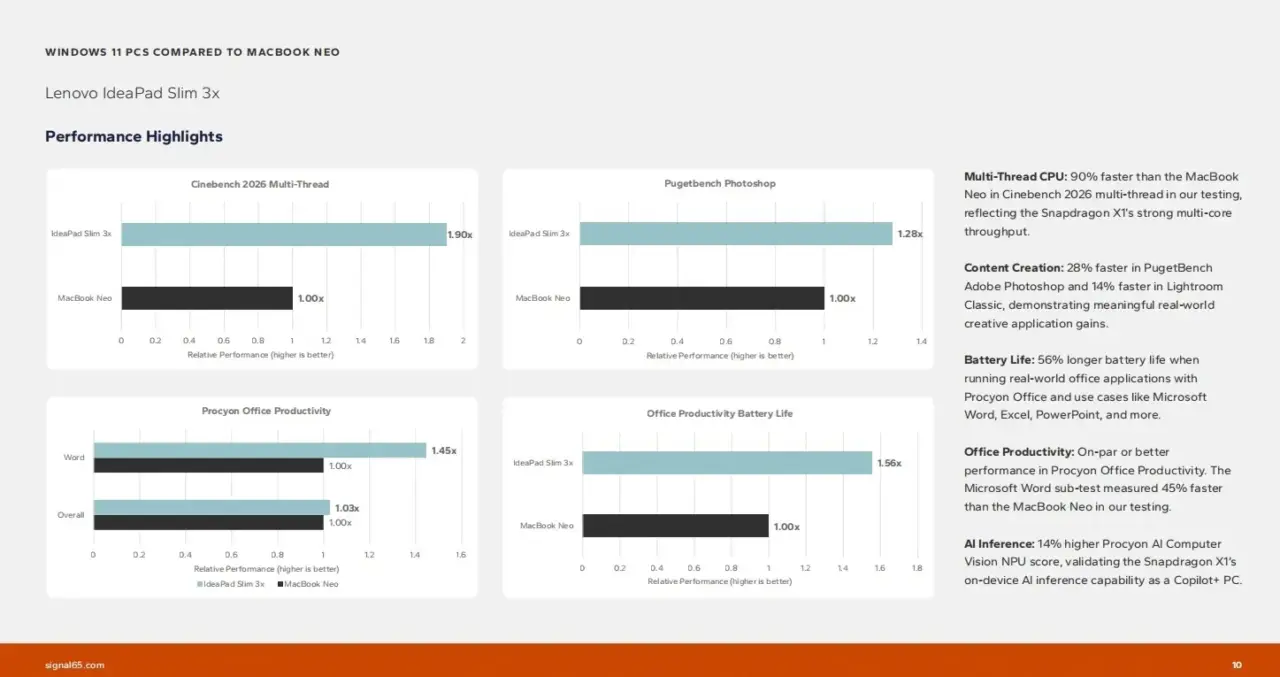
Microsoft has commissioned an independent analysis firm to compare the performance of Windows 11 laptops against Apple's new MacBook Neo. The report highlights specific advantages for Windows devices in key areas such as battery life and multi-core processing power. Signal65 conducted the study and published findings that position Windows laptops as offering superior value in these metrics.
Analysis shows significant battery and CPU advantages for Windows.
The MacBook Neo features an A18 Pro chip and 8GB of RAM. It includes a 500-nit display and connects via two USB-C ports. The device contains a 36.5Wh battery. Microsoft selected models like the Lenovo IdeaPad Slim 3x and HP OmniBook 5 for comparison. These Windows machines utilize larger batteries, such as the 60Wh unit in the Lenovo model.

The Lenovo IdeaPad Slim 3x starts at 449 USD. The MacBook Neo begins at 599 USD. Signal65 claims the Lenovo model delivers 56% longer battery life than the MacBook Neo. The report also states that Windows laptops lead in Cinebench multi-core CPU performance by up to 92%.
Critics argue the comparison methodology favors Windows devices. The Windows models tested typically feature screens larger than the 13-inch display on the MacBook Neo. The analysis ignores the MacBook Neo's strengths in build quality, speaker performance, and display resolution. The battery life gap stems partly from the physical size difference between the 36.5Wh and 60Wh cells.
Apple has not publicly responded to the specific claims made in the Signal65 report. The company has not confirmed whether it will address the performance or pricing disparities highlighted by Microsoft's commissioned study. The debate continues regarding whether the benchmarking approach accurately reflects real-world user experience.



Discussion
0 comments
Log in to join the thread with a thoughtful take, question, or correction.