
TrendForce projects a decline in global laptop shipments for 2027, signaling that buyers may face higher prices or reduced value in the coming years. This forecast matters because rising component costs threaten to extend the typical replacement cycle for personal computers. The analysis highlights a direct link between semiconductor pricing and consumer purchasing power in the mainstream market.
Rising component costs threaten to extend laptop replacement cycles
The forecast centers on the structural cost pressures facing laptop manufacturers as they approach the 2026 and 2027 production cycles. CPU, DRAM, and SSD costs accounted for approximately 68 percent of the bill of materials for a mainstream laptop with a $900 MSRP in the third quarter of 2026. These components form the core of the device, making their price volatility a primary driver of final retail costs.
Manufacturers face a difficult trilemma in 2027 where they must choose to maintain price, maintain specs, or maintain margins. If DRAM and CPU prices remain elevated, brands will likely pass these costs to consumers, which could worsen the shipment decline from low-single digits to high-single digits. AI server demand continues to constrain advanced process capacity, keeping DRAM supply tight and limiting the ability of laptop makers to lower component costs.
We have seen similar cost pressures impact the market recently, as evidenced by XMG raising laptop prices by up to 300 euros due to surging DDR5 costs. This recent industry move illustrates the immediate financial strain that component shortages place on hardware vendors. The trend suggests that price stability for consumers is becoming increasingly difficult to maintain in the current supply chain environment.
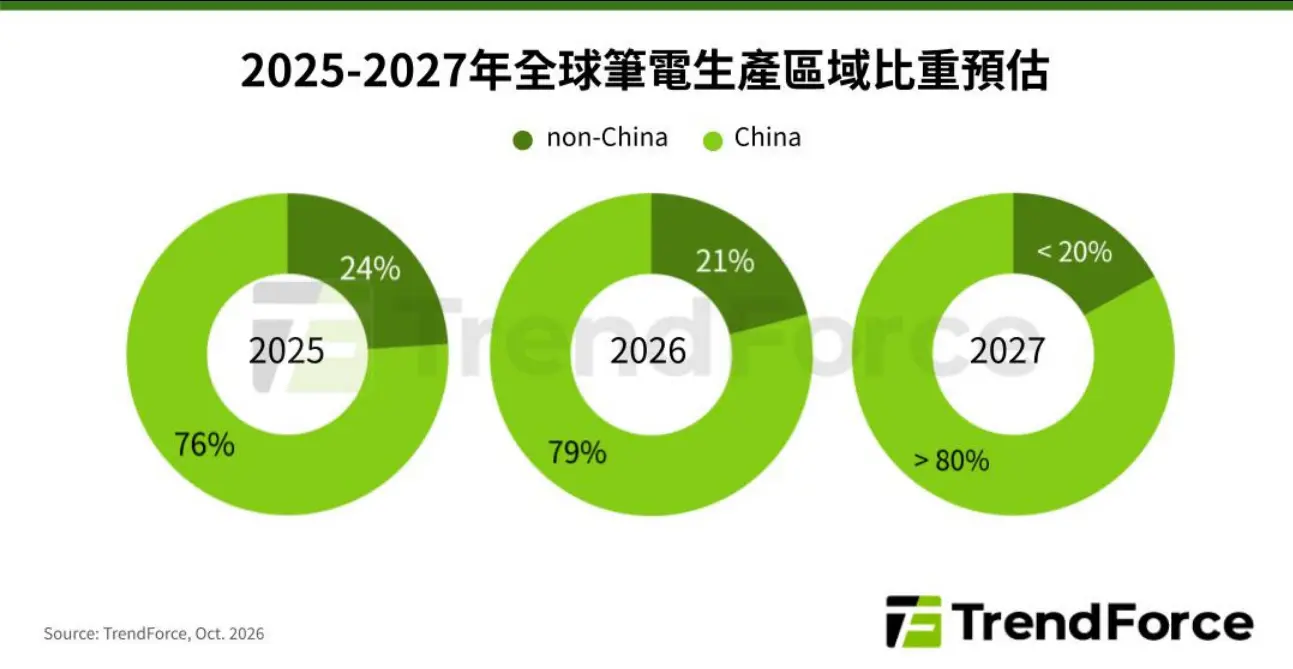
Global laptop manufacturing outside of China is also shifting, with the non-China share expected to drop from roughly 24 percent in 2025 to below 20 percent by 2027. NAND Flash supply may improve in the second half of 2027, but this improvement is unlikely to offset the tightness in DRAM and CPU markets. The combination of manufacturing consolidation and component scarcity defines the outlook for the laptop sector in the near future.
Discussion
0 comments
Log in to join the thread with a thoughtful take, question, or correction.