
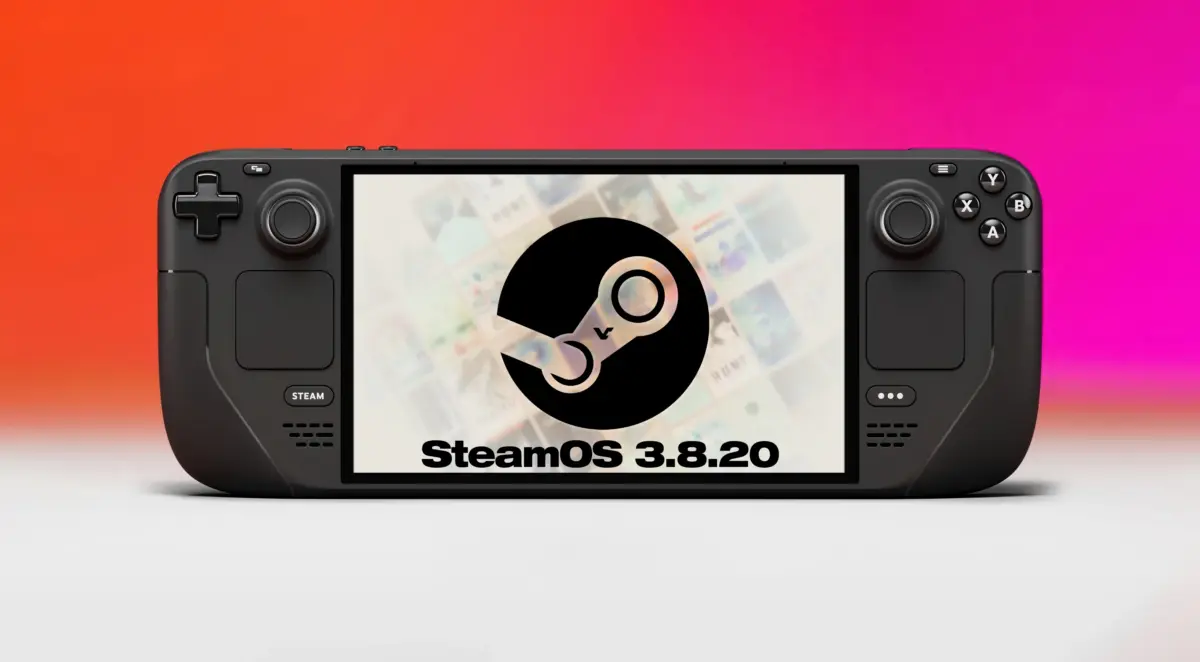
SteamOS 3.8.20 Beta arrives with changes that directly address a common frustration for handheld PC gamers: stuttering caused by limited video memory. Valve designed this update to keep games running smoothly on devices with constrained VRAM, which matters to anyone who has experienced frame drops when switching between intensive titles. The release targets users who rely on the Steam Deck or similar hardware for consistent performance without manual tweaking.
Valve targets handheld stuttering with improved memory management
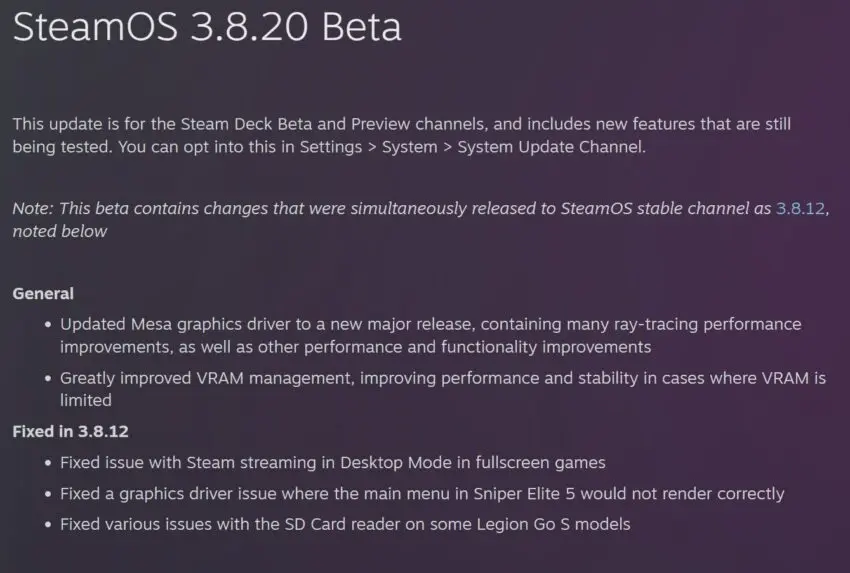
Valve released SteamOS 3.8.20 Beta to the Beta and Preview channels, making the update available to testers and early adopters. The core of this release involves a significant overhaul of how the operating system handles graphics resources. Valve lists the primary improvement as greatly improved VRAM management, a change aimed at stabilizing gameplay on hardware with limited dedicated memory.
The update includes a new major release of the Mesa graphics driver, which brings many ray tracing performance improvements. Valve states that the new driver contains these enhancements to boost performance in supported titles. The public changelog does not list the exact Mesa package version, but the update focuses on preventing foreground games from being pushed out of dedicated video memory. This technical shift aims to improve performance and stability when VRAM is under pressure.
This beta build also incorporates several fixes carried over from the stable channel version 3.8.12. Users will find a fix for Steam streaming in Desktop Mode, which resolves connectivity issues for remote play. The update also addresses a main menu crash in Sniper Elite 5 and adds SD card reader fixes specifically for the Lenovo Legion Go S. These additions round out the stability improvements for a wider range of gaming scenarios.
We looked at the last steamos update earlier while tracking Valve's release cycle, and several of the same balance and stability themes came up in this new release. The current beta focuses on memory management and driver updates rather than new features. Valve continues to refine the platform through these incremental updates to support the growing library of Linux-compatible games.

Discussion
0 comments
Log in to join the thread with a thoughtful take, question, or correction.