
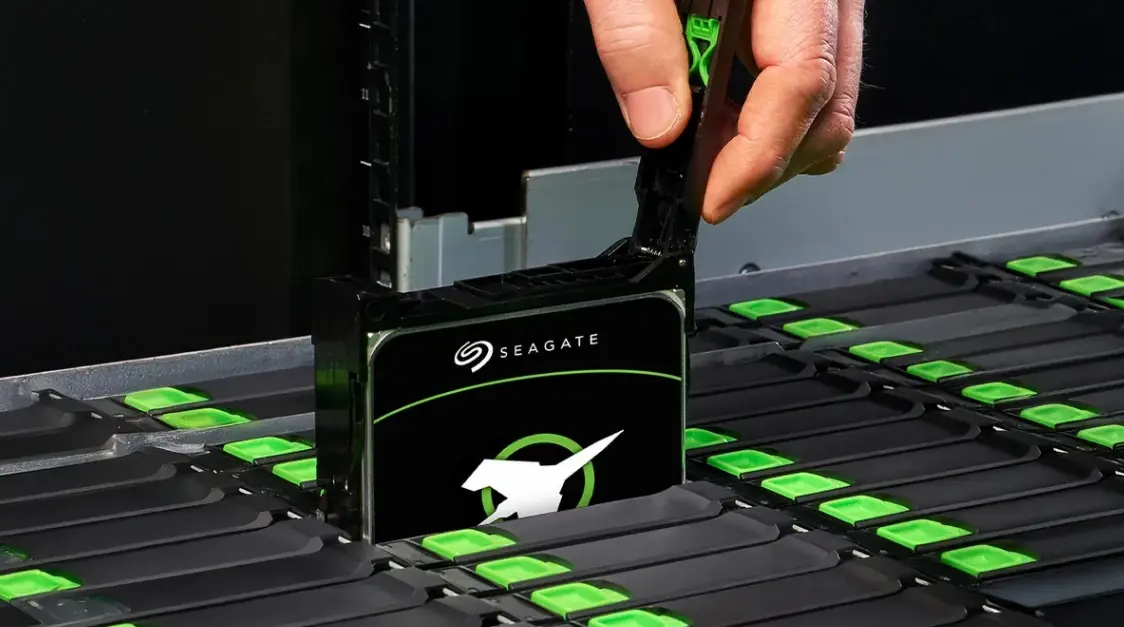
Seagate has updated its enterprise storage roadmap to include a 50TB HAMR hard drive, signaling a major leap in mechanical disk density for cloud data centers. This development matters because AI workloads and massive data archives continue to outpace the growth of solid-state storage, keeping high-capacity spinning disks essential for cost-effective scaling. Buyers managing large-scale infrastructure will need to plan for this shift as traditional capacity limits are pushed further.
Next-gen Mozaic 5+ platform breaks 5TB per platter barrier
The company currently ships the Mozaic 4+ platform, which supports up to 44TB per drive and stands as the only large-scale deployed HAMR technology in the market. HAMR, or Heat-Assisted Magnetic Recording, uses a microscopic laser to heat the disk surface during writing, allowing data bits to be packed much closer together than on standard platters. This technology enables Seagate to maintain a competitive edge in capacity per dollar for enterprise customers.
Specifications
- Planned Capacity: 50TB
- Technology: HAMR (Heat-Assisted Magnetic Recording)
- Current Platform: Mozaic 4+
- Current Max Capacity: 44TB
- Next Gen Platform: Mozaic 5+
The next generation of this technology, known as the Mozaic 5+ platform, will break the 5TB barrier for individual platters. Seagate plans to use a ten-platter design in the flagship model to reach the total 50TB capacity target. This architectural change represents a significant engineering step up from the current four-platter or fewer configurations found in earlier HAMR drives.
Seagate CEO Dave Mosley confirmed that most capacity through 2028 is already sold out, with negotiations for 2029 capacity quotas currently underway. The company expects to launch the 50TB drives in 2027, with mass production of these units scheduled for 2028. This high demand reflects the sustained growth in AI and cloud computing, which continues to drive strong requirements for mechanical hard drive storage.
We looked at Seagate Allocates Nearline HDD Capacity Through in our earlier Seagate coverage to track these long-term planning details. The roadmap confirms that Seagate is betting heavily on HAMR to meet the escalating storage needs of the modern data center. This commitment ensures that mechanical drives remain a viable and scalable option for enterprise storage architectures for years to come.
Discussion
0 comments
Log in to join the thread with a thoughtful take, question, or correction.