
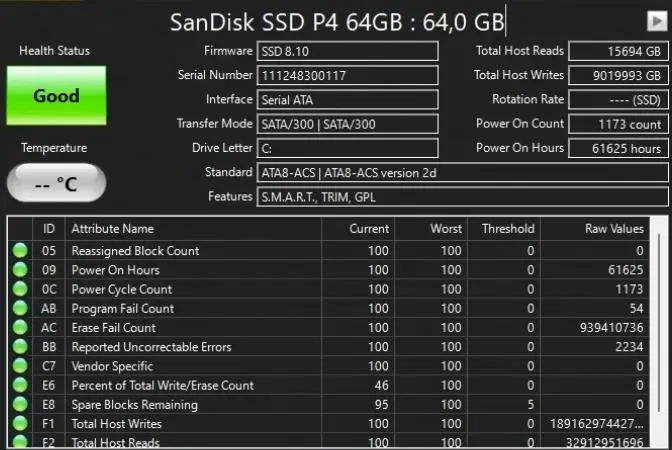
A SanDisk 64GB SATA SSD has survived 16 years of continuous operation, proving that older storage technology can outlast modern equivalents by a wide margin. This case matters because it challenges the assumption that current TLC and QLC drives offer sufficient longevity for long-term data retention. Users interested in archival storage or industrial applications should note that endurance metrics from a decade ago were significantly higher than today's consumer standards.
Old drive accumulates massive write volume while remaining functional
The drive in question uses a SATA interface and relies on early-generation SLC or MLC flash memory. These older flash types store more data per cell than modern multilevel cells, which directly contributes to their superior endurance. The specific model is not identified, but the technology aligns with SanDisk products from the early 2000s.
Specifications
- Capacity: 64GB
- Interface: SATA
- Total Data Written: 9PB
- Total Run Time: 61,000+ hours
- Erase Cycles: 140,000+
The SSD has accumulated 9PB (approximately 9000TB) of total data writes over its lifespan. It has also completed more than 140,000 full erase cycles. The drive has been running for over 61,000 hours without failure. These numbers demonstrate a level of durability that far exceeds typical consumer expectations for solid-state drives.
Despite its age, the drive remains functional, though it shows signs of wear. Sector 0 has developed an unrecoverable error (UNC), but the flash translation layer and write cache mechanisms continue to operate normally. A Reddit user shared these findings, noting that the drive's durability is over 100 times that of modern TLC or QLC products based on erase cycle counts.
We looked at storage longevity trends earlier while tracking SSD endurance claims. The drive was reported by Kuai Keji, who highlighted the impressive write volume and operational time. This case serves as a practical example of how early SLC and MLC technology handled heavy workloads over extended periods.
The SanDisk 64GB SATA SSD remains operational after 16 years, 9PB of writes, and 140,000 erase cycles. It demonstrates that older flash memory technologies offer significantly higher endurance than modern consumer drives. The drive's continued functionality, despite sector errors, highlights the robustness of early SSD designs.


Discussion
0 comments
Log in to join the thread with a thoughtful take, question, or correction.