
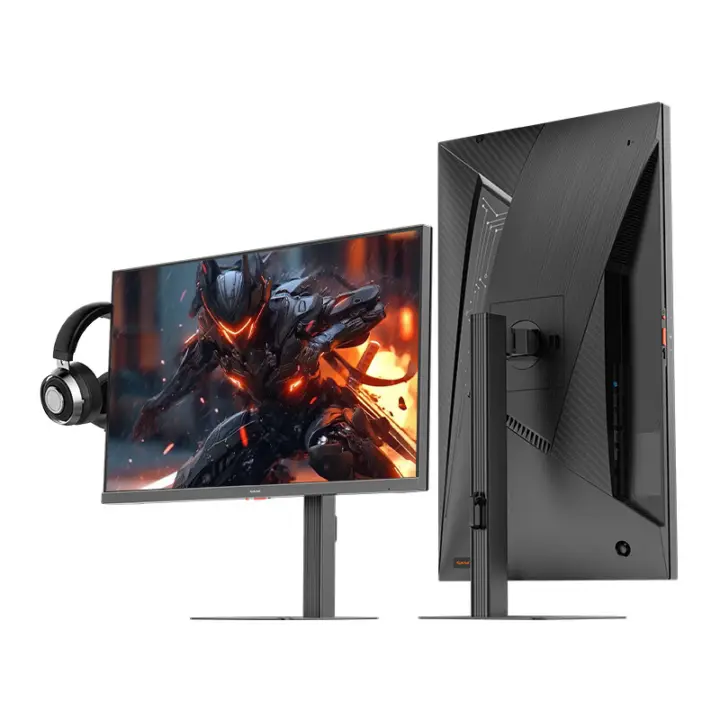
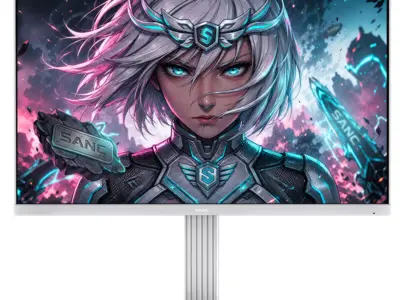
SANC has released the G73Turbo, a 27-inch gaming monitor that targets budget-conscious players who prioritize speed over resolution. The display ships with a unique triple-mode refresh rate system that lets users swap between QHD, FHD, and HD resolutions to chase higher frame rates. This flexibility matters because it allows gamers to push frame counts significantly higher than standard 1440p monitors allow, which directly impacts competitive play.
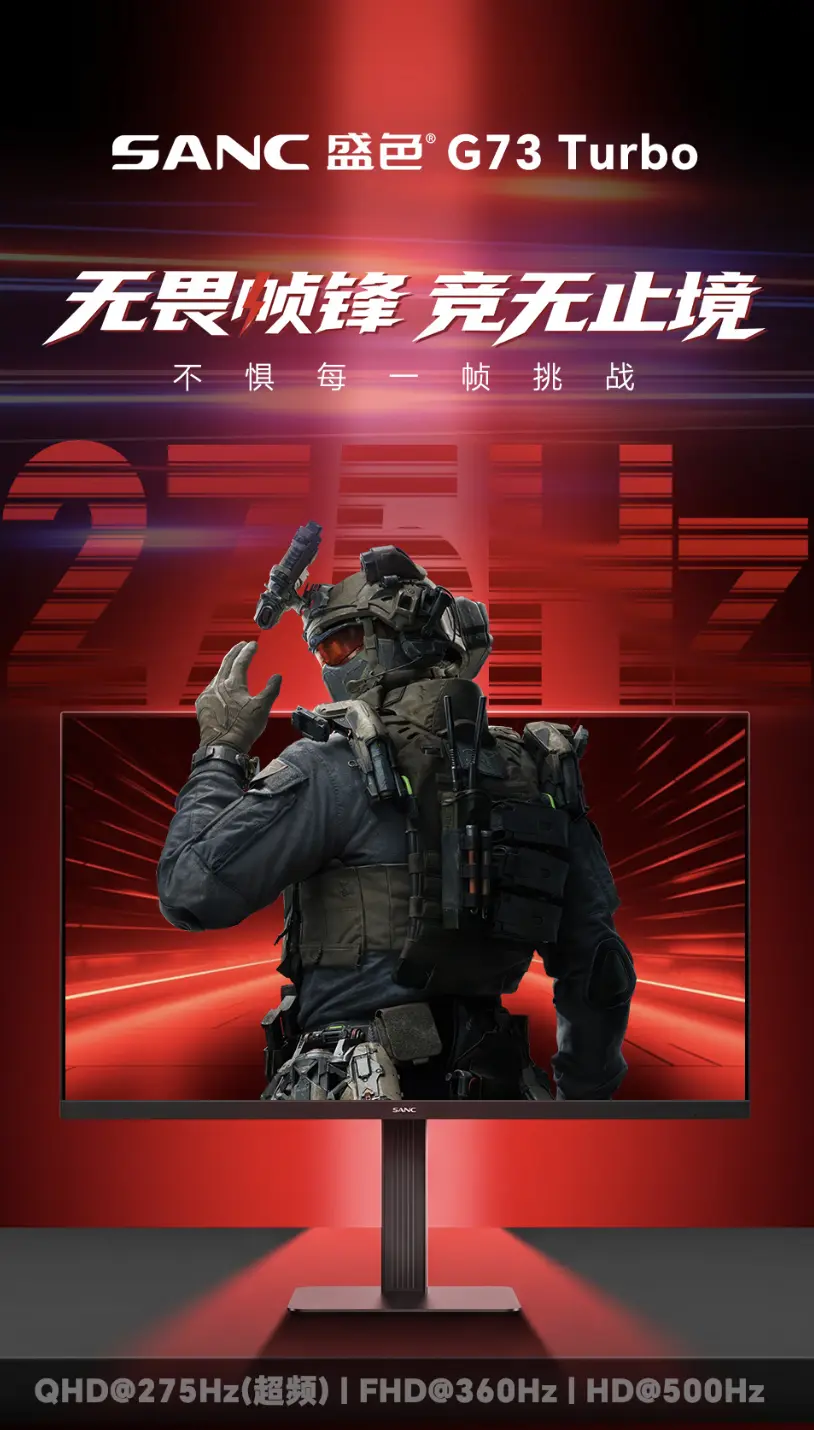
Triple refresh rate modes target budget esports players
The monitor relies on a Fast IPS panel to deliver its high refresh rates while maintaining decent color accuracy. It supports three distinct resolution and refresh rate combinations: 2560×1440 at 275Hz, 1920×1080 at 360Hz, and 1280×720 at 500Hz. This setup gives users the freedom to choose between image clarity and raw speed depending on the game they are playing.
Specifications
- Panel: Fast IPS
- Max Refresh: 500Hz (720p)
- Brightness: 400 nits
- Ports: 2x HDMI 2.0, 2x DP 1.4
- Price: 1599 CNY (around $237)
Visual performance centers on a 400-nit brightness level and a 1000:1 static contrast ratio. The panel handles 8-bit color depth and covers 99 percent of the sRGB color gamut, which is standard for this price tier. Connectivity includes two HDMI 2.0 ports, two DisplayPort 1.4 inputs, and a single 3.5mm audio jack for headphones.
The G73Turbo supports VESA 100x100mm wall mounting for flexible desk setups. SANC priced the monitor at 1599 CNY (around $237), which converts to around $237, making it one of the most affordable high-refresh-rate options available. The display went live on JD.com in China on August 26, 2024, with some regional listings showing potential discounts down to 1439.1 CNY (around $214).
This launch adds another high-speed option to the entry-level gaming monitor market, where speed often outweighs visual fidelity. Buyers looking for a dedicated esports display or a secondary monitor for fast-paced titles will find the triple-mode refresh rate feature particularly useful. The G73Turbo confirms that manufacturers are continuing to push refresh rate boundaries even at lower price points.
Discussion
0 comments
Log in to join the thread with a thoughtful take, question, or correction.