
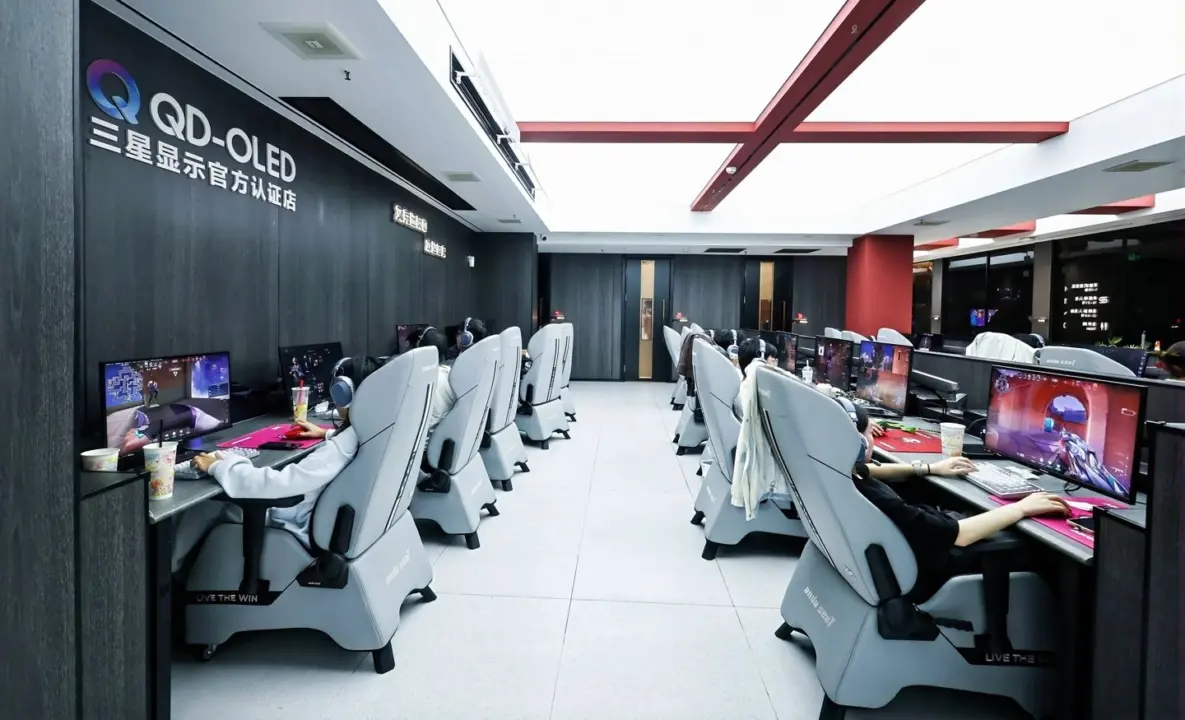
Samsung Display to increase QD-OLED usage in China through the new internet cafe certification scheme. The program aims to attract gaming hardware enthusiasts and internet cafe owners that value high refresh rate monitors. By doing so, the program brings QD-OLED out of the realm of individual enthusiast usage and into more commercial gaming spaces. As a result, this provides a standard benchmark for consumers in the space regarding display quality in public gaming environments.
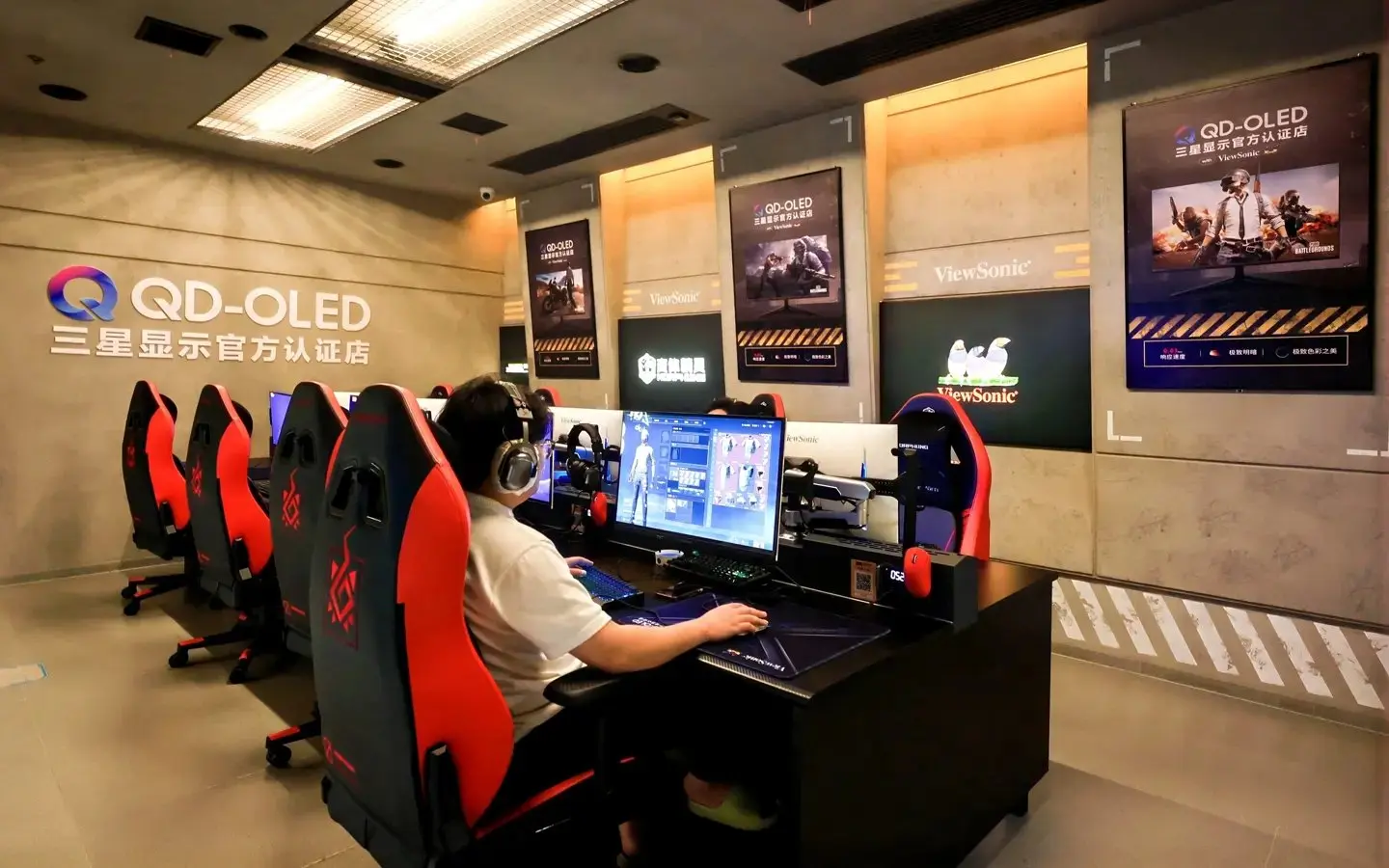
Samsung Display launches a certification program for QD-OLED monitors in Chinese internet cafes, aiming to expand from 10 to 60 locations by the end of 2026.
In order to receive the certification, partner brands must install at least 30 monitors for Samsung QD-OLED at a single location. Brands such as AOC, ASUS, HKC, MSI, Titan Army, and ViewSonic fall under this list of partner brands. These manufacturers are the source for certified hardware that meets the criteria of the program. The focus is on the Chinese market as internet cafes are a huge source of display sales.
Internet cafes make up about 30-40% of the OLED gaming monitor sales in China. The sales of self-emissive gaming monitors in China have gone from 25,000 in 2023 to 560,000 in 2025 according to IDC. This is a tremendous growth rate which reflects the trend towards the use of premium display technologies within the commercial gaming environment. The certification program is looking to leverage this growth in the market segment.
Samsung Display's goal is to increase the number of certified cafes from 10 to 60 by the end of 2026. By doing so, the company aims to target important gaming areas in China to bolster the presence of QD-OLED displays. In turn, this provides a standard baseline for hardware in the commercial gaming space. We have been monitoring QD-OLED as of late as in our previous coverage of Samsung Display to Mass Produce 24.5-Inch.
With this certification program, QD-OLED will formally enter into the Chinese gaming cafe space. Partner brands will provide monitors that adhere to certain display criteria. Their goal is to reach 60 certified cafes by the end of 2026. This is all in support of broader self-emissive display adoption for commercial gaming.
60 cafes is a lot of screens. The IDC sales jump is real though.
Does the certification include independent luminance testing or just panel sourcing? I need raw nits data before I care.
The article does not mention independent luminance testing protocols. It only states that partner brands must install at least 30 monitors. This is a sourcing requirement, not a performance benchmark. You will need to wait for third party verification.
im guessing the latency on those qd-oleds is fine for fps but who knows tbh
Samsung is locking the supply chain hard here. Partner brands like ASUS and MSI are just hardware integrators now. The panel dictates the commercial viability.
I hope these monitors do not burn in after heavy gaming sessions. I have seen screens go dark in offices before.
Reliability is the only thing that matters for internet cafes. If the panels last three years the model works.
Still too expensive for my setup. I will stick to my current IPS panel for now. The price difference is too big.
VRAM prices are still high so why pay for premium OLEDs? The budget builders are stuck with older tech again. It is a shame really.
30 monitors per location is a serious investment for cafe owners.