
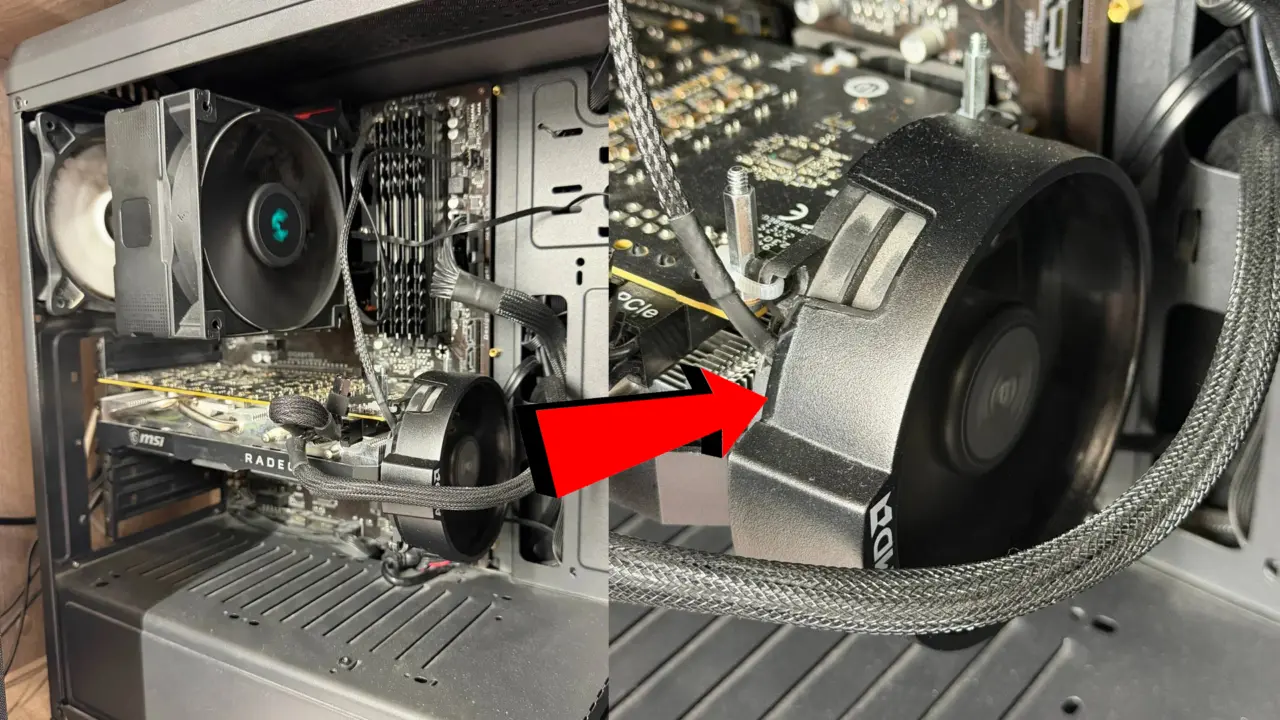
Thermal throttling ruins gaming performance by forcing graphics cards to drop their clock speeds when they get too hot. A Reddit user fixed a stuttering AMD RX 5700 XT by physically modifying the card's cooling system. This modification proves that standard factory cooling solutions can fail under load. Gamers experiencing similar thermal issues might find these specific changes useful for their own hardware.
Reddit user undervolts card and attaches external fan to stop thermal stuttering
The user started with an RX 5700 XT that suffered from severe overheating. The GPU hotspot reached 106 degrees Celsius, which triggered thermal throttling. The card could not maintain its boost clocks and dropped to 1630-1680 MHz during games. This thermal behavior caused noticeable stuttering in gameplay. The user decided to open the card to address these temperature spikes directly.
The repair involved replacing the internal thermal pads and thermal paste. The original thermal pads had degraded into a sandy consistency. The user also removed the plastic backplate to improve airflow. They attached a VRAM heatsink using zip ties and mounted an AMD stock fan. This fan blows cool air directly onto the components inside the card.
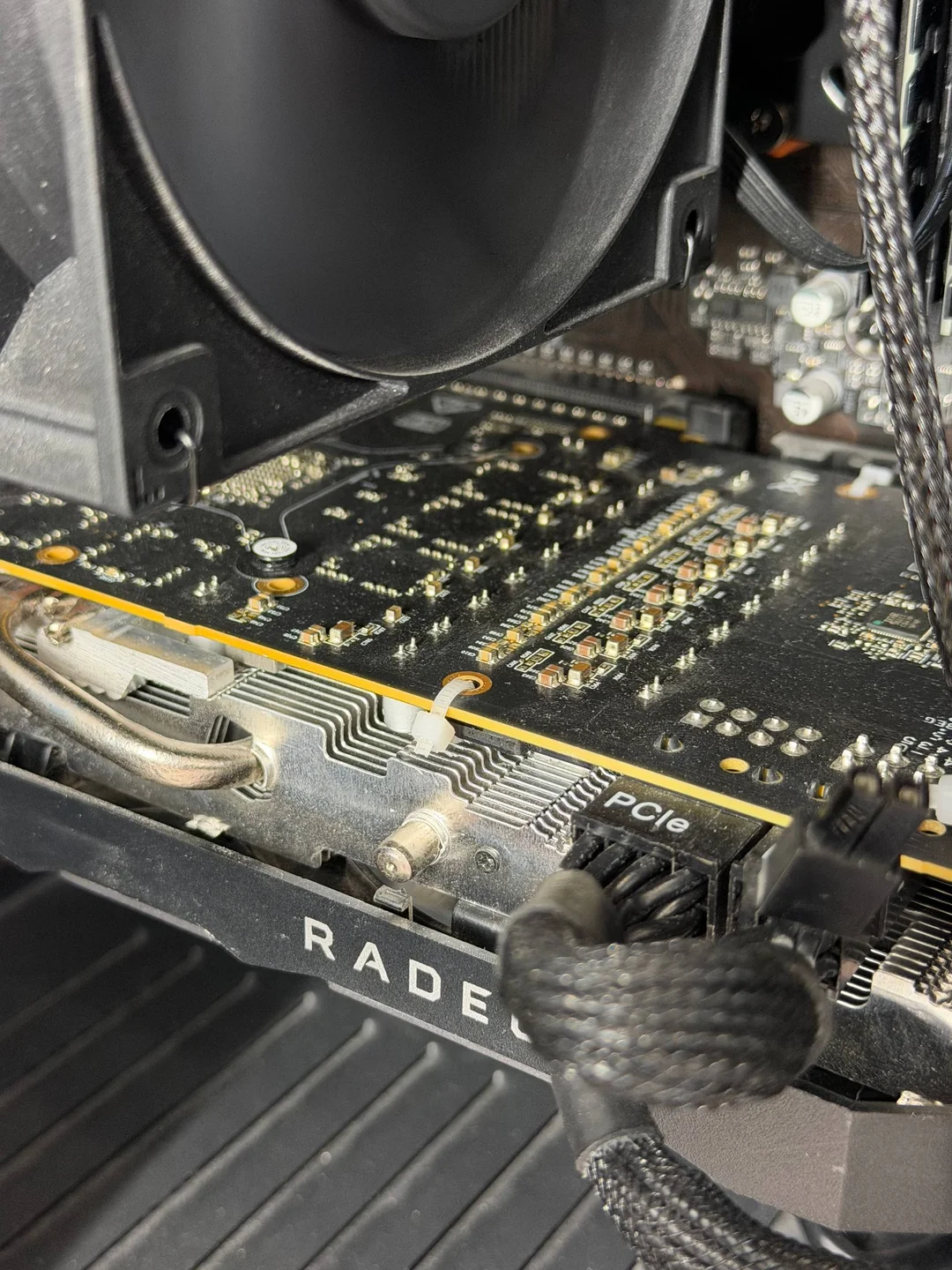
The user adjusted the card's electrical settings to support the new cooling setup. They undervolted the card from 1.16V to 1.07V. They fixed the core frequency to 2.0 GHz and increased the memory clock to 1825 MHz. They also raised the power limit by 15%. These changes allowed the card to run games without stuttering.
The modification resulted in a significant drop in operating temperatures. The GPU hotspot temperature fell from 106 degrees Celsius to 83 degrees Celsius. This represents a 23-degree Celsius improvement in thermal performance. The VRAM temperature also dropped from nearly 104 degrees Celsius to between 85 and 90 degrees Celsius. The card now runs games without thermal throttling.
The user made a custom fan curve to manage the new cooling configuration. The fans run at 100% speed when the temperature reaches 75 degrees Celsius. This aggressive fan setting ensures the components stay cool. The long-term reliability of the zip-tied heatsink remains unconfirmed. This specific modification serves as a proof of concept for extreme cooling fixes.

Discussion
0 comments
Log in to join the thread with a thoughtful take, question, or correction.