
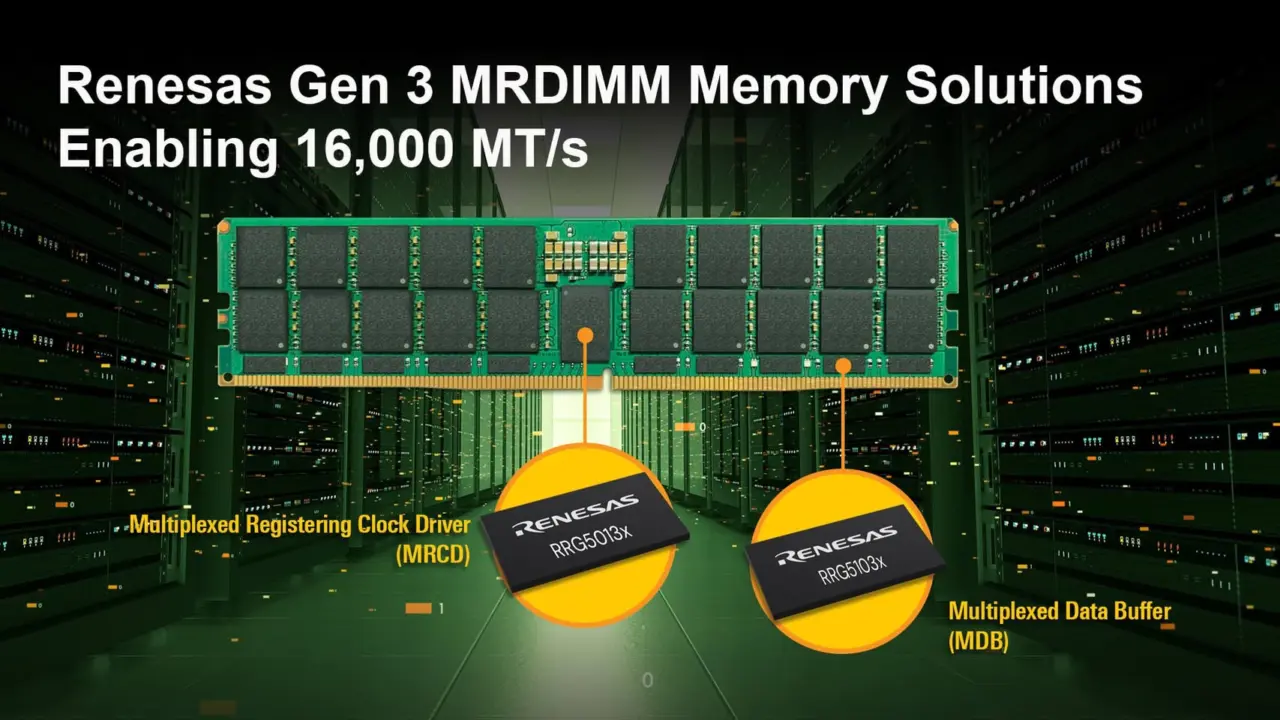
Server memory bandwidth is pushing higher as Renesas Electronics released its third-generation DDR5 MRDIMM chipset solution. This update matters because it raises the ceiling for data throughput in high-performance computing environments. Buyers and system integrators tracking server memory standards should note the shift to faster transfer rates.
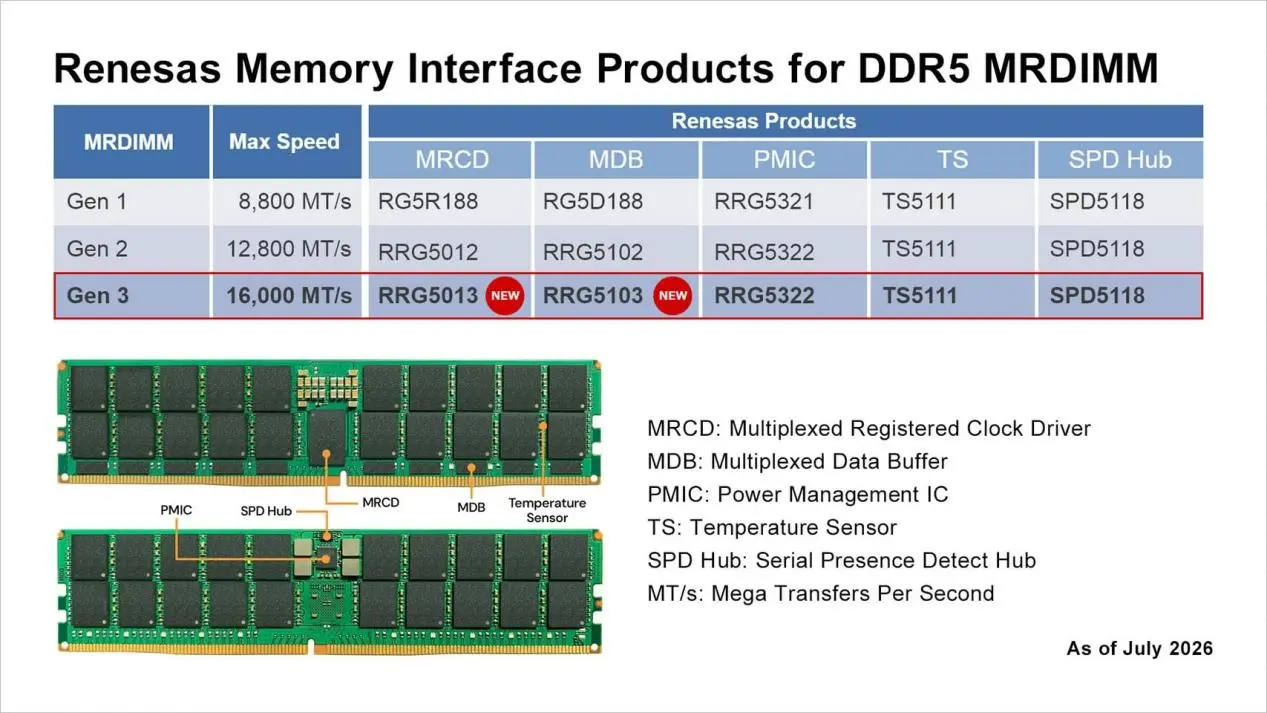
New chipset components arrive for server memory integration
The new chipset targets server-grade applications and relies on two main components to operate. The Multi-Buffer Data (MDB) component is the RRG5103 model. The Multi-Repeat Clock Driver (MRCD) component carries the model number RRG5013. These parts work together to manage the memory interface for the new generation module.
Specifications
- Transfer Rate: 16000 MT/s
- Bandwidth Increase: 25%
- MRCD Model: RRG5013
- MDB Model: RRG5103
- Feature: Device Equalization Self-Training Mode (DESTM)
Renesas claims the third-generation solution increases bandwidth by 25% compared to the second-generation option. The system supports transfer rates up to 16000 MT/s. The chipset also includes a Device Equalization Self-Training Mode (DESTM) to help maintain signal quality. This feature allows the hardware to self-train for better stability during operation.
Samples are currently available to major DRAM suppliers for testing and integration. Mass production is expected in the second half of 2027. We've been tracking DDR5 MRDIMM closely — see our earlier coverage on Industree DDR5 MRDIMM Hits 12800 MT/s,.
Discussion
0 comments
Log in to join the thread with a thoughtful take, question, or correction.