
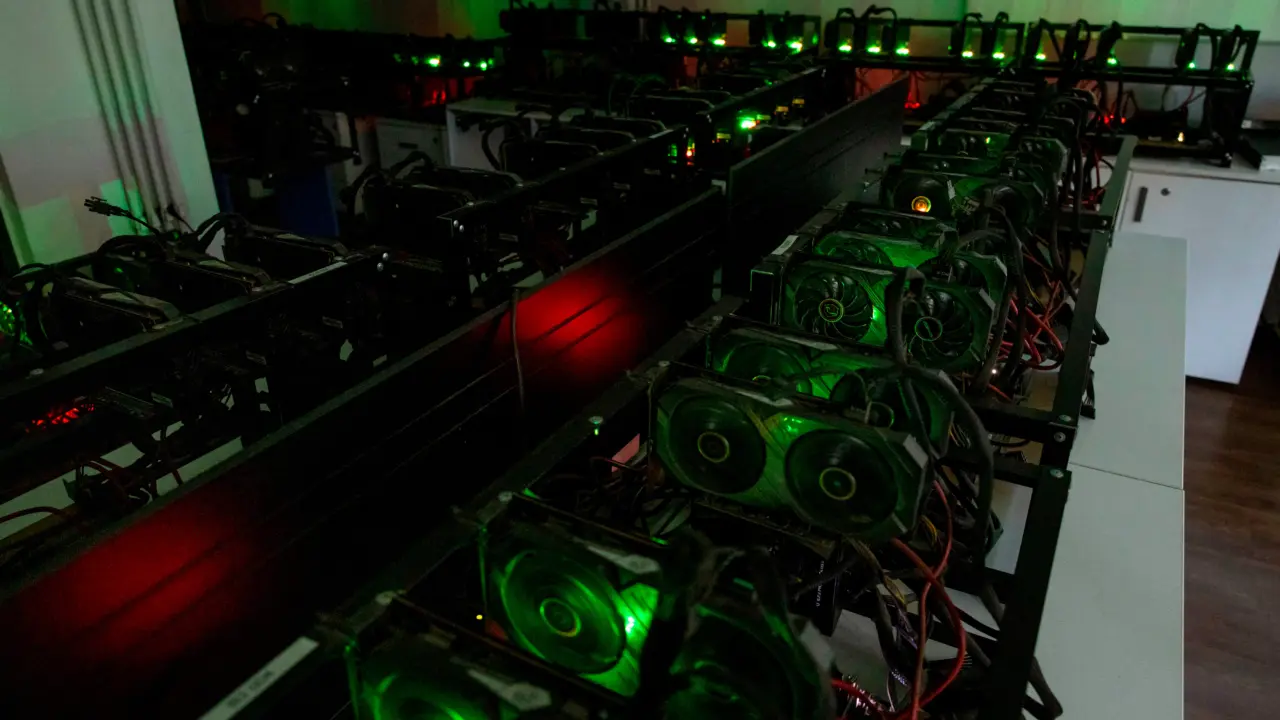
A Reddit user in Russia has turned a discarded crypto mining rig into a functional local AI workstation for just 35 USD. This setup proves that older, low-cost hardware can still handle substantial machine learning tasks without expensive new components. Readers interested in budget AI builds should note that repurposing retired graphics cards remains a viable path for high-VRAM experiments.
Nine retired graphics cards deliver massive memory capacity for local AI tasks
The system relies on nine Nvidia P106-100 GPUs, which are Pascal-generation cards originally released in 2017 for cryptocurrency mining. These specific models were never intended for general gaming, which kept their market value low after mining demand collapsed. The user acquired the entire rig, including the motherboard and power supply, from a damp garage for a negotiated price of 3,000 rubles.
Specifications
- GPU Model: Nvidia P106-100
- Total VRAM: 54GB
- VRAM per Card: 6GB GDDR5
- Memory Bandwidth: 192 GB/s per card
- Test Model: Qwen3.6-35B-A3B
Each of the nine cards contains 6GB of GDDR5 memory, providing a combined total of 54GB of VRAM. This configuration delivers a memory bandwidth of 192 GB/s per card, which is critical for loading large language models. The total cost equates to approximately 65 cents per gigabyte of video memory, a fraction of the price of modern consumer GPUs.
The rig successfully ran the 35-billion-parameter Qwen3.6-35B-A3B model locally using the Ollama inference engine. The system operated at over 30 tokens per second, demonstrating that the collective VRAM allows for models that would not fit on a single modern consumer card. This performance was achieved without any special software optimizations, highlighting the raw capacity of the multi-GPU setup.
Nvidia has ended feature support for Pascal GPUs in CUDA 13.0, although security updates continue for the architecture. The long-term stability of the rig remains uncertain due to the hardware's age and exposure to a damp environment. The user noted that power costs were not a barrier, as electricity is generally inexpensive in their region.
Discussion
0 comments
Log in to join the thread with a thoughtful take, question, or correction.