
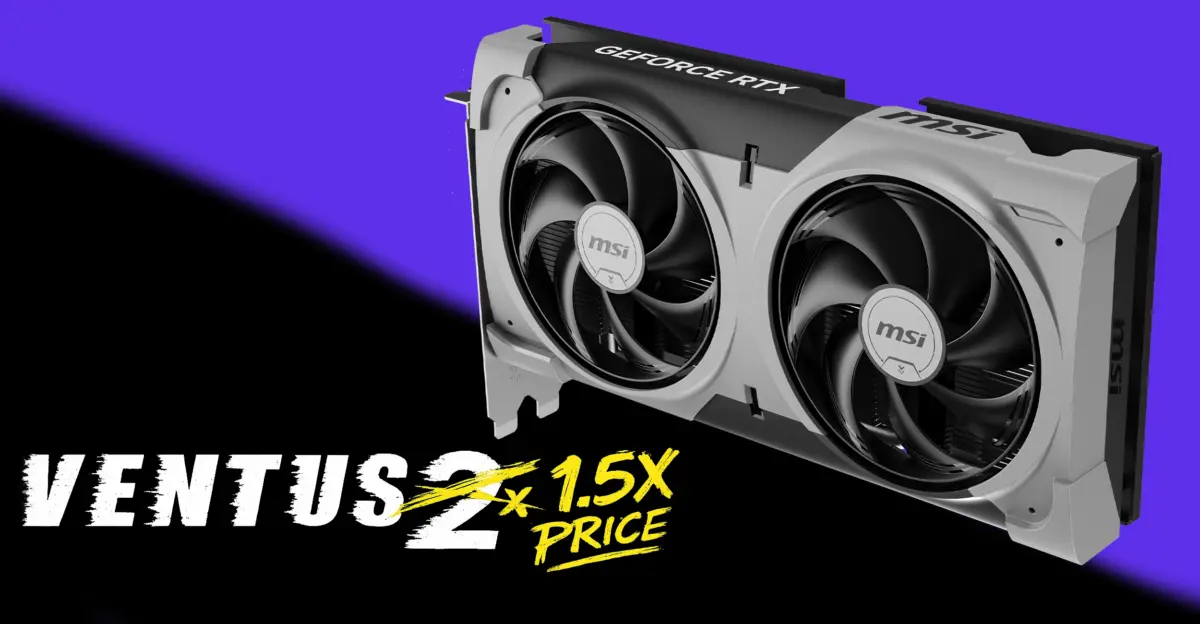
NVIDIA GeForce RTX 50 series graphics cards have surged in price across the South Korean market, forcing buyers to pay significantly more than expected. Shoppers face an average cost increase of 30 percent within just a few days of availability, which drastically alters the budget for high-end gaming builds. This rapid inflation means that the initial street prices listed at launch are no longer reliable indicators of what consumers will actually pay at retail.
Mid-range cards see the steepest increases
The price hikes affect every model in the new lineup, from the entry-level RTX 5050 to the flagship RTX 5090. We tracked eight specific listings on the Korean price comparison site Danawa to see how the market responded to the new hardware. The data shows that even the most expensive cards are not immune to these sudden retail adjustments, with the RTX 5090 seeing a smaller but still notable jump.
The most dramatic increases appeared on the mid-range RTX 5060 Ti models, where prices nearly doubled for certain configurations. The GIGABYTE RTX 5060 Ti 8GB EAGLE MAX OC climbed from 472,500 WON (around $331) to 706,120 WON (around $494), representing a 49.4 percent increase. Similarly, the MSI RTX 5060 Ti 16GB VENTUS 2X PLUS OC rose from 740,860 WON (around $518) to 1,109,280 WON (around $776), a gain of 49.7 percent. Other models like the RTX 5060, RTX 5070 Ti, and RTX 5080 also saw steep jumps of 37.2 percent, 34.9 percent, and 30.3 percent respectively.
Even the top-tier RTX 5090 experienced price pressure, though the percentage increase was much lower than the mid-range cards. The ASUS RTX 5090 ROG ASTRAL OC recorded the smallest rise at just 3.0 percent, yet its base price remained above 7.2 million won. This indicates that although demand for high-end models may be less sensitive to price changes, the broader market is undergoing a coordinated increase in prices. We've been tracking GeForce RTX 50 Series closely — see our earlier coverage on AMD Radeon RX 9050 Benchmarks Show.
These figures confirm that the South Korean retail market has adjusted to the new pricing reality much faster than anticipated. Buyers looking to purchase any RTX 50 series card should expect to pay substantially more than the initial launch MSRP suggested. The data provides a clear snapshot of the current cost of entry for NVIDIA's latest generation of gaming hardware.

Discussion
0 comments
Log in to join the thread with a thoughtful take, question, or correction.