
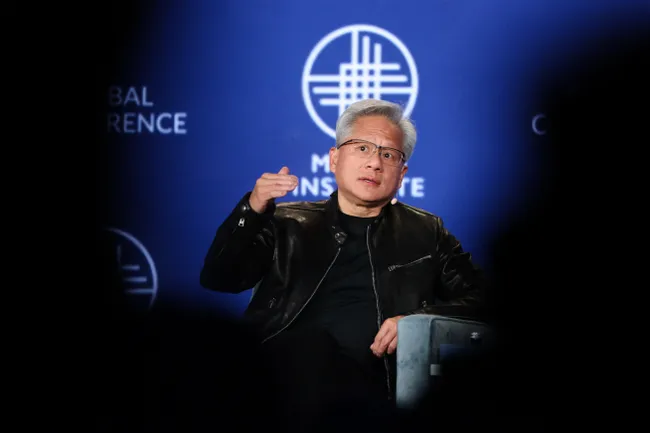
NVIDIA CEO Jensen Huang declared that the United States must maintain its dominance in artificial intelligence technology. He stated that the country needs to have the first, largest, and best AI capabilities. This position implies that China should not have access to NVIDIA's most advanced graphics processing units. Specifically, the Blackwell and Rubin architectures are excluded from the Chinese market.
Huang emphasized that NVIDIA strongly supports the US holding the top position in AI technology. The company aims to ensure its leadership remains unchallenged by restricting access to its latest chips. This strategy aligns with the goal of keeping the most powerful computing resources within American borders. The statement reflects a clear prioritization of domestic technological supremacy over international expansion for these specific products.
NVIDIA's presence in the Chinese AI accelerator market has effectively vanished. The company's market share for these specific chips has dropped to zero. This decline follows the halt of H200 processor shipments to Chinese customers. Previously, the US government approved the sale of H200 chips with a 25 percent fee. NVIDIA has not shipped these processors recently despite the approval.
American competitor AMD has capitalized on this gap by selling $390 million worth of AI GPUs to Chinese customers. These sales were facilitated by the MI308X approval. The shift in market dynamics suggests that NVIDIA may be prioritizing Blackwell production for US customers. This prioritization could be driven by TSMC capacity constraints on its N4 and N5 nodes.
Analysts speculate that NVIDIA might resume Hopper shipments to China in the future. This possibility depends on TSMC production capacity allocation. Some observers infer that widespread adoption of Rubin GPUs could lead to lower-tier Blackwell versions becoming available to Chinese clients. Huang has not confirmed any specific launch windows or future availability details for these restricted products.

Discussion
0 comments
Log in to join the thread with a thoughtful take, question, or correction.