
Microsoft has launched WSL Containers in public preview, offering developers a native way to run Linux containers on Windows without relying on Docker Desktop. This shift matters because it removes the need for a separate virtualization layer, allowing teams to streamline their development environments and reduce overhead. Developers can now integrate container workflows directly into their existing Windows toolchains, which simplifies setup and improves consistency across different machines.

Native Linux container execution arrives for Windows developers
The new feature centers on a command-line interface named wslc.exe, which includes a built-in alias called container.exe to mimic familiar Docker commands. To access these capabilities, users must first install the latest pre-release version of the Windows Subsystem for Linux by running the update command wsl –update –pre-release in their terminal. The underlying architecture ensures that every application and CLI session spawns its own lightweight Hyper-V utility VM in the background, providing strong isolation for each task.
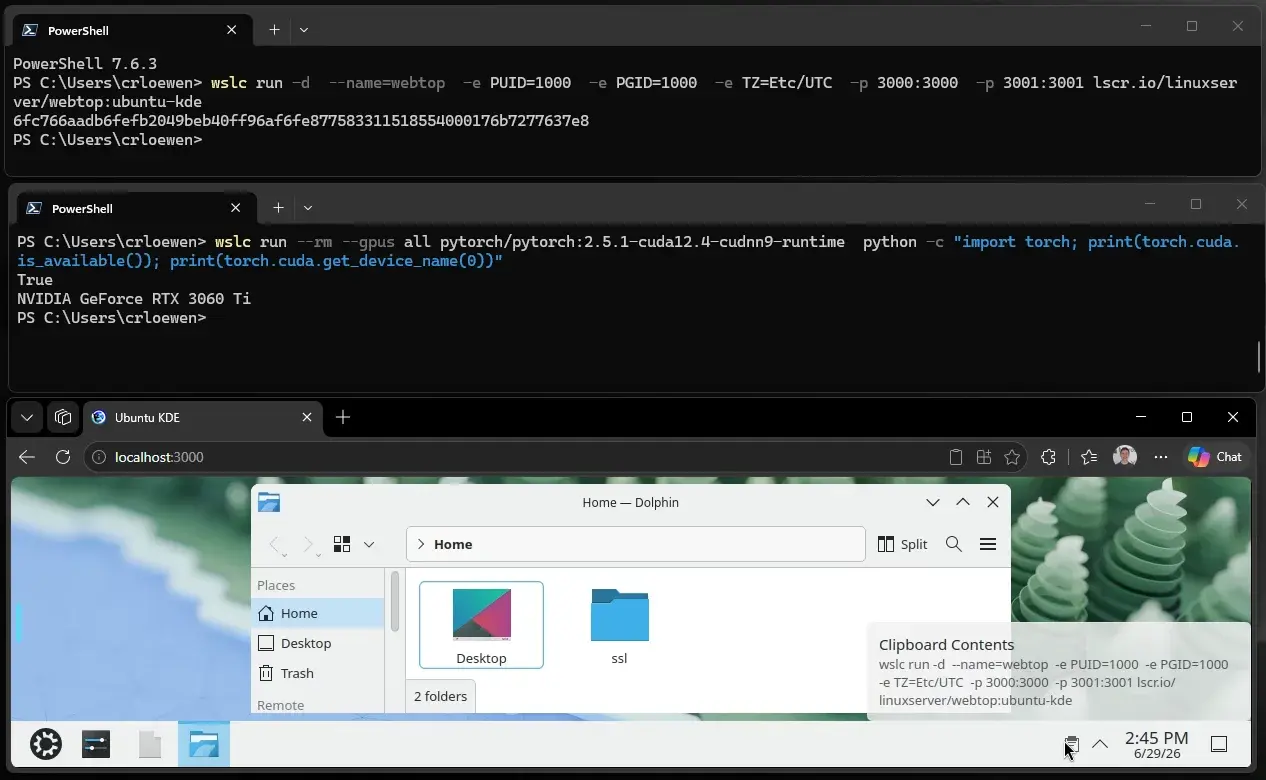
Technical integration is a key focus, with the API embedded directly into MSBuild and CMake so developers can define container steps within their project files. The tool also supports GPU passthrough for machine learning workloads, allowing users to link hardware instantly by passing the –gpus all flag in the run command. Microsoft is also developing an experimental networking mode called consomme to resolve compatibility issues with corporate VPNs, addressing a common pain point for enterprise users.
Looking ahead, Microsoft stated that it is working on a new default file system called virtiofs to speed up file transfer rates between Windows and Linux. This update represents a significant step toward unifying the development experience on Windows, though the feature remains in public preview. The launch provides a concrete alternative to third-party container managers for those already invested in the WSL ecosystem.



Discussion
0 comments
Log in to join the thread with a thoughtful take, question, or correction.