
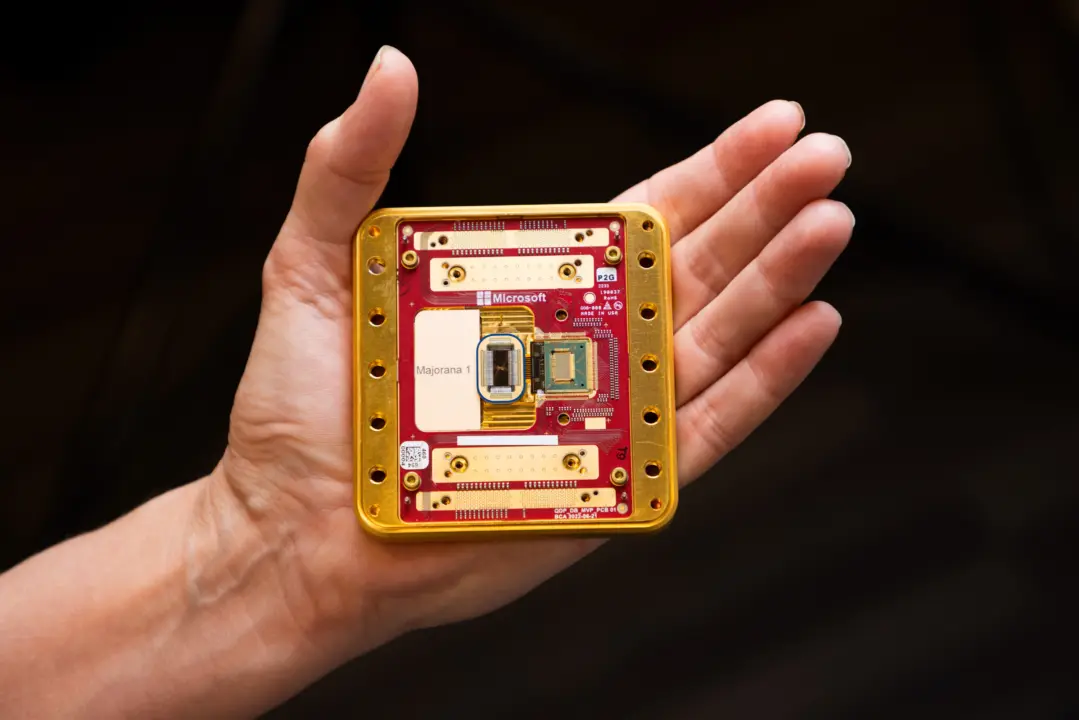
A scientific critique published in Nature argues that Microsoft's 2025 quantum computing breakthrough relied on basic Python coding errors. This allegation challenges the validity of the Majorana 1 topological qubit results, suggesting that data processing scripts discarded noisy signals to create a false positive. Researchers claim these software flaws manufactured the appearance of a topological gap, which is essential for stable quantum states. This controversy matters to buyers and developers because it questions the reliability of Microsoft's roadmap toward a commercial quantum supercomputer.
Company rejects allegations that Python scripts manufactured topological gap data
Microsoft has unveiled the Majorana 2 processor as part of its ongoing quantum research efforts. The company maintains that the criticism represents a minor anomaly that does not alter the physical reality of the experiment. Microsoft rejects the notion that the hardware results are invalid, distinguishing between software interpretation and physical measurement. The vendor continues to position its Majorana-based architecture as a viable path for future quantum computing infrastructure.
The core of the dispute centers on how researchers processed data from the Majorana 1 experiment. Critics state that the Python scripts used to analyze the results systematically removed noisy data points. This filtering process allegedly created a clean signal that mimicked the expected topological gap. The Nature article asserts that this methodology effectively manufactured the breakthrough rather than revealing a natural physical phenomenon.
Microsoft recently accelerated its timeline to deliver a commercial quantum supercomputer by 2029. The company views the current controversy as a technical detail that does not impact its broader engineering goals. This aggressive roadmap aims to bring quantum computing capabilities to market within the next few years. The vendor continues to develop its Majorana 2 processor alongside its stated timeline for commercial deployment.
The allegations recall a previous scientific controversy involving a 2018 paper that was retracted in 2021. That earlier retraction occurred due to issues with data cropping that compromised the study's integrity. Microsoft's current situation mirrors those past data integrity concerns in the scientific community. The company faces scrutiny over how it handles and interprets experimental data in its quantum research.
Microsoft disputes the severity of the critique and continues to advance its quantum computing initiatives. The company asserts that the physical experiments remain valid despite the software processing disagreements. This stance allows Microsoft to maintain its 2029 timeline for a commercial quantum supercomputer. The controversy highlights the challenges of verifying complex quantum hardware results through software analysis.


Discussion
0 comments
Log in to join the thread with a thoughtful take, question, or correction.