
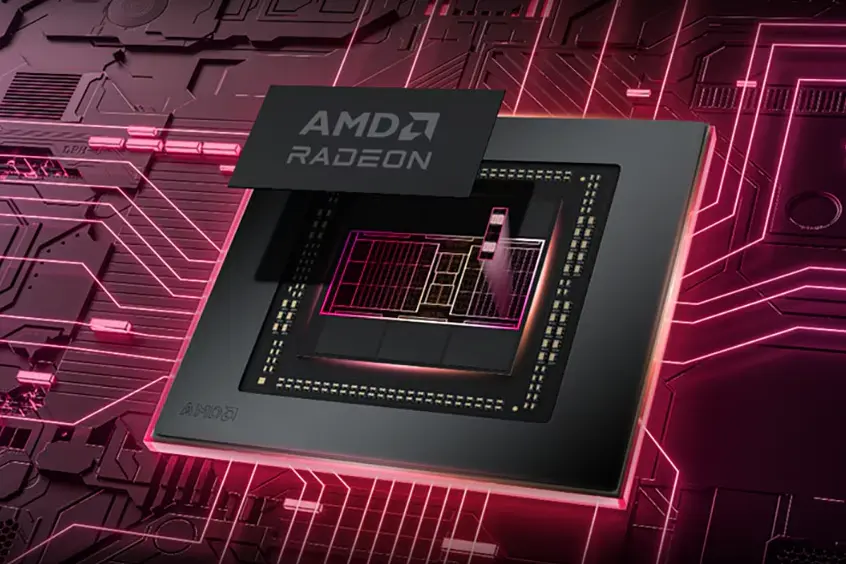
Linux 7.4 introduces a specific optimization for AMD integrated graphics that directly impacts users running local AI workloads. The PerfOpt patch allows these chips to bypass the IOMMU and access system memory directly, which reduces latency for AI inference tasks. This change matters to buyers because it unlocks significant performance gains on entry-level hardware that previously struggled with memory bottlenecks.
Kernel patch bypasses IOMMU to speed up Llama.cpp on Ryzen AI 5 340
The optimization targets the Linux kernel's interaction with AMD's Radeon integrated GPUs, specifically those built on the Zen 5 architecture with RDNA 3.5 graphics. The patch modifies how the GPU handles graphics translation table (GTT) access, aiming to bring latency closer to that of reserved VRAM. This technical shift is particularly relevant for APUs that do not have dedicated high-speed memory.
- Performance Improvement: Up to 23% increase in Llama.cpp throughput
- Latency Reduction: GTT access latency reduced to within 10% of reserved VRAM
- Code Changes: 341 lines of code added across 8 files
- Affected Hardware: Zen 5 architecture APU with RDNA 3.5 iGPU
Testing shows that the Ryzen AI 9 365 sees up to a 23% increase in Llama.cpp throughput with this update. The gains are most pronounced on entry-level chips like the Ryzen AI 5 340, which demonstrated an improvement of at least 18%. The optimization works by reducing reserved VRAM requirements, allowing the system to allocate more resources to the AI workload.
Flagship APUs such as the Ryzen AI Max+ 395 saw minimal gains of only 2 to 4 percent, as they already possess ample dedicated memory. It remains undetermined whether older architectures like the Ryzen 7040 or the Steam Deck's Van Gogh chip can utilize this feature. The final form of the patch is still pending confirmation for the official kernel release.
When we covered the last Linux Kernel update, several of the same balance and stability themes came up. This latest change confirms that kernel developers are actively refining memory management for modern integrated graphics. Users relying on Linux for local AI inference should monitor the official kernel release for the stable inclusion of these changes.
Discussion
0 comments
Log in to join the thread with a thoughtful take, question, or correction.