
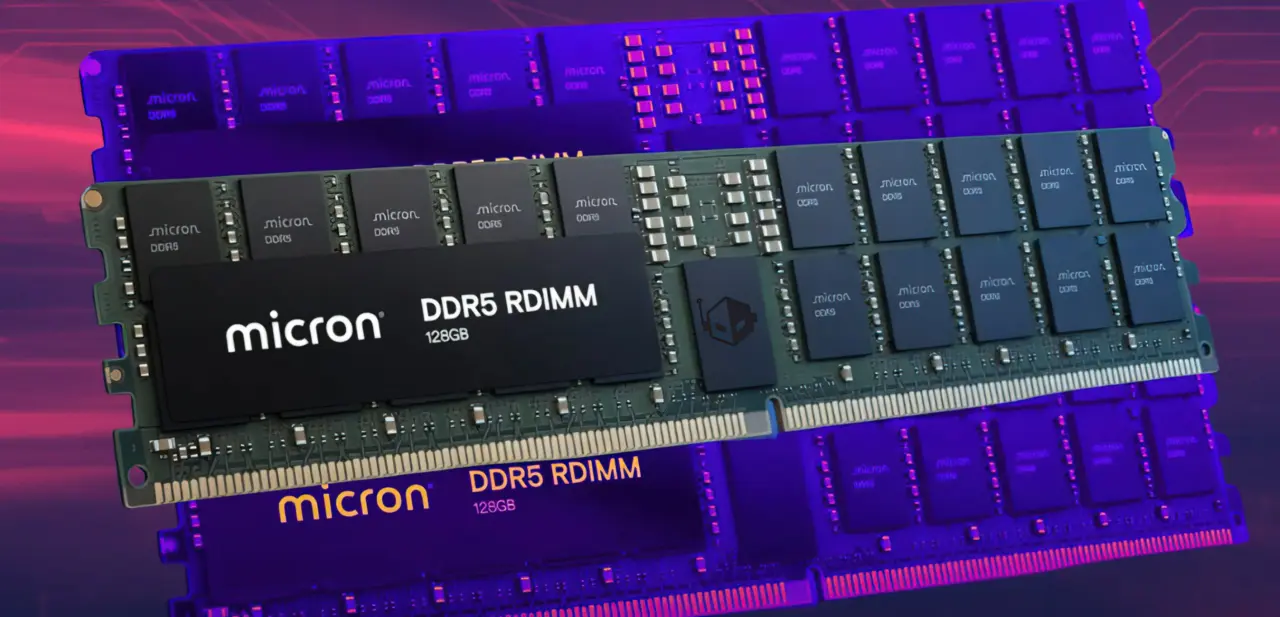
Server memory standards are shifting to meet the intense bandwidth demands of next-generation data centers. JEDEC has outlined a roadmap for Multi-Rank Data Memory Module (MRDIMM) technology that pushes DDR5 speeds far beyond current limits. This architecture allows servers to handle massive data loads without requiring a complete redesign of memory slots. Buyers and system builders can expect significant performance gains for AI and high-performance computing workloads.
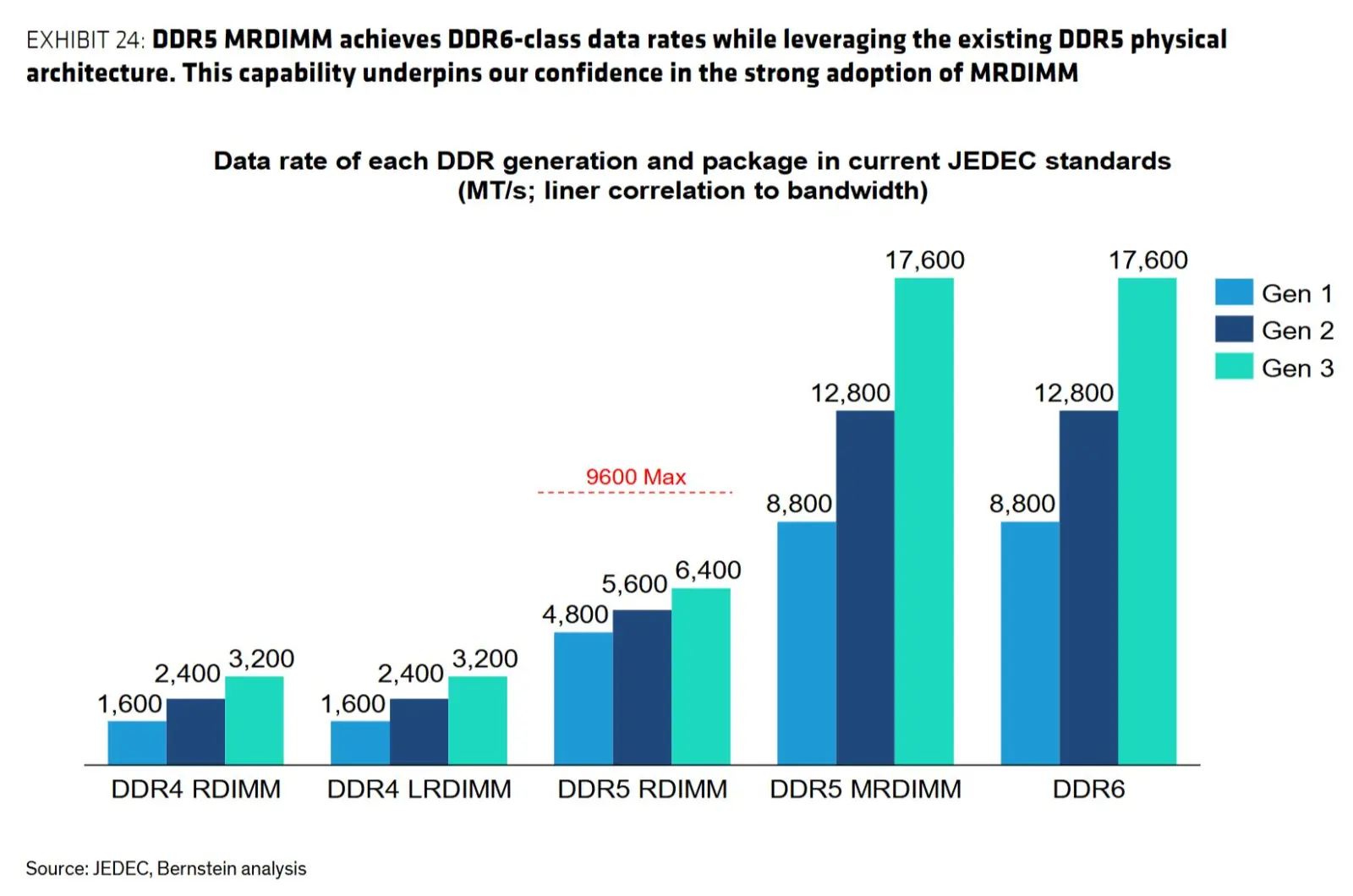
JEDEC outlines MRDIMM speeds up to 17,600 MT/s for Intel and AMD servers
The technology relies on a specific architecture that ranks memory channels to increase throughput. The first generation of MRDIMMs already delivers 8800 MT/s speeds with capacities up to 256 GB. These modules are currently employed by Intel's Xeon 6 lineup, codenamed Granite Rapids. This initial release establishes the baseline for the new memory standard in the market.
Spec comparison
| Spec | Gen 1 | Gen 2 | Gen 3 |
|---|---|---|---|
| Speed | 8,800 MT/s | 12,800 MT/s | 17,600 MT/s |
| Capacity | 256 GB | ||
| Target CPUs | Intel Xeon 6 | Intel Xeon 7, AMD EPYC |
JEDEC plans to accelerate speeds in subsequent generations to keep pace with CPU advancements. The second generation of MRDIMMs will target 12,800 MT/s speeds, offering double the bandwidth of standard DDR5. This tier supports Intel's next-gen Diamond Rapids (Xeon 7) and AMD's EPYC Venice CPUs based on the Zen 6 architecture. The third generation aims for speeds up to 17,600 MT/s around 2030.
Standard DDR5 RDIMMs currently peak at around 6400 MT/s, making the MRDIMM roadmap a substantial leap. Gen 1 MRDIMMs already provide a 37.5% boost in bandwidth over these standard modules. The architecture serves as a cost-effective alternative to DDR6 by avoiding pin-change requirements for motherboard manufacturers.
We've been tracking MRDIMM closely — see our earlier coverage on JEDEC Announces DDR5 MRDIMM Gen 2. JEDEC also notes that DDR6 MRDIMMs will likely be developed, with an expected timeline of 2028 to 2029. This roadmap ensures that DDR5-based memory can remain relevant through the end of the decade.
MRDIMM provides a clear path for upgrading server memory without hardware redesigns. The technology bridges the gap between current DDR5 limits and future DDR6 requirements. System integrators can plan for 8800 MT/s modules now and scale to 17,600 MT/s by 2030.
Discussion
0 comments
Log in to join the thread with a thoughtful take, question, or correction.