
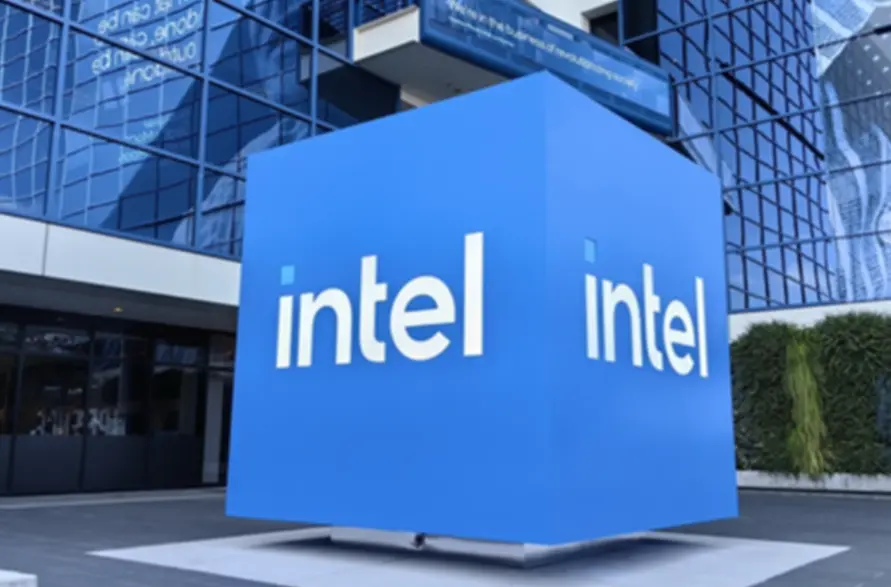
Intel's financial results for the second quarter of 2024 reveal a decisive shift in how consumers are buying computers. The company reported total revenue of $16.13 billion, which represents a 25 percent increase from the same period last year. This growth rate marks the strongest performance the company has seen in nearly 15 years. Buyers should note that this surge is not driven by traditional desktop or laptop sales, but by a specific category of machine.
AI PCs now dominate Intel client revenue after 26% quarterly growth
The primary driver of this financial success is the AI PC segment. Intel's chief financial officer highlighted that revenue from AI PC business grew by 26 percent compared to the previous quarter. This rapid expansion has allowed AI PCs to capture a dominant share of the company's overall client business. These machines now account for two-thirds of all revenue generated by Intel's client computing group. This metric signals that the market has moved past the initial hype phase and is actively adopting AI-enabled hardware.
Beyond client sales, Intel is simultaneously scaling its manufacturing capabilities to support future demand. The company announced a 5 billion euro investment in its Leixlip, Ireland fabrication plant. This facility will expand production capacity for Xeon 6 processors and next-generation Xeon products built on the Intel 3 process node. The investment also supports the foundry business, which has recently entered high-volume production using High-NA EUV lithography technology on the Intel 18A process node.
These developments illustrate a dual strategy of capitalizing on current AI PC demand while securing long-term manufacturing leadership. The financial data confirms that AI PCs are no longer a niche experiment but a core revenue pillar for Intel. The company is backing this market shift with significant infrastructure upgrades to ensure supply chain stability. Readers tracking the PC market should watch how this revenue split evolves in subsequent quarters as AI features become standard across more device tiers.

Discussion
0 comments
Log in to join the thread with a thoughtful take, question, or correction.