
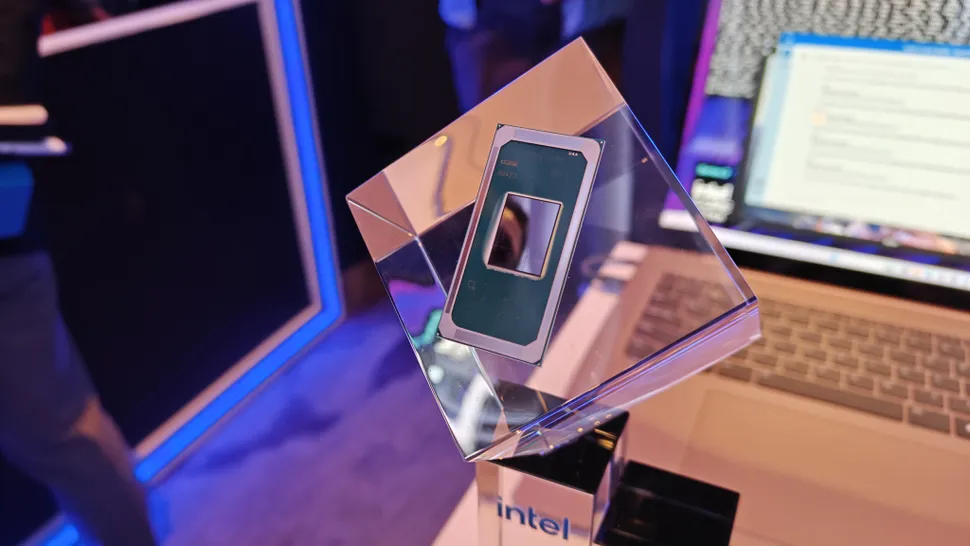
Intel's enhanced 18A-P manufacturing process has entered risk production, delivering a 9% performance boost or 18% power savings at the same voltage. The update matters for future CPUs and chips that rely on Intel's most advanced node.
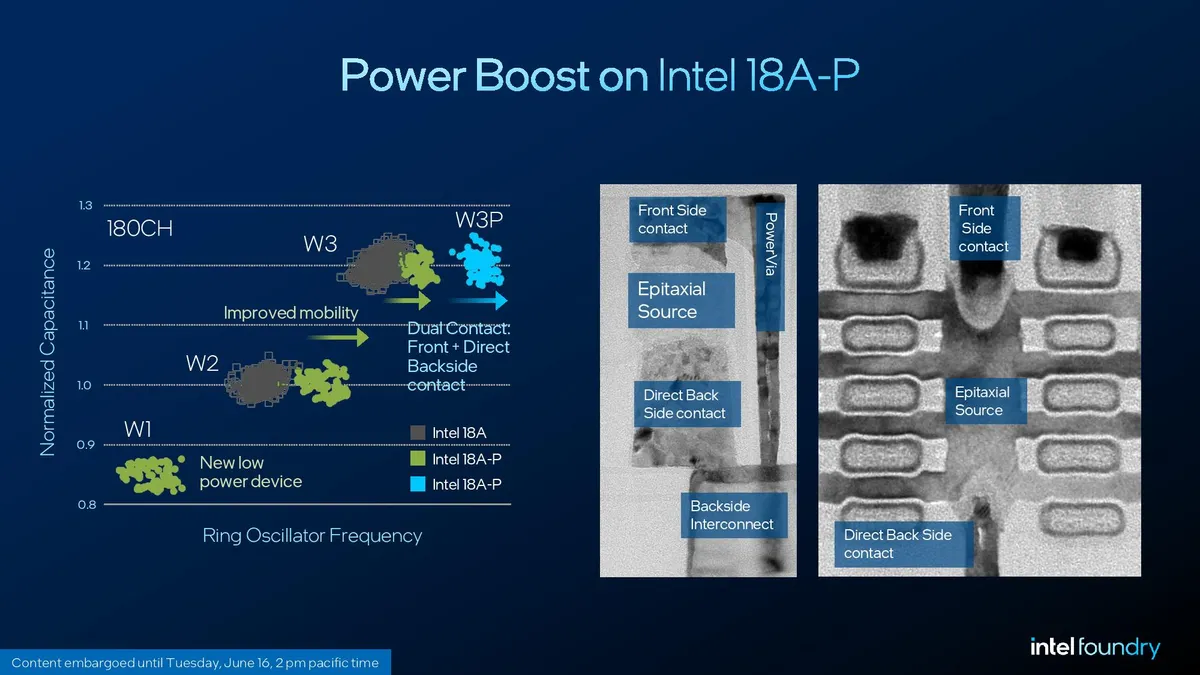
New transistor designs boost efficiency
The 18A-P process builds on the baseline 18A node already used in Panther Lake and Xeon 6+ processors. It introduces new transistor designs labeled W1, W1.5, and W3P, along with an ultra-low voltage threshold option called ULVTLL.
Specifications
- Performance improvement at iso-power: 9%
- Power reduction at iso-performance: 18%
- Thermal resistance improvement: 20-40%
- Via resistance improvement: 10-30%
At 0.75V, 18A-P achieves 9% higher frequency or cuts power consumption by 18% at iso-performance. Thermal resistance improves by 20-40%, while via resistance drops by 10-30%.
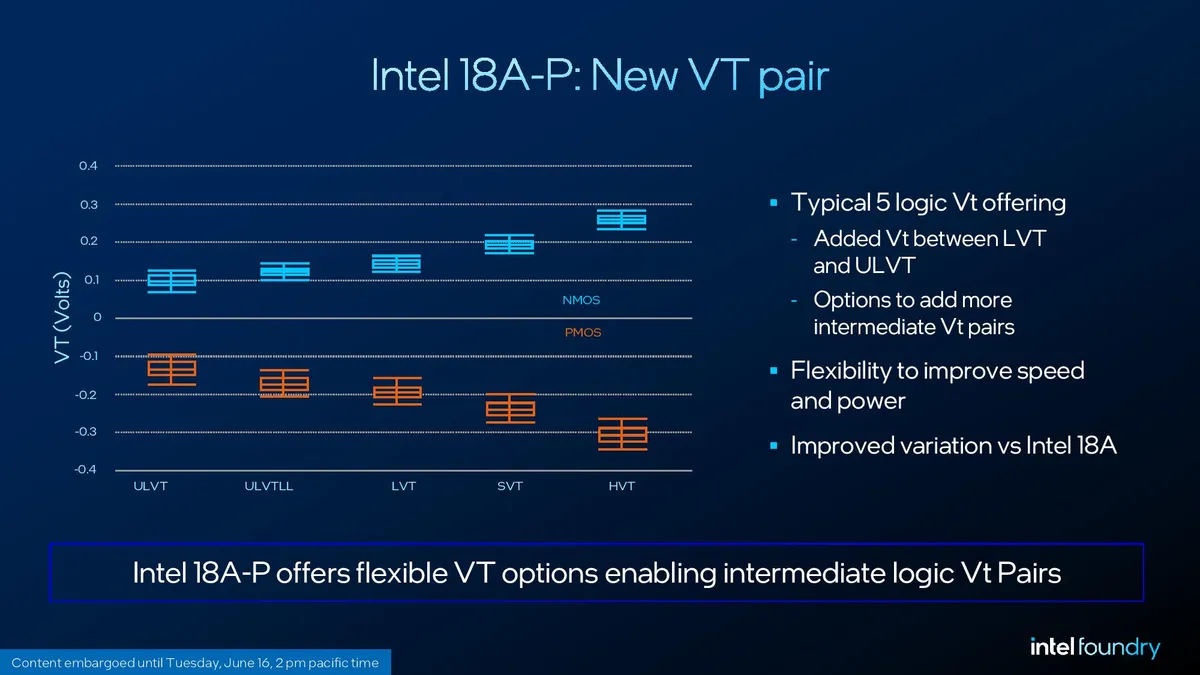
The new ULVTLL voltage threshold adds design flexibility for low-power applications. Intel has not disclosed pricing or availability timelines for 18A-P products.


Discussion
0 comments
Log in to join the thread with a thoughtful take, question, or correction.