
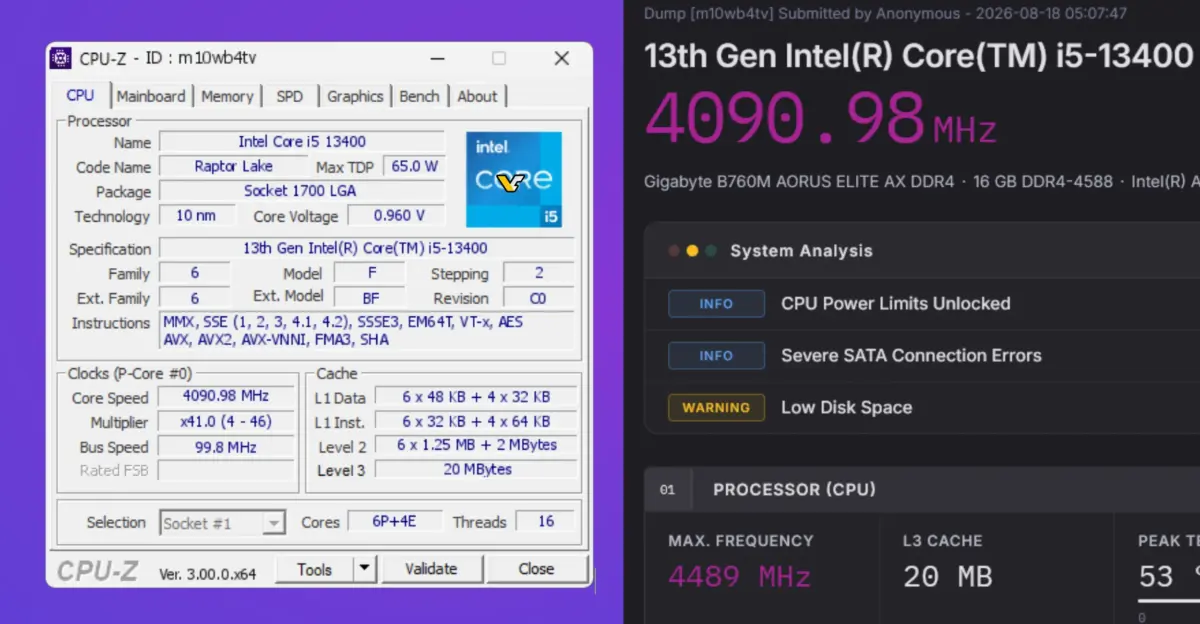
CPUID released CPU-Z 3.01, the first version in the 3.x series, to address the growing complexity of modern system diagnostics. Users who rely on this utility for hardware verification now have access to a more robust validation engine that goes beyond basic identification. This update matters because it introduces automated health checks that help identify potential system instability before it causes data loss or hardware damage.
New validation engine checks system stability and driver status
The core of this release is the new Validator V3, which combines traditional hardware validation with comprehensive system health checks. This tool runs on both 32-bit and 64-bit versions of Windows, requiring at least a patched Windows 7 installation to function. It offers a single interface for users to check system integrity without needing to switch between different diagnostic tools.
Validator V3 performs over 100 detection points to analyze the system in less than 10 seconds. These checks cover critical areas such as driver status, overheating risks, and the presence of bloatware. The update also includes a new XOC mode for overclocking that calculates input and effective frequencies to account for modern CPU clock behavior, ensuring accurate reporting for enthusiasts pushing their hardware limits.
An Advanced Validation mode is currently in development to provide error detection for CPU, RAM, and GPU components. While this feature is not yet available, CPUID has confirmed that Validator V2 submissions will remain accepted until October 20, 2026. After that date, the database will become read-only, marking a clear transition to the new validation standard for long-term users.
This release establishes a new baseline for system verification tools by integrating health monitoring with hardware identification. Users can expect more accurate diagnostics for modern processors and a clearer path for validating system stability. The continued support for older Windows versions ensures that legacy systems remain compatible with the latest security and diagnostic standards.


Discussion
0 comments
Log in to join the thread with a thoughtful take, question, or correction.