
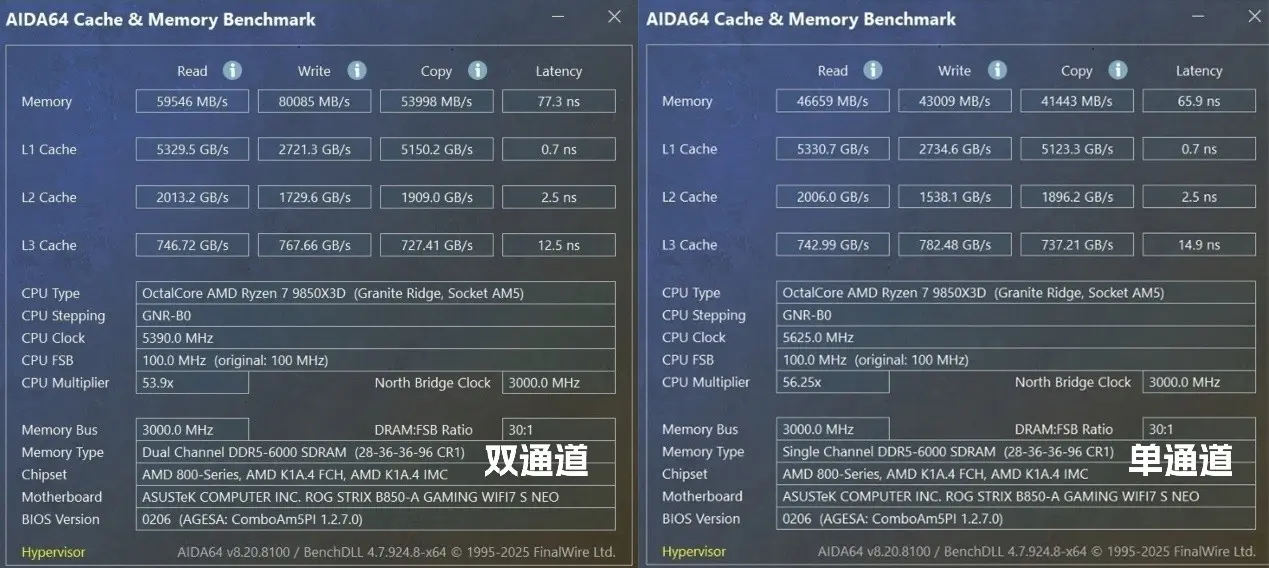
Switching from single-channel to dual-channel memory does not significantly boost average frame rates in modern games, but it noticeably smooths out stuttering. Our editorial desk tested this tradeoff on a high-end platform to see if the upgrade justifies the effort for typical gamers. The results show that while raw speed increases, the visual impact on average FPS is minimal, though 1% low FPS gains are substantial. This distinction matters because players who prioritize consistent frame delivery over peak averages will see a tangible difference in gameplay feel.
Dual-channel memory increases bandwidth by 28% while stabilizing frame delivery
We built the test rig using an AMD R7 9850X3D CPU paired with an RTX 5070 GPU to isolate memory bandwidth as the variable. All benchmarks ran at 2560 x 1440 resolution to ensure the workload was balanced between the processor and graphics card. This configuration allows us to measure how memory architecture affects performance without the GPU becoming the sole bottleneck. The platform choice reflects current mid-to-high-end standards where memory speed and configuration play a critical role in system responsiveness.
- Test Platform CPU: AMD R7 9850X3D
- Test Platform GPU: RTX 5070
- Memory Bandwidth (Single Channel): 46.6GB/s
- Memory Bandwidth (Dual Channel): 59.5GB/s
- Bandwidth Increase: 28%
The hardware tests revealed a 28% increase in memory bandwidth when moving from single to dual-channel configuration. Single-channel DDR5 6000MHz provided 46.6GB/s of read bandwidth, while dual-channel doubled the sticks to reach 59.5GB/s. We evaluated this increase across four demanding titles: Cyberpunk 2077, CS2, Shadow of the Tomb Raider, and Forza Horizon 5. These games represent a mix of open-world simulation, competitive shooting, and racing genres to test different memory access patterns.
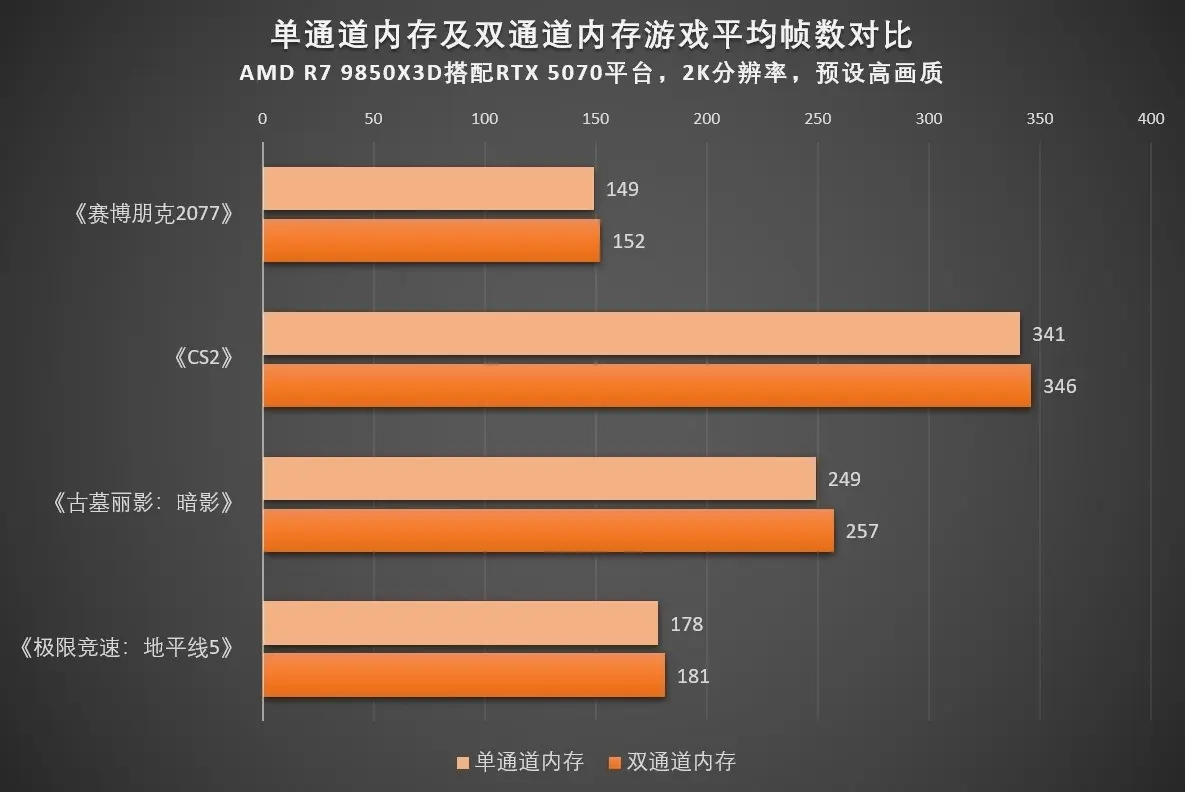
Average FPS gains across these titles remained small, hovering between 2% and 3% regardless of the game. However, the 1% low FPS metric saw improvements exceeding 10%, which directly reduces micro-stutters during complex scenes. This data suggests that dual-channel memory stabilizes frame times rather than pushing maximum frame rates higher. Integrated graphics users will benefit even more from this setup since their GPUs rely entirely on system RAM for video processing.
We looked at Lenovo Lecoo Fighter 7000X Uses Single-Channel on a related angle earlier this month. That previous analysis highlighted how single-channel configurations can halve memory bandwidth, creating a stark contrast to the dual-channel results we see here. The evidence indicates that single-channel memory is sufficient for casual gaming where average FPS matters more than consistency. Competitive FPS players, however, should prioritize dual-channel kits to maximize smoothness and reduce input lag variance.
Dual-channel memory delivers a clear advantage in frame consistency rather than raw speed increases. The 10%+ gain in 1% low FPS provides a smoother experience that is more noticeable during gameplay than the marginal average FPS bump. Users building systems for competitive gaming or those using integrated graphics should install matched memory pairs to ensure optimal performance. Single-channel setups remain viable for basic tasks and casual play where budget constraints take priority over peak smoothness.


Discussion
0 comments
Log in to join the thread with a thoughtful take, question, or correction.