
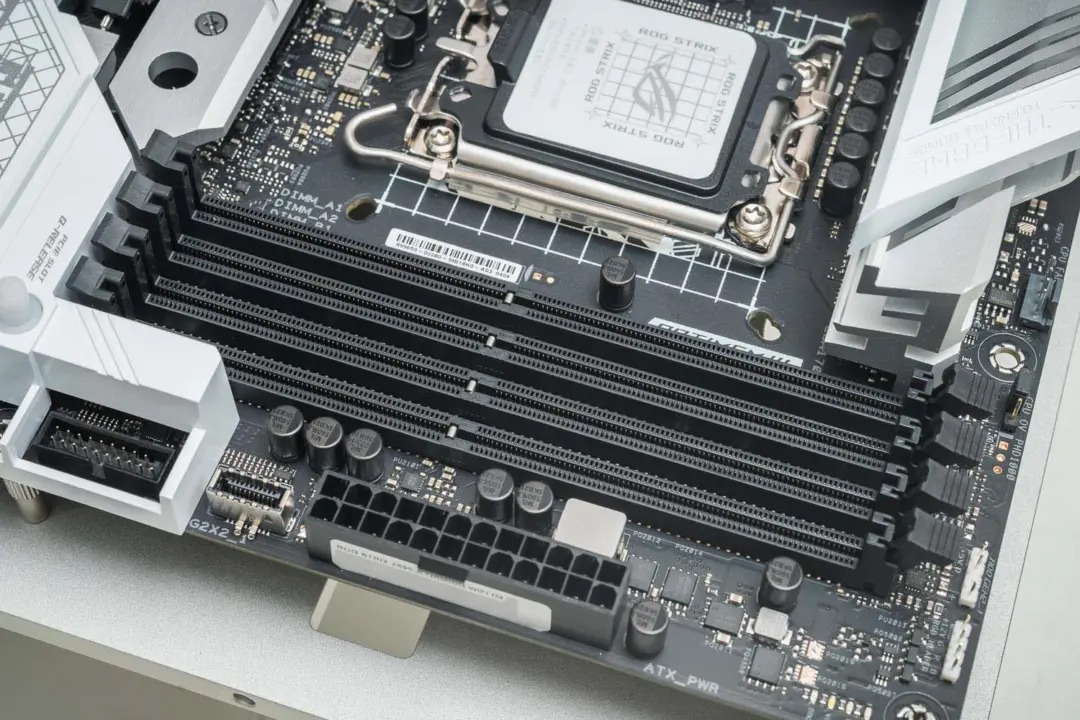
There will be a major change in the landscape of memory as industry analysis suggests DDR6 would shift to 192-bit wider interface. This matters a great deal as it will result in almost quadrupled bandwidth in the next-gen desktop systems compared to what we have today. For our readers who are in for high-end computer or HEC this will be a massive change in the way data is exchanged between CPU and RAM.
Industry analysis suggests next-gen RAM will double or quadruple current speeds
In Micron's suggested roadmap, DDR6 is expected to leave behind the 128-bit width of DDR5. In the new architecture, 24-bit sub-channels will enable the 192-bit wider architecture. This new architecture will need a new form factor for modules with most likely CAMM2 being the one for this architecture.
Let us take a look at some theoretical performance. With a 192-bit width, the data throughput is huge. In the 17600 MT/s speed, it will have 422.4GB/s bandwidth, which is 4.13x greater than DDR5-6400. Even at the base speed of 8800 MT/s it will have 211.2GB/s of data, which is 2x greater than DDR5-6400.
It is still in the area of uncertainty how signals will be handled in the current spec. There have been some rumors about the possible use of PAM4 signaling to handle the high data rates, but this is not confirmed by JEDEC yet. The current spec for sub-channels, interface width and signaling is all theoretical analysis based on Micron's roadmap and calculations by 3DCenter.
For the consumers, DDR6 is still years away. The industry predicts its release for consumer desktops processor will be in 2030 or so. This gives plenty of time to manufacturers to further optimize CAMM2 form factor and signal integrity before a wider adoption. To keep you posted we have already covered Colorful iGame Shadow II DDR5 6000, which is our base for this current generation before the major upgrade.

Comments (0)