
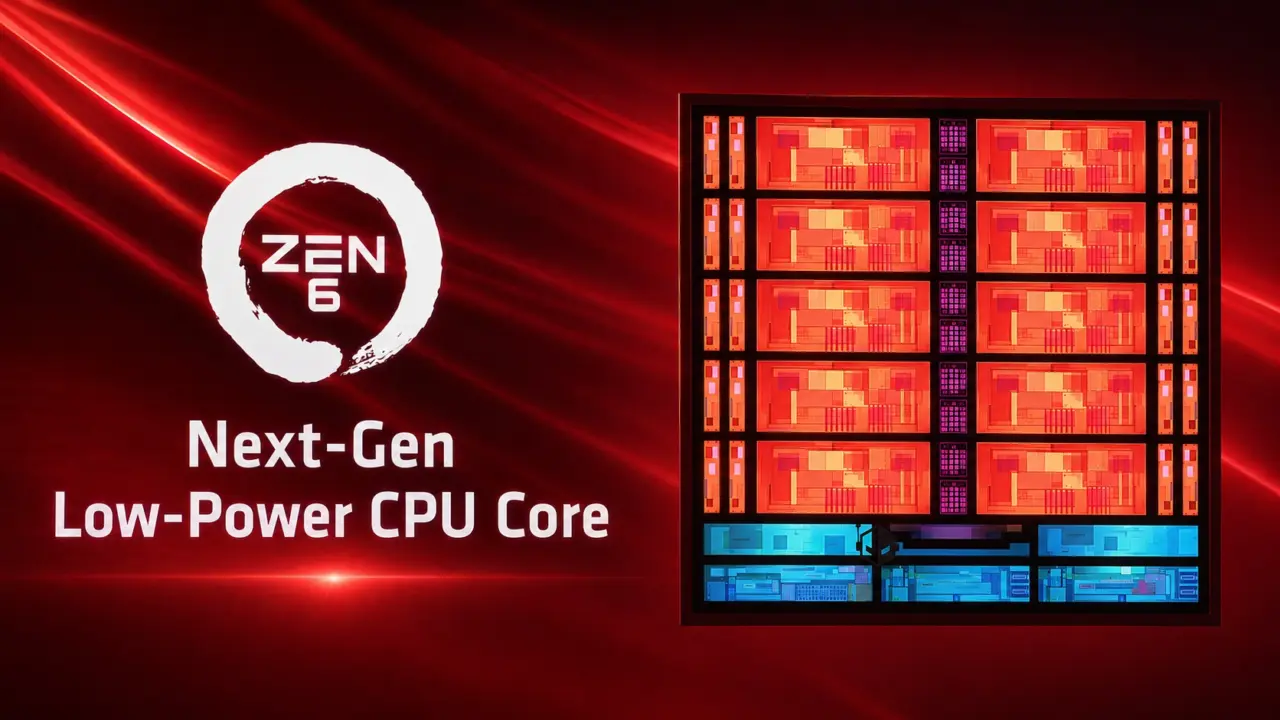
AMD is engineering a distinct "Low Power" core variant for its upcoming Zen 6 processor family, a move that signals a shift toward specialized efficiency in client computing. This architectural split allows the company to optimize background tasks and idle states without compromising the high-performance demands of active workloads. We see this as a practical response to the growing need for longer battery life in laptops and handheld gaming devices. The change matters because it promises better thermal management and sustained performance in thin-and-light form factors.
Hybrid architecture blends five Zen generations for better efficiency
The new core, officially referred to as Zen 6 Low Power (LP), operates as a hybrid architecture that blends elements from four previous Zen generations. Leaked identifiers and source analysis confirm that this design targets the Medusa APU family, which is expected to launch around CES 2027. This specific core type joins the standard Zen 6 and Zen 6C designs, giving AMD a third distinct option for its next-generation client chips. The integration of older microarchitectural components suggests a strategy focused on stability and proven efficiency rather than radical reinvention.
Zen 6 Low Power Core Specifications
- ISA: Zen 6
- Microarchitecture: Zen 5
- FPU Width: 256b
- L2 Cache: 512 KB
- L3 Cache: 1 MB per core
Technical details reveal a unique combination of instruction sets and cache structures within the Zen 6 LP core. The processor uses the Zen 6 Instruction Set Architecture (ISA) but runs on the Zen 5 microarchitecture. It incorporates a 256-bit Floating Point Unit (FPU) derived from Zen 4, paired with 512 KB of L2 cache from Zen 3. Each core also includes 1 MB of L3 cache, a configuration traced back to the Zen 2 and Mendocino designs. Linux kernel patches have already identified this core through the CPU ID 80000026h.EBX[31:28]=2.
Performance expectations for the Zen 6 LP core suggest it will match or exceed the efficiency and output of the Zen 5C design. AMD states that the primary goal is minimizing power consumption during background or idle workloads. This focus on efficiency implies that the core will handle system tasks and low-intensity applications with minimal energy draw. The exact nature of the performance gains remains unclear, as sources do not specify if the improvements apply to raw speed, energy efficiency, or both. We expect this core to handle background processes more effectively than previous generations.
We looked at AMD Linux Kernel Patch Adds Low power support earlier while tracking these architectural leaks. The Zen 6 LP core represents a targeted approach to client computing, balancing performance and power through a collage of proven technologies. This design choice aims to extend battery life and reduce heat in portable devices without sacrificing the capabilities required for modern computing tasks.

Discussion
0 comments
Log in to join the thread with a thoughtful take, question, or correction.