

Linux kernel patches have quietly expanded support for AMD's upcoming Zen 6 architecture, signaling that the company is preparing its software stack for a wider range of future processors. The changes go beyond initial expectations by adding recognition codes for 32 additional CPU models to the kernel's identification list.
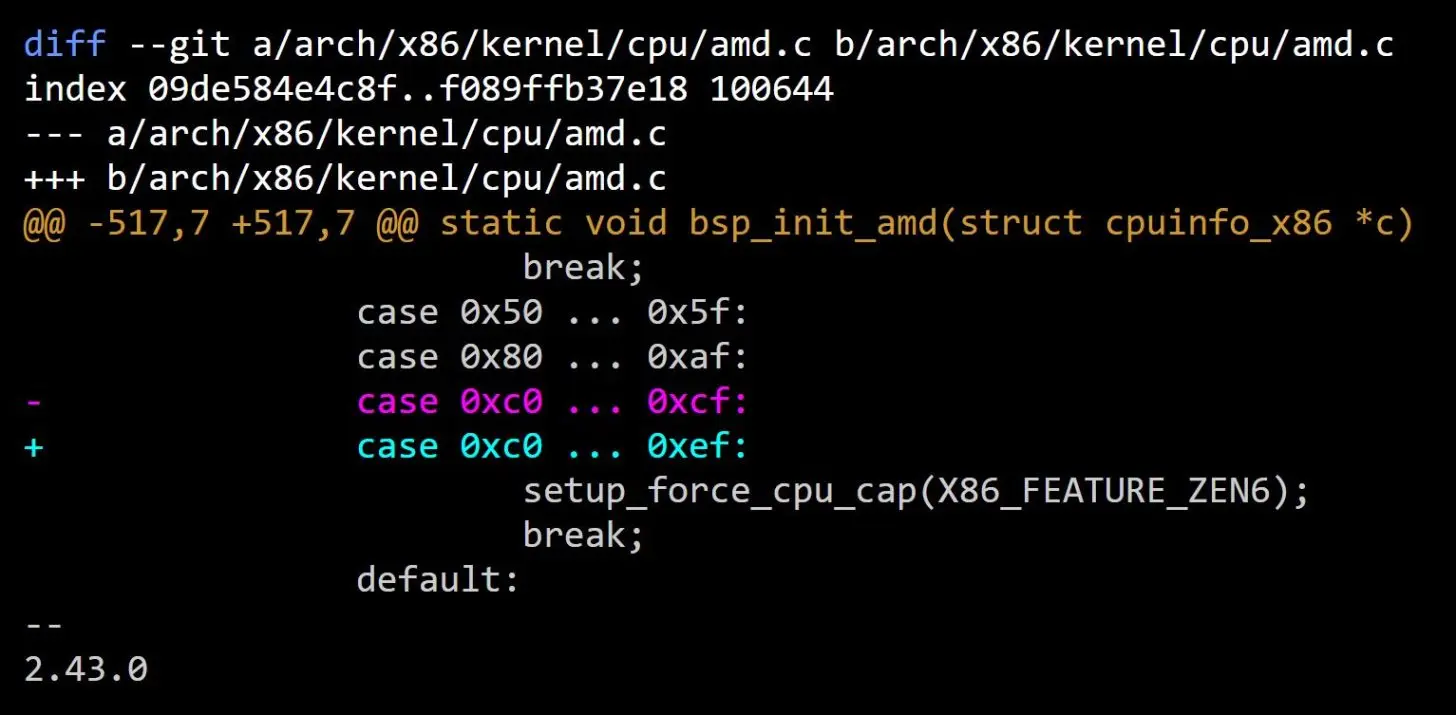
Kernel patches reveal expanded CPU model range and updated driver support for the upcoming architecture
The Linux kernel now identifies Zen 6 CPUs using model numbers ranging from 192 (0xc0) to 239 (0xef). This expansion increases the supported range significantly, as previous patches only covered models up to 207 (0xcf). The updates also include driver adjustments for the Power Management Controller (PMC), ensuring the operating system can properly manage power states for the new architecture.
Beyond basic identification, the kernel development work points to deeper architectural support. New instruction sets are being integrated into the Linux codebase, with specific enhancements for AVX-512 operations indicated in recent commits. These technical additions suggest that AMD is finalizing the software interface required for Zen 6 to function efficiently across different computing environments.
The expansion of model numbers does not guarantee that every identified SKU will reach consumers. Kernel developers note that some entries may be reserved for unreleased or specialized processors, meaning the actual market lineup could differ from the technical identifiers currently visible in the source code.
Industry observers expect Zen 6 to launch in late 2026 or early 2027, aligning with AMD's typical multi-year release cycle. The recent kernel updates serve as an early indicator that hardware validation and driver development are well underway ahead of the official product announcement.


Discussion
0 comments
Log in to join the thread with a thoughtful take, question, or correction.