
An open-source software project named Low_Latency_Layer now enables NVIDIA Reflex 2 and AMD Anti-Lag 2 technologies on Linux systems. This development allows gamers using AMD and Intel graphics cards to access latency reduction features that were previously exclusive to Windows. The tool functions as a Vulkan layer that intercepts the VK_NV_low_latency2 extension to deliver these benefits.
New open-source Vulkan layer enables low-latency tech on AMD and Intel GPUs
The project was created by developer Nicolas James to address stability and performance issues found in Mesa's native implementation of Anti-Lag 2. Mesa's previous efforts faced stability concerns and were disabled by default, leaving a gap for Linux users seeking competitive gaming performance. Low_Latency_Layer aims to close this gap by providing a reliable alternative for non-NVIDIA hardware.
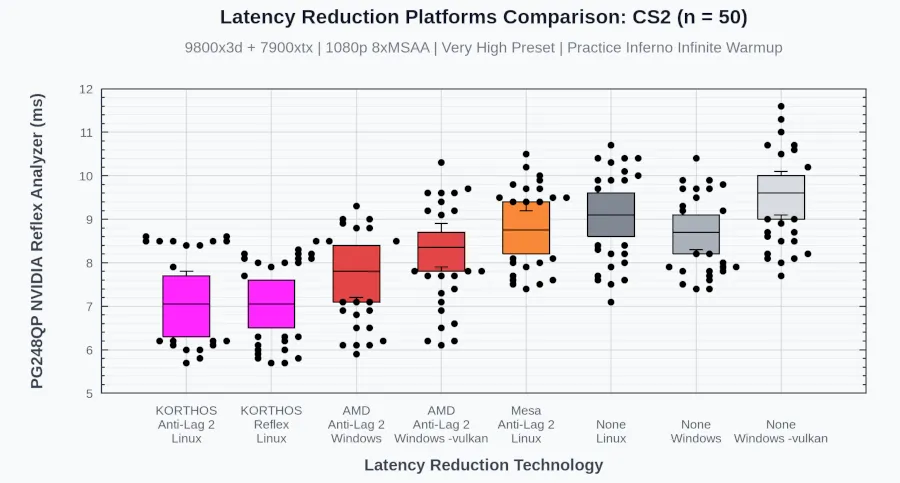
Testing of the layer included a variety of popular titles such as Counter-Strike 2, Cyberpunk 2077, Marvel Rivals, Overwatch 2, The Finals, and Resident Evil Requiem. According to data from the project, the latency reduction performance is similar to or on par with proprietary Windows implementations running on the same hardware. This suggests that Linux gamers can achieve comparable responsiveness to their Windows counterparts without switching operating systems.
The release of Low_Latency_Layer marks a significant step for the Linux gaming ecosystem, particularly for users of AMD and Intel GPUs who previously lacked access to these specific low-latency technologies. By bridging the gap between Linux and Windows performance capabilities, the project addresses a long-standing demand for parity in competitive gaming environments.

Discussion
0 comments
Log in to join the thread with a thoughtful take, question, or correction.