
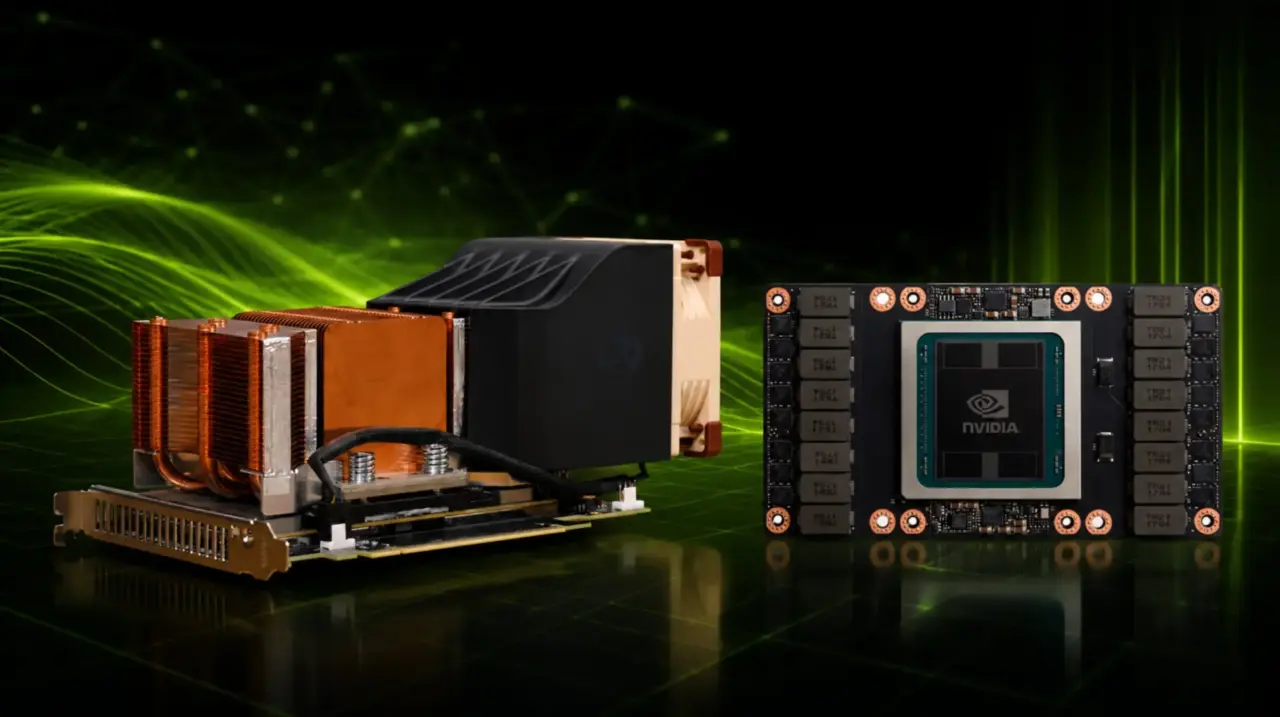
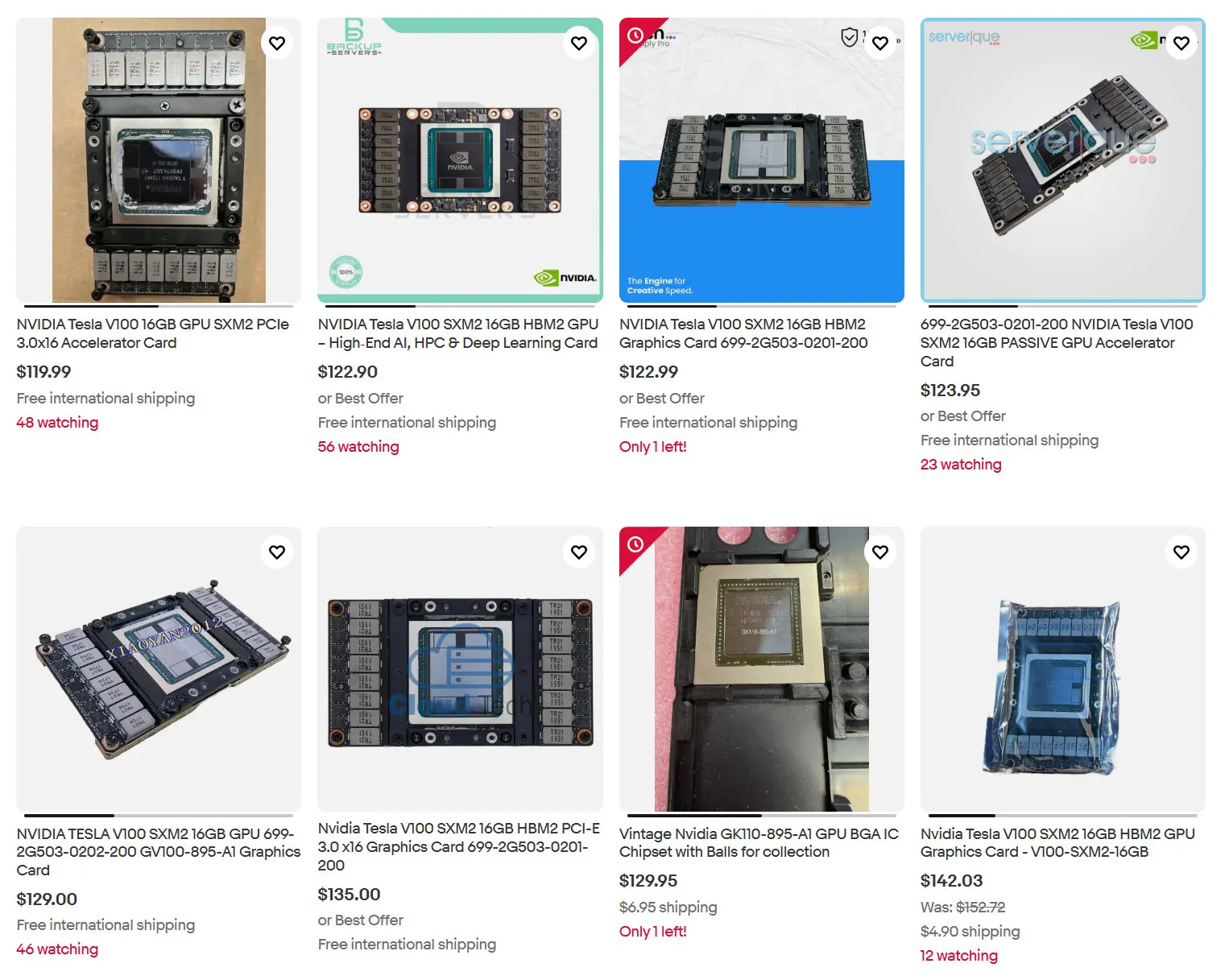
An eight-year-old NVIDIA Tesla V100 graphics card is generating attention for its ability to outperform modern consumer GPUs in artificial intelligence workloads. The data center card, originally designed for server environments, is now available on the secondary market for approximately 100 USD. This low price point has prompted enthusiasts to test its capabilities against contemporary hardware.
Eight-year-old data center card now available on secondary market for approximately 100 USD
The specific unit tested utilizes the SXM2 form factor and features the Volta architecture with Tensor Cores. It contains 5120 CUDA cores and 640 Tensor Cores paired with 16 GB of HBM2 memory. The memory interface delivers a bandwidth of 898 GB/s, while the chip operates with a thermal design power of 250W. The tested variant is a 16 GB model, though 32 GB versions exist and sell for around 400 to 500 USD.
Benchmark results from Hardware Haven show the V100 achieving roughly 130 tokens per second on the GPT-oss 20b model. This performance significantly exceeds the Radeon RX 7800 XT, which managed approximately 90 tokens per second in the same test. The V100 also demonstrated a 42 percent speed advantage over the GeForce RTX 3060 12 GB in token generation for the Gemma4:e4b model.
Power efficiency remains a strong point for the older architecture. The V100 proved 12 percent more power efficient than the RTX 3060 in token-per-watt measurements. When restricted to a 100W power limit, the V100 maintained a 41 percent lead in efficiency over the newer Ampere-based card. These results highlight the card's continued relevance for specific AI tasks despite its age.
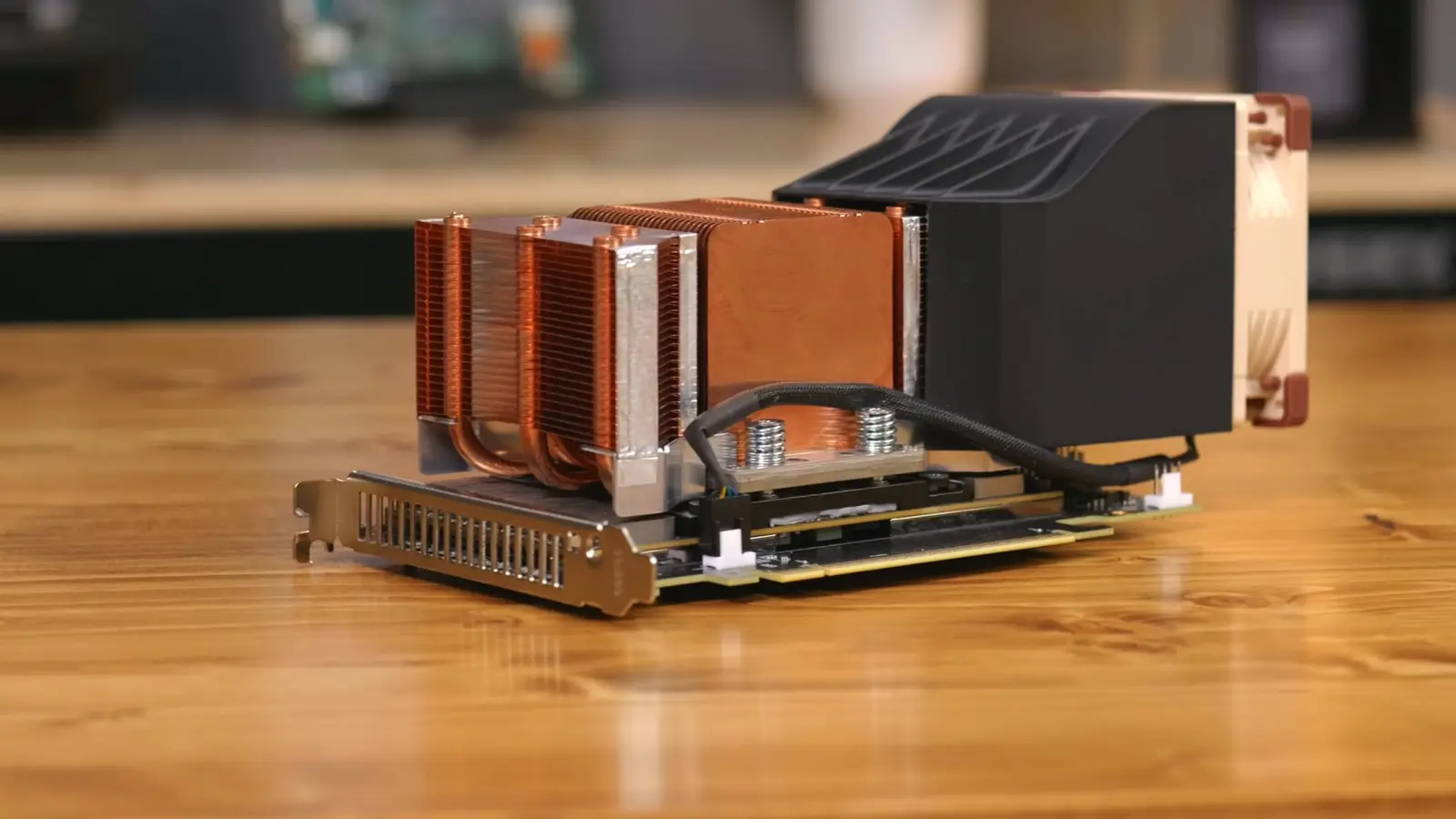
Implementing the V100 in a standard personal computer requires significant modification. The card lacks a heatsink suitable for 24/7 operation in typical PC cases. Users must construct custom cooling solutions, such as 3D printed ducts paired with aftermarket fans, to prevent overheating. The total cost for the card and necessary cooling modifications exceeds 200 USD.
Discussion
0 comments
Log in to join the thread with a thoughtful take, question, or correction.