
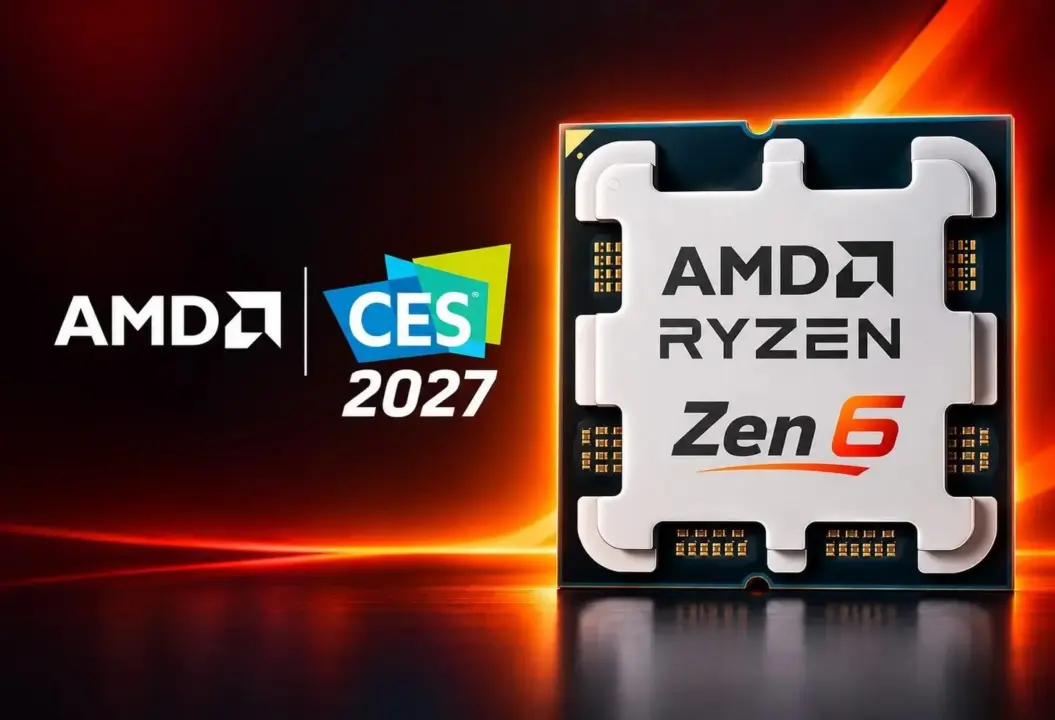
AMD's next-generation Zen 6 desktop processors (Olympic Ridge) are set to be announced at CES 2027. This is significant as the new architecture is said to deliver a major boost in core density, especially for high-end desktop processors. For users already on Zen 4 or Zen 5 motherboards, the upgrade process could potentially be plug-and-play, offering a cost-effective upgrade path and minimizing e-waste. We'll certainly hear more about this as AMD aims to communicate this to gamers and content creators who value multi-threading capabilities.
AMD confirms Zen 6 desktop CPUs will keep current socket support while boosting core counts to 12
At the heart of the news is the upcoming Zen 6 architecture, which AMD CEO Jack Huynh hinted at as 'something special' in recent communication. According to Huynh, they're reimagining what's possible and going beyond limits for the next big event. For desktops, a new 12-core CCD (compared to 8-core in the previous Zen 5) is part of the picture. This indicates a shift towards raw parallel processing power for heavy-duty tasks.
Zen 6 Olympic Ridge Key Specifications
- Architecture: Zen 6
- Core Configuration: 12-core CCD (up from 8-core)
- Socket Compatibility: Same platform as Zen 5 (Ryzen 9000)
- Mobile Variant: Medusa Point (Zen 6 + Zen 6c)
Another key aspect is the Olympic Ridge platform will emphasize compatibility. AMD intends to maintain the same socket as their current Ryzen 9000 series. This enables a straightforward CPU upgrade by simply replacing the CPU itself.
So, existing Zen 4 & Zen 5 motherboards should be compatible with the new Zen 6 CPUs without needing a new platform. A mobile version of this (Medusa Point) is also in the works. Medusa Point will combine Zen 6 & Zen 6c cores for laptops and mobile applications.
We're monitoring some other details which may or may not be unveiled at CES 2027. It's rumored AMD may showcase RDNA 5 GPU architecture, but we might see the actual launch slip to 2028. There's also some question about when Zen 6 X3D CPUs will be launched.
Typically, AMD releases the gaming-oriented X3D CPUs later in the cycle. You can recall our coverage about Hollow AMD Ryzen 9 9900X3D CPU Found in Japan to understand AMD's intricate product segmentation and supply chain oddities.
So, to summarize the confirmed facts for this cycle, we'll have Zen 6 architecture, we'll see an increase to 12-core CCD. Socket compatibility will continue. And we'll have the mobile Medusa Point launch alongside the desktop.
GPU or X3D details are speculation at the moment. However, we're seeing the CPU roadmap come into focus. Make sure you tune in to the official CES 2027 keynote for the full roadmap and price points.

Twelve cores per CCD is a massive density jump from the eight core design. This means we will finally have true 24 core desktop chips without needing dual CCDs that increase latency.