
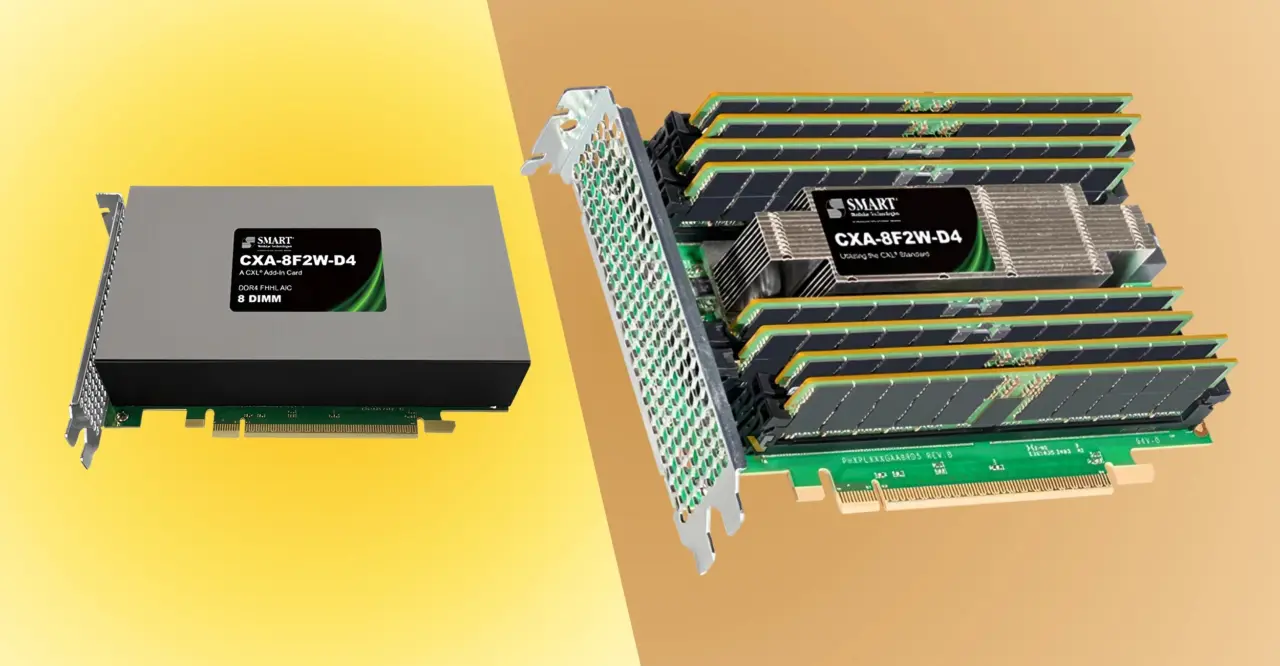
The upgrade process for server systems becomes more eco-friendly and cost-effective with the ability to repurpose aging DDR4 RAM sticks on newer DDR5 platforms. This evolution in compatibility is significant as it eliminates the hurdle of retiring working legacy RAM in the transition to faster hardware. For users managing extensive server estates, it provides an instant advantage in terms of optimizing their existing stock.
CXL 2.0 adapter bridges DDR4 and DDR5 ecosystems for cost-efficient server upgrades
The innovative component at hand is a generic, industry-compatible CXL 2.0 memory expansion card. It fits into conventional server slots and leverages the Compute Express Link to act as a translator between DDR4 and DDR5 landscapes. This hardware innovation lets systems recognize legacy memory as if they're dealing with native DDR5 memory.
This card provides the capability to repurpose up to eight DDR4 memory sticks in the DDR5 server environment. This setup offers an impressive scale for expanding memory capacities without necessarily purchasing new equipment. The technology tackles the memory compatibility problem by enabling signal conversion between the two distinct RAM protocols through CXL.
The focus here is on efficiency and sustainability over performance. It offers a route to maximize the life of existing DDR4 assets in the transition towards newer servers. It's a real-world example of a solution for memory updates in a hybrid data center environment.
We followed DDR5 Memory Prices Surge 607% in Germany as part of our coverage of these industry introductions. This price swing is a reminder of the economic value in re-utilizing DDR4 memory modules instead of investing in new DDR5 memory kits. The CXL 2.0 card presents a viable option to cushion the blow from soaring memory prices.



This is exactly what I needed. My current DDR4 stock is sitting idle and DDR5 prices are insane right now. 😬
Does the kernel handle the CXL 2.0 translation transparently or do we need specific driver patches for the latency overhead?
It acts as a bridge so the OS sees standard memory. You still pay a penalty for the protocol conversion though.
At least someone is finally thinking about cost over raw speed in server builds. 💀