
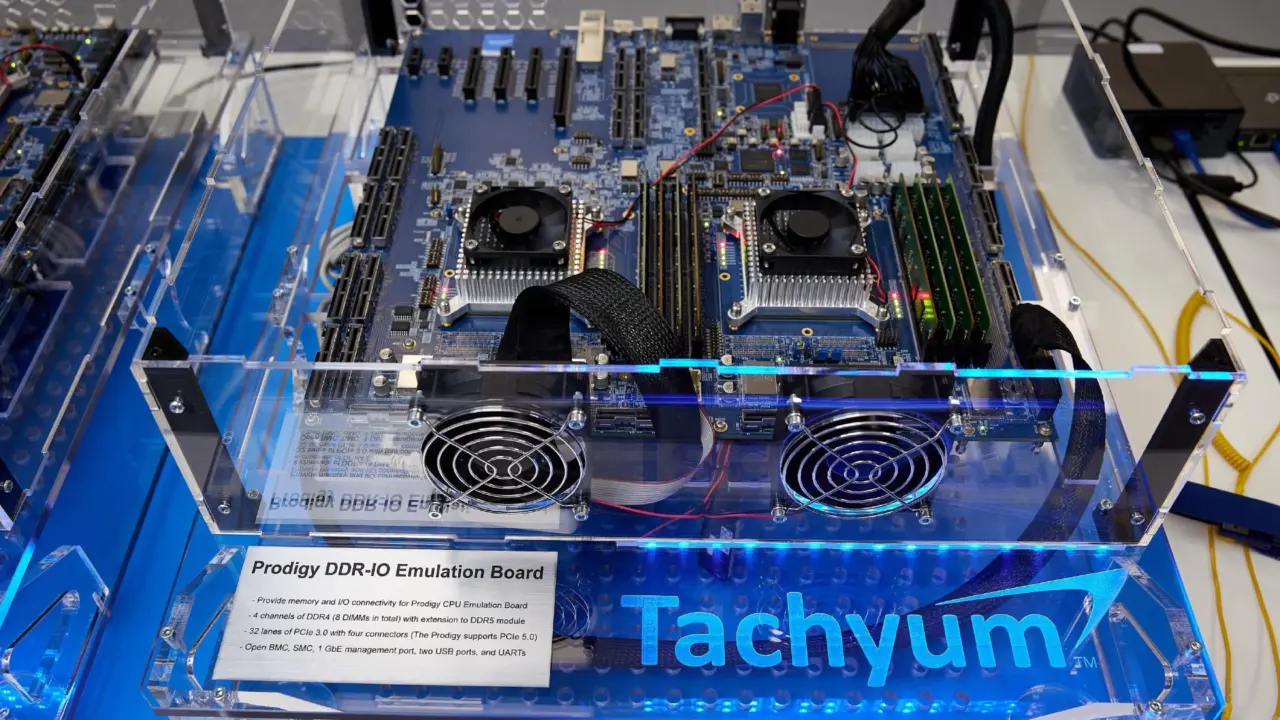
Tachyum has filed voluntarily for bankruptcy in Slovakia over the long-delayed Prodigy universal processor. As a result of the bankruptcy, the company won't launch its 1,024 core CPU after years of delays and missed deadlines. Customers and interested parties eagerly awaiting the ultra-high-performance CPU will not receive anything at all from Tachyum in its current form.
Tachyum Slovakia voluntary bankruptcy ends Prodigy processor development
Tachyum's Prodigy processor was supposed to be a revolutionary new universal CPU. Tachyum Slovakia – the development division – filed for bankruptcy on October 22, 2026. The company has had numerous delays that have resulted in the project being years late from the 2019 tape-out date.
Prodigy specifications
- Core Count: 1,024
- Memory Channels: 24 DDR5
- TDP: 1,600W
- Process Node: TSMC 2nm-class
The company's revised plan was to have the Prodigy chip with 1,024 cores in a chiplet design. The cores would support 24 DDR5 channels and have a TPD of 1,600W. The new chip would use a 2nm-ish fab node from TSMC, which is far different from the original 64 core design.
Tachyum claims the next-gen chip would provide a 21x performance boost over Nvidia's Rubin Ultra. Unfortunately, the company hasn't shown any working hardware to back up those numbers. The company's bankruptcy confirms that the hardware is untested, and it's basically dead (unless someone buys assets).
The question is what happens to the Prodigy IP? Will the US parent keep it? Will it get sold to another company? Until a buyer is found, the Prodigy processor won't be in production or available.
Untested silicon and a 21x performance claim against Rubin Ultra. This collapse was inevitable.
Did the 1600W TDP spec require custom liquid cooling or could standard data center racks handle it?
1600W is way beyond standard rack density. You would need custom chillers and massive power distribution units just for one chip.
they never even showed a bootable unit so the 21x leap is just fantasy 😂
I just hope the US parent company keeps the IP so someone else can finish the job.
The bankruptcy confirms the hardware was untested. The IP sale is the only thing left to watch.