
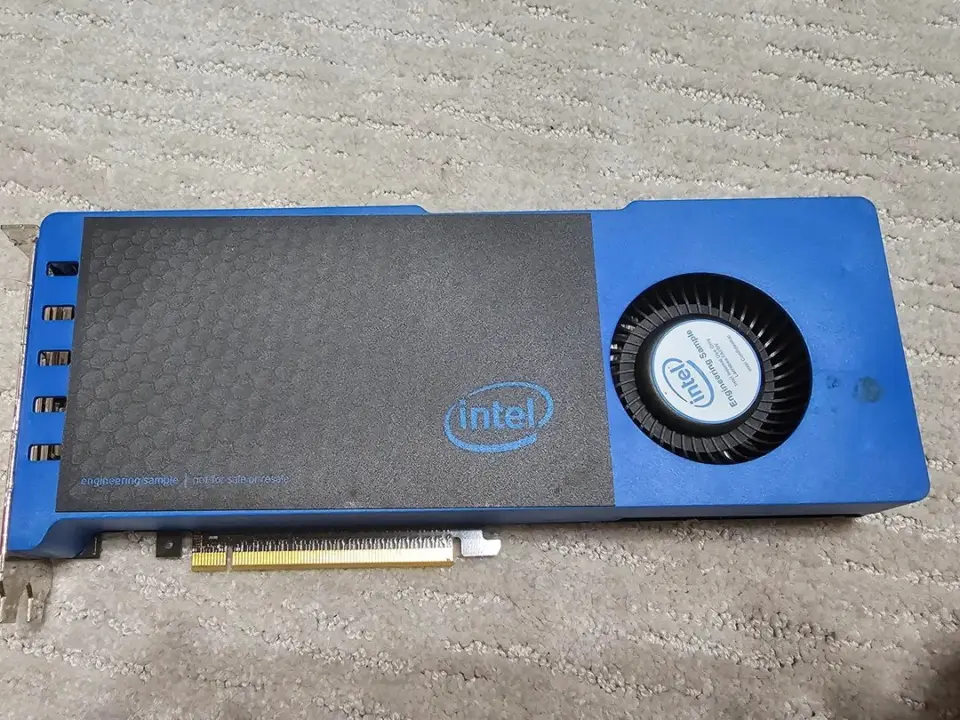
A recent rediscovery of an old Intel Larrabee graphics card in a storage unit auction by a Reddit user showcases the working capabilities of the decade-old engineering sample. This resurgence is significant as it saves a unique piece of hardware history that was never sold to the public, offering insights into the capabilities of early many core GPU designs for gaming on a real-world level.
Reddit user boots vintage Intel Larrabee GPU and restores playable Crysis performance
The system at hand features an Intel Larrabee engineering sample GPU, coupled with a DX58SO motherboard and diagnostic board. The user managed to boot up the system and enter Windows 7 (after replacing the motherboard battery and tweaking storage controller settings to identify legacy hardware).
- Resolution: 1280×720
- Graphics Settings: Medium, AA off
- OS: Windows 7
- Interface: DVI, HDMI
- BIOS: Intel(R) Larrabee Custom Video BIOS
The graphics card identifies as Intel(R) Larrabee Custom Video BIOS Product, as clearly shown during boot up. It uses DVI and early HDMI connections to output video, and runs on a setup consisting of original Intel development software and drivers (over 800MB) on USB drives.
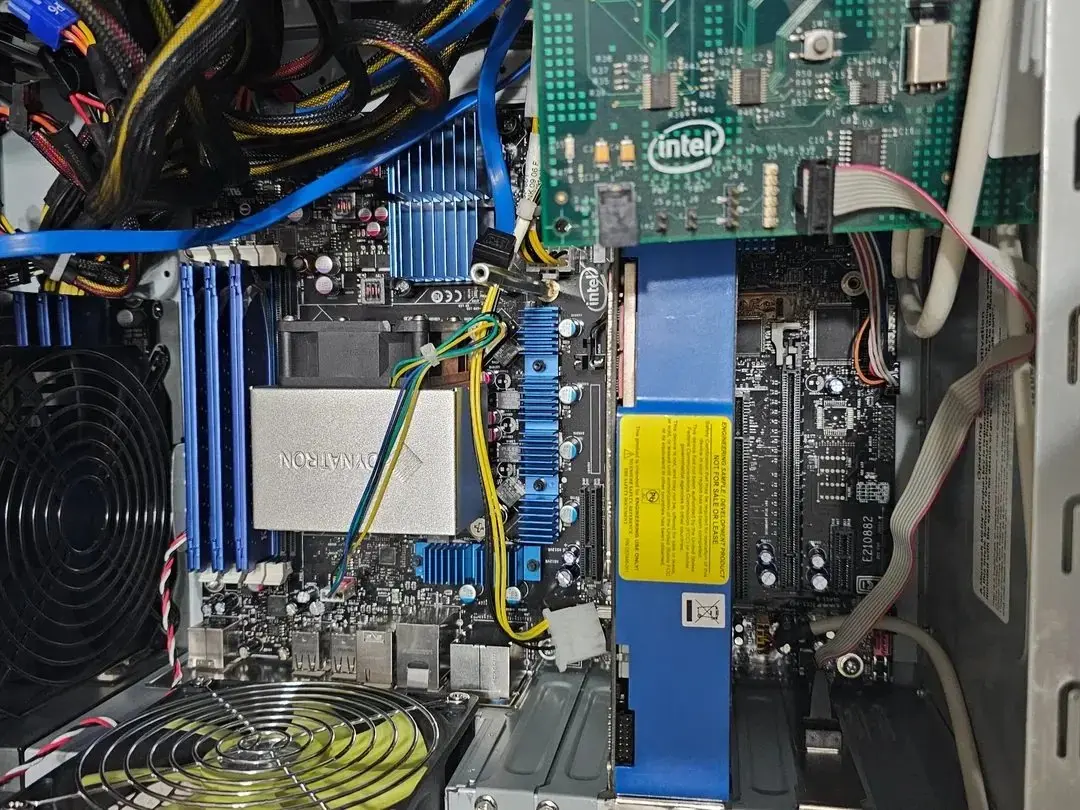
Early drivers were initially only able to achieve around 17FPS (at 1280×720 resolution, medium graphics settings, no anti-aliasing) in Crysis. An updated driver from archives helped to greatly improve performance, hitting 36FPS in the same conditions.
Original drivers and diagnostic tools are uploaded to the Internet Archive for public use, so the software is accessible for posterity. This restoration proves that the Larrabee sample is capable of rendering modern games at playable FPS given optimized software, despite its initial performance drawbacks.

Did the updated driver actually fix the shader compiler, or is 36 fps just lucky frame pacing at 720p?
The Larrabee architecture relied heavily on software rasterization before the fixed function pipeline kicked in. The driver update likely optimized the draw call submission for that specific many-core layout. It is not a general performance gain but a specific fix for the Crysis engine loop.
booting windows 7 on legacy hardware is a vibe 🤔