
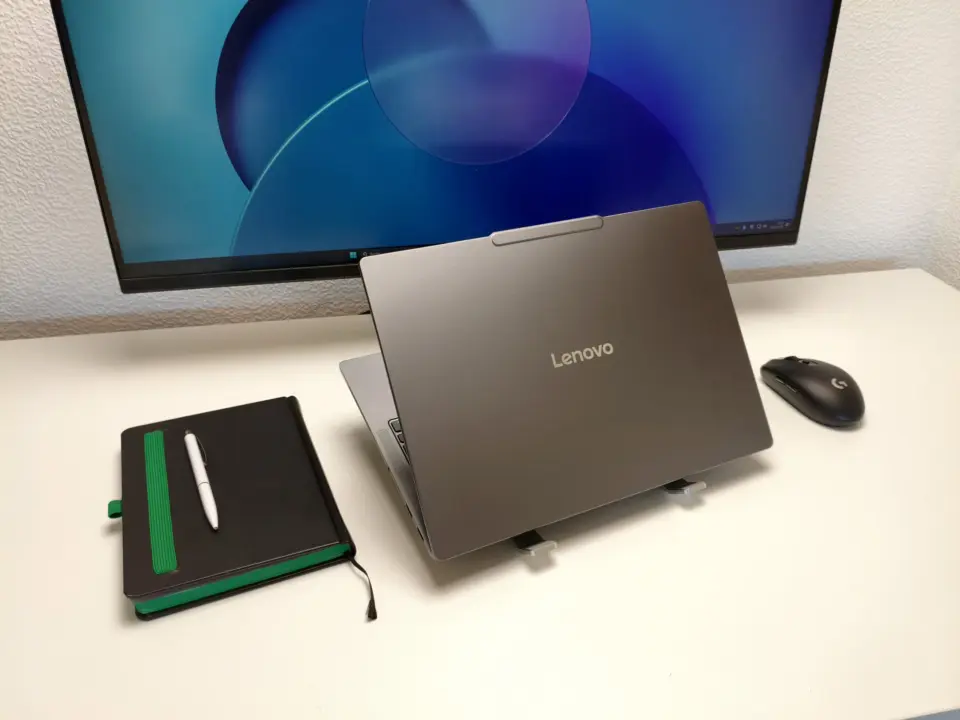
AMD's Ryzen AI 7 450 processor delivers only marginal performance gains over its predecessor, the Ryzen AI 7 350. Independent testing of a Lenovo IdeaPad Pro 5 14AGP11 laptop equipped with the chip reveals that CPU and GPU improvements are barely noticeable in most scenarios. The processor even produced worse results in some specific tests compared to the previous generation.
Clock speeds increased by only 100 MHz with RAM support reaching LPDDR5-8533
The Ryzen AI 7 450 retains the same eight Zen 5 core configuration found in the Ryzen AI 7 350. Clock speeds increased by only 100 MHz, a change that has minimal impact on overall performance. RAM support has seen a slight improvement, now reaching up to LPDDR5-8533.
Spec comparison
| Spec | AMD Ryzen AI 7 450 | AMD Ryzen AI 7 350 |
|---|---|---|
| Cores | 8 Zen 5 cores | 8 Zen 5 cores |
| Clock Speed Increase | +100 MHz | Base |
| RAM Support | LPDDR5-8533 | LPDDR5-8533 |
| Cinebench R23 Multi Core | 18316 Points | 17899 Points |
| Cinebench R23 Single Core | 2038 Points | 2006 Points |
Benchmark scores highlight the stagnation in performance. The chip achieved 18316 points in Cinebench R23 Multi-Core, compared to 17899 points for the predecessor. Single-core performance reached 2038 points in Cinebench R23, up from 2006 points. Geekbench 6.6 Multi-Core scores stood at 14624 points, while single-core scores reached 2928 points.
Some of the slightly lower test results may be attributed to the margin of error in measurements. Small percentage differences between the two chips can reasonably fall within this margin. The overall data suggests that the Ryzen 400 series offers limited advancement over the previous generation.
AMD has not confirmed specific launch windows or pricing for the Ryzen AI 7 450. The limited performance uplift raises questions about the value proposition of the new chip compared to the older model.


Discussion
0 comments
Log in to join the thread with a thoughtful take, question, or correction.