
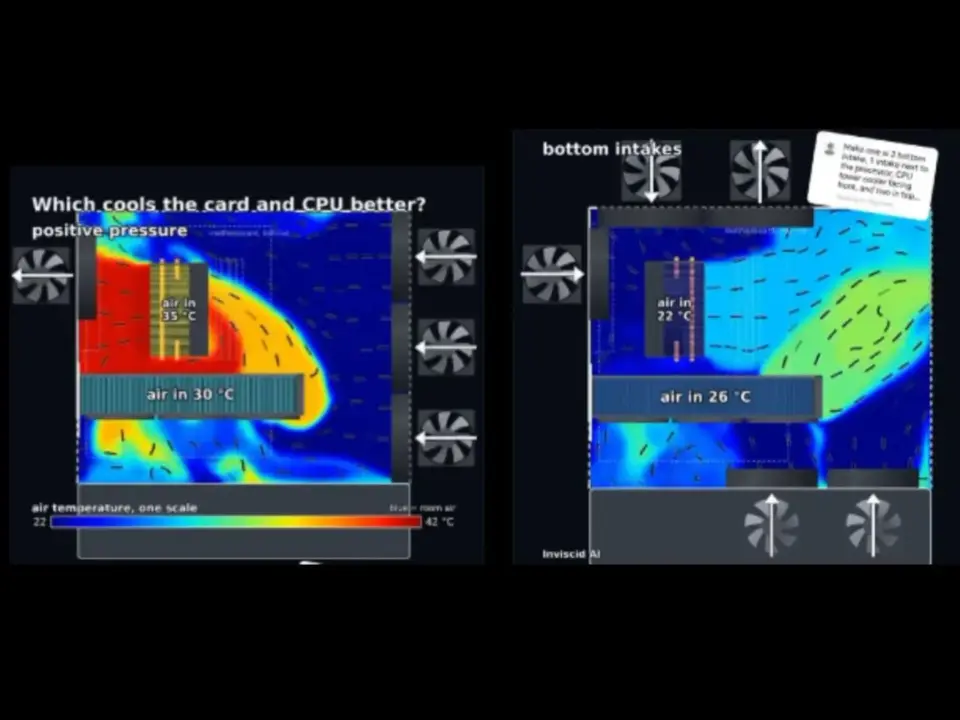
Inviscid AI is challenging the standard PC case cooling design with simulation data suggesting bottom intake fans can lower CPU temperatures by up to 13 degrees Celsius. This finding matters to builders who rely on traditional front-intake setups, as it offers a potential path to cooler components without expensive liquid cooling loops. The research targets the common thermal inefficiency found in many tower-style cases where hot air from the graphics card recirculates into the CPU cooler.
Simulation data suggests shifting air intake from front to bottom bypasses GPU heat recirculation
The core of the proposal involves shifting air intake from the front panel to the bottom of the case, directly beneath the CPU cooler. Most traditional designs use a positive-pressure front intake to keep dust out, but this approach often pulls in air that has already been heated by the graphics card. Inviscid AI notes that GPUs in standard tower configurations sit below or adjacent to CPU coolers, causing exhaust heat to raise the temperature of the air the CPU fan inhales.
- CPU Intake Temperature Reduction: 13°C
- Cooling Strategy: Bottom Intake
- Traditional Strategy: Positive-Pressure Front Intake
Fluid dynamics simulations conducted by Inviscid AI show that adding or replacing front fans with bottom intakes can significantly improve airflow efficiency. The bottom vent, typically reserved for power supply intake, can serve as a dedicated cold air source for the CPU if the case allows. This configuration bypasses the hot air recirculation zone created by the GPU, delivering cooler air directly to the processor cooler.
Implementing this design requires cases with sufficient clearance from the floor and dedicated mounting points for bottom fans. Builders must also consider maintenance, as bottom intakes are more exposed to floor dust and debris than front intakes. The simulations indicate that the thermal benefit is substantial, but real-world performance will depend on how accurately the case geometry and component heat output match the simulation model.
We have tracked similar innovations in the space, such as the COUGAR DUOAIR RGB PC Case Launches which explored vertical GPU intake designs. While Inviscid AI has not yet released independent physical testing results, the simulation data provides a clear technical argument for rethinking case airflow. The findings suggest that bottom intake is a viable strategy for thermal optimization in compatible cases.
Discussion
0 comments
Log in to join the thread with a thoughtful take, question, or correction.