
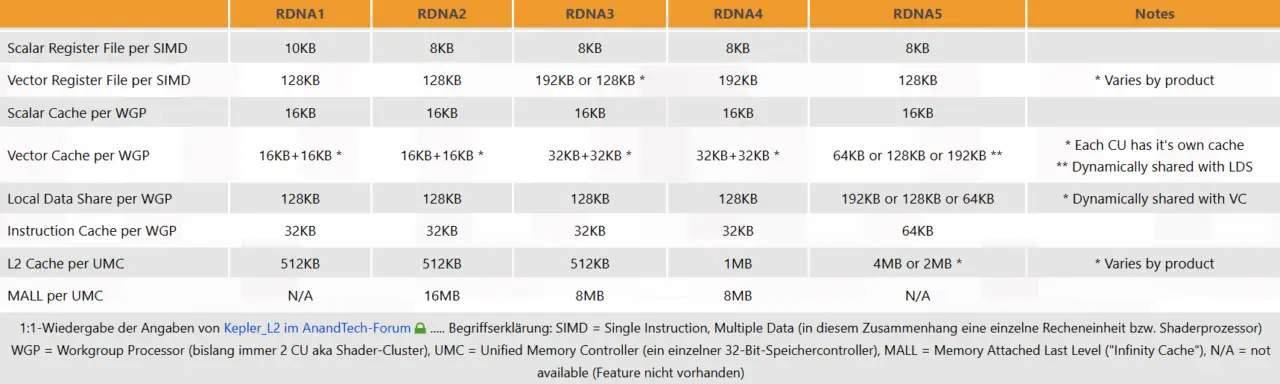
AMD is overhauling its next-generation graphics architecture, and the changes directly impact what gamers and PC builders can expect from the upcoming RDNA 5 lineup. The most significant shift involves removing the Infinity Cache that has defined previous generations, a move that fundamentally alters how the chips manage data. Removing the Infinity Cache may increase latency for certain tasks while potentially improving power efficiency and design scalability. Buyers interested in high-end performance should note that the flagship gaming cards will not receive the full professional silicon.
AMD RDNA 5 gaming cards cut stream processors and memory bus width while removing Infinity Cache
The new architecture introduces several distinct core variants, each targeting a specific segment of the market. The top-tier AT0 core is reserved for professional workstations, while gaming versions will use a cut-down configuration. Reserving the full AT0 core for professional use may limit the maximum gaming performance available in consumer cards. The reported architecture suggests AMD is creating distinct silicon variants for different market segments.
- Infinity Cache: Removed
- L2 Cache: Increased 2-4x (AT0 core)
- Desktop Clock Speed: 3.x GHz
- Mobile Clock Speed: Slightly above 3 GHz
- AT0 Core Stream Processors: 9856 (for gaming cards)
Key specifications reveal a strategy focused on larger L2 cache and lower clock speeds. The AT0 gaming variant features 9856 stream processors and a 384-bit memory bus, a reduction from the 12288 stream processors and 512-bit bus found in the professional version. Desktop clock speeds are expected to hover in the 3.x GHz range, with mobile versions slightly exceeding 3 GHz. Leaks suggest that speeds near or above 4 GHz are unlikely for this generation, marking a departure from previous high-frequency trends.
Mid-range and entry-level options rely on smaller cores with different memory types. The AT2 core targets 5120 stream processors and may replace the RX 9070 series in the lineup. The AT3 core offers 3072 stream processors and uses LPDDR5X memory, serving as the foundation for the upcoming PlayStation 6 console. A lower-power AT4 core with 1536 stream processors and LPDDR5X memory will likely power handheld devices and entry-level desktops. These configurations show a heavy reliance on low-power memory for non-flagship products.
We have been tracking RDNA 5 closely, and our earlier coverage on the AMD RDNA 5 AT2 GPU Leaked provides additional context on the mid-range segment. Leaked specifications indicate a focus on efficiency and cost control, with clock speeds remaining in the 3.x GHz range. Memory price increases may also delay the release of new cards from both AMD and NVIDIA until 2028. The upcoming RDNA 5 lineup appears to emphasize power efficiency and cost-effectiveness rather than maximum clock speeds.

Discussion
0 comments
Log in to join the thread with a thoughtful take, question, or correction.