
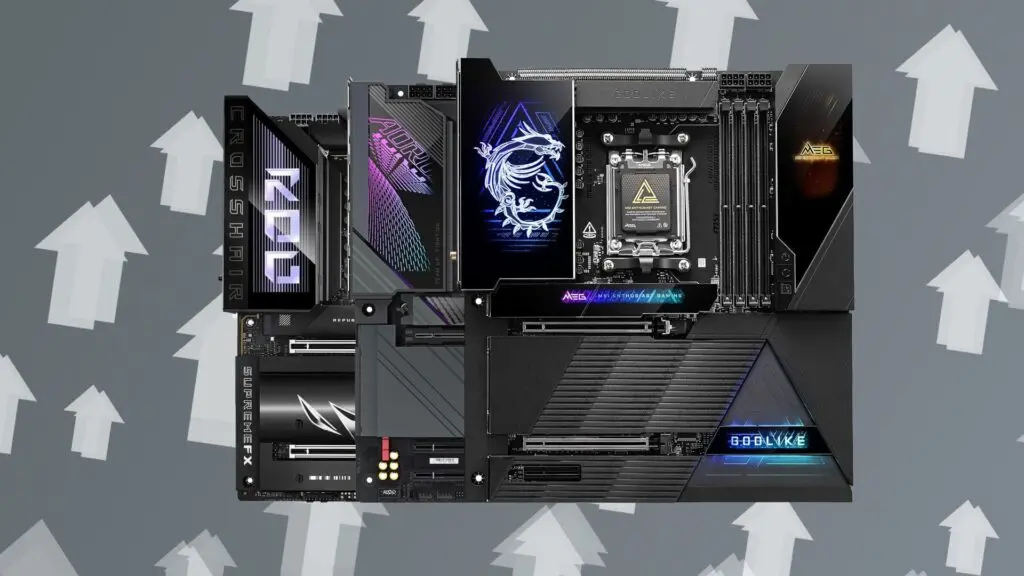
Major motherboard manufacturers raised prices in August, marking the first significant shift in pricing strategy for the sector in recent memory. ASUS, GIGABYTE, and MSI implemented increases of approximately 3% across their product lines in China, Japan, and global markets. This adjustment matters to PC builders because it signals that the recent period of stable hardware costs has ended. Buyers should expect higher upfront expenses for new builds starting this month.
Manufacturers absorb some component costs while signaling future hikes
The price hike stems from a sharp rise in component manufacturing costs that manufacturers could no longer absorb. PCBs saw cost increases ranging from 15% to 50%, while capacitors rose by approximately 50%. Wi-Fi modules also became more expensive, with costs jumping between 10% and 20%. These material expenses forced companies to adjust their retail pricing to maintain margins.
Manufacturers capped the initial price increase at 3% despite component costs rising by more than 10% in many cases. This restraint aims to prevent further contraction in consumer demand during an already weak market. However, the gap between rising production costs and the limited retail increase suggests that additional price hikes are likely in the coming months. Companies are attempting to balance profitability with the risk of losing sales.
Sales forecasts for 2024 have been lowered by major Taiwanese manufacturers, with some predicting a year-over-year decline of more than 30%. This sharp drop in expected sales volume reflects the broader weakness in the PC gaming and hardware sectors. Price adjustments in Japan may lag behind those in China due to different inventory cycles and distributor pricing structures. The market remains under pressure as builders delay purchases in anticipation of further changes.
The August price increase represents a necessary step to cover rising component costs, but it is unlikely to be the final adjustment. Additional increases are expected as manufacturers work to close the remaining gap between production expenses and retail prices. This trend indicates that motherboard costs will likely continue to climb through the rest of the year. Builders should monitor pricing closely as the market stabilizes.
Discussion
0 comments
Log in to join the thread with a thoughtful take, question, or correction.