
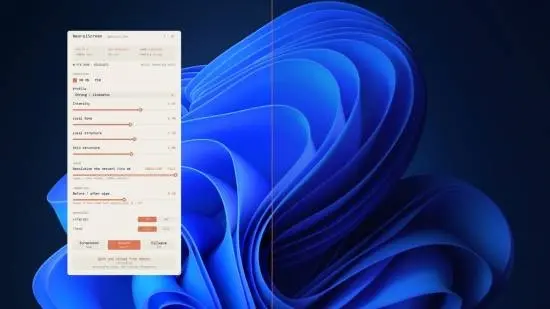
Windows 11 users can now apply real-time visual enhancement to their entire desktop environment using a new third-party utility. This tool extends AI-driven image upscaling beyond gaming frames to live video and windowed applications. The release matters because it brings neural rendering capabilities to general desktop use, offering a way to improve clarity on dynamic content without changing hardware.
Developer tool applies AI upscaling to dynamic screen elements
Developer Perseval released the software named NeuralScreen on September 11, 2024. The application leverages NVIDIA's DLSS5 neural network technology to process the Windows 11 desktop. Unlike traditional upscalers that target specific game engines, this tool operates at the system level to enhance the visual output of the operating system.
NeuralScreen targets all dynamic content on the screen, including videos and windowed games. The software allows users to switch between different DLSS5 models and adjust the rendering intensity. It also includes a built-in feature for one-click before-and-after comparison to verify the visual changes. Static elements such as plain text and wallpapers do not receive significant processing.
The tool remains an unofficial release and has not received official recognition or endorsement from NVIDIA. This status means users are running a third-party utility that modifies system-level graphics output without vendor support. The feature set focuses on real-time quality enhancement for dynamic visual elements rather than static interface components.
NeuralScreen represents a community effort to adapt NVIDIA's latest neural rendering technology for broader desktop use. The software provides a mechanism to enhance dynamic content clarity on Windows 11 systems. Users interested in experimenting with desktop-level AI upscaling can access the tool, though it operates outside of official NVIDIA channels.
Discussion
0 comments
Log in to join the thread with a thoughtful take, question, or correction.