
NVIDIA's GeForce RTX 5090 faces a specific hardware vulnerability that concerns high-end PC builders. A Brazilian YouTuber named TecLab demonstrated a risky modification to prevent the 16-pin power connector from melting under heavy load. This workaround matters because the standard connector design has drawn scrutiny for thermal issues during extreme overclocking scenarios.
YouTuber demonstrates risky hardware modification to bypass 16-pin interface
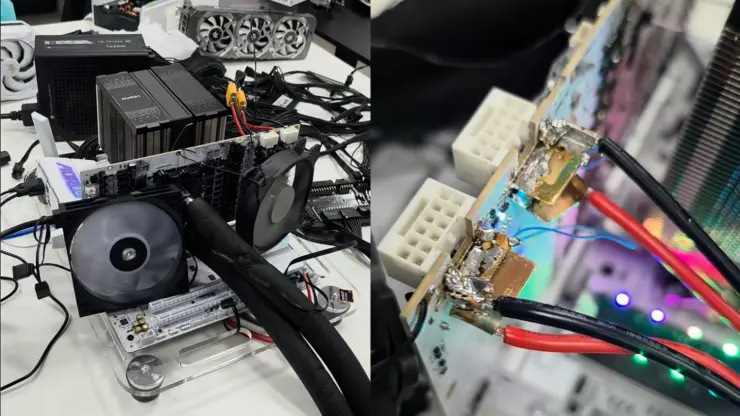
The modification targets the GALAX RTX 5090 D HOF OC LAB XOC model. TecLab bypassed the proprietary 16-pin interface entirely by soldering power wires directly to the GPU printed circuit board. This approach eliminates the connector as a potential failure point in the power delivery chain.
To execute this change, TecLab used adapters to split power from a single 16-pin cable into two sets of wires. He then soldered these wires directly to the connector's circuit traces on the GPU. The system successfully booted and passed stability tests with external cooling fans attached directly to the GPU components.
This modification is not practical for general users who rely on standard build practices. The process likely voids the GPU warranty and requires specialized soldering skills. We have been tracking GeForce RTX 5090 closely — see our earlier coverage on HP OMEN MAX 45L RTX 5090.
NVIDIA has not officially endorsed this soldering method as a solution to the connector concerns. The demonstration serves as a proof of concept for extreme overclockers rather than a recommended fix. Buyers should monitor official guidance before attempting similar hardware alterations.
Discussion
0 comments
Log in to join the thread with a thoughtful take, question, or correction.