
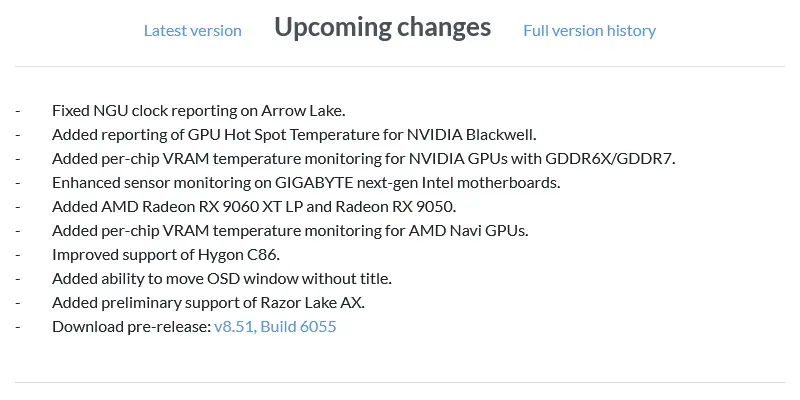
Hardware monitoring tool HWiNFO prepares to recognize Intel's upcoming Razor Lake AX processors in its next major release. This update matters because it signals that Intel is moving closer to shipping its first commercial system-on-chip with a large memory bit-width and integrated graphics. Users tracking next-generation mobile or embedded chips can now verify hardware details as soon as the software updates.
Diagnostic tool update signals Intel is nearing shipping of its first commercial SoC with large memory bit-width
The upcoming release, version 8.51, adds preliminary detection support for the Razor Lake AX architecture. HWiNFO serves as a standard diagnostic utility for system administrators and enthusiasts who need accurate sensor and component identification. This early support allows the community to see how Intel structures its new silicon before final retail availability.
- HWiNFO Version: v8.51
- Intel Processor Codename: Razor Lake AX
- Intel Processor Support Status: Preliminary support
Leaks indicate that Razor Lake AX may feature 16 or 32 Xe3P integrated graphics units. The processor is also expected to utilize a Memory on Package design similar to the previous Lunar Lake architecture. These technical details suggest a significant shift in how Intel handles memory bandwidth and graphics performance in its commercial lineup.
Razor Lake AX is positioned to compete directly with AMD's Medusa Halo products in the market. The combination of large memory bit-width and substantial integrated graphics aims to address performance bottlenecks in modern computing tasks. This competitive positioning highlights Intel's strategy to reclaim ground in the high-performance mobile and embedded sectors.
We looked at the last HWiNFO update earlier while tracking Intel architecture changes, noting similar themes in stability. HWiNFO version 8.51 will officially confirm these architectural details once Intel releases the final silicon. This verification step is crucial for users who rely on accurate hardware identification for system optimization.


Discussion
0 comments
Log in to join the thread with a thoughtful take, question, or correction.