
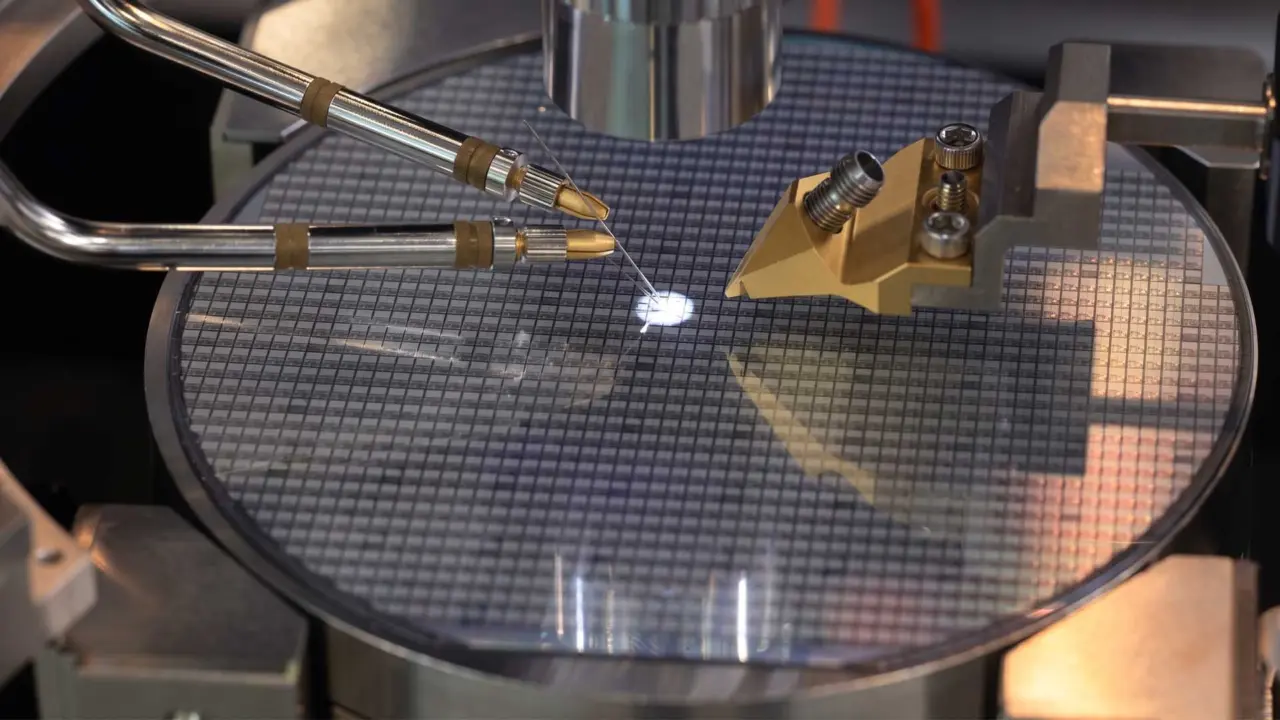
China's commercial semiconductor ambitions face a hard ceiling without access to extreme ultraviolet lithography tools, according to Zeiss CEO Frank Rohmund. The company's position matters because US export controls have effectively blocked Beijing from acquiring the machinery needed for advanced chip manufacturing. This constraint forces Chinese manufacturers to rely on older, less efficient technology that struggles to compete in the global market.
Zeiss executive warns DUV multi-patterning cannot sustain commercial chip production
The core of the discussion centers on the technical divide between extreme ultraviolet (EUV) and deep ultraviolet (DUV) lithography. EUV machines, produced by Zeiss and its partner ASML, are essential for patterning the smallest transistor features. Without them, Chinese foundries must use DUV multi-patterning, a process that exposes silicon wafers multiple times to create single features. This approach significantly increases manufacturing complexity and reduces the number of usable chips per wafer.
Rohmund argues that DUV multi-patterning results in low yields and high production costs that are not sustainable for commercial products. He believes China's manufacturing capabilities will remain capped at the 7nm node for the foreseeable future. While it is technically possible to produce 5nm chips using DUV, the process requires massive government subsidies to offset the inefficiencies. The current economic model for advanced nodes in China does not support viable mass production without these external financial injections.
Real-world performance gaps illustrate these technical limitations. Huawei's Kirin 9030, built on SMIC's 7nm N+3 node, shows lower performance and poorer power efficiency compared to Apple's low-power cores. This comparison highlights the tangible impact of using older lithography methods. Meanwhile, earlier reports suggesting China would begin trial production of in-house EUV machines in 2025 have not materialized, leaving the country dependent on workarounds that cannot scale efficiently.


Discussion
0 comments
Log in to join the thread with a thoughtful take, question, or correction.