
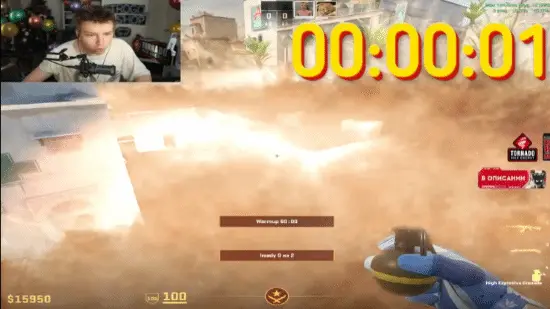
Valve's Counter-Strike 2 can now destroy physical PC components, a reality demonstrated when streamer StRoGo triggered a hardware failure on his own rig. This incident proves that extreme in-game physics calculations can generate enough heat to melt plastic and fry silicon, moving beyond standard software crashes. Gamers running high-end builds should be aware that specific server-side events can push hardware beyond its thermal limits.
Streamer StRoGo triggers thermal failure on high-end rig
The event occurred during a live stream on a community server run by CYBERSHOKE. StRoGo initiated a simulation that detonated 100,000 grenades simultaneously within the game engine. This action created an unprecedented particle load that the client hardware could not dissipate quickly enough.
- Test Condition: 100,000 grenades detonated simultaneously
- Damage Type: Physical hardware destruction
- Failed Component: GPU (Graphics Processing Unit)
- Server Environment: CYBERSHOKE community server
The resulting thermal spike caused the PC case side panel to melt and deform. Internal components suffered varying degrees of damage, with the dedicated graphics card taking the most severe hit. The GPU core and power supply modules sustained physical damage that rendered the card completely beyond repair.
Server-side stability was confirmed by CYBERSHOKE founder Eric Shokov, indicating the failure was isolated to the client machine. While previous Counter-Strike 2 updates have caused driver crashes and visual glitches, physical destruction of hardware remains rare. This incident highlights the extreme end of rendering stress rather than a typical software bug.
The exact CPU and GPU models involved were not specified in the source reports. The hardware was described only as a high-end system with a dedicated graphics card. The event serves as a stark example of the physical risks associated with extreme computational loads in modern gaming engines.



Discussion
0 comments
Log in to join the thread with a thoughtful take, question, or correction.