
NVIDIA has released a beta version of its ACE Game Agent SDK to help developers add local artificial intelligence directly into games. The open-source toolkit aims to reduce reliance on cloud servers by running AI models on consumer graphics cards. The SDK enables developers to build interactive game characters and dynamic systems that operate locally without requiring an internet connection.
New toolkit enables offline voice and chat features in Unreal Engine 5 games without cloud reliance.
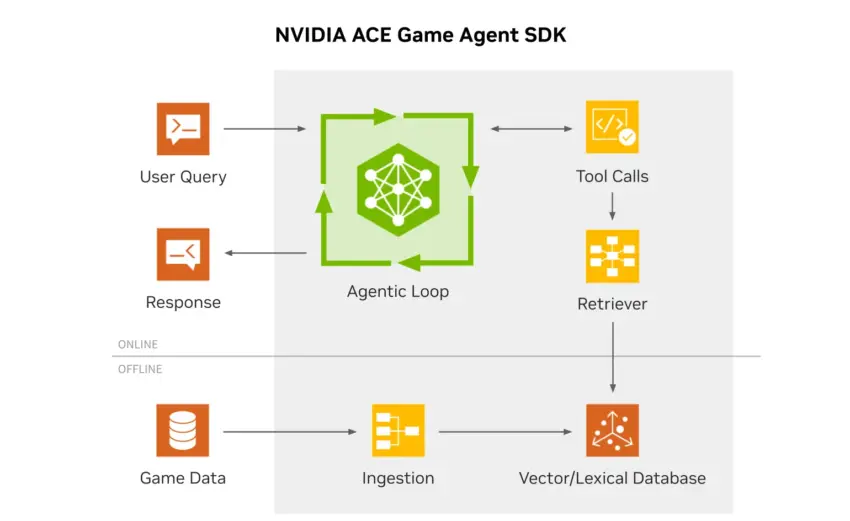
The software targets Unreal Engine 5 projects and includes a lightweight C/C++ agentic framework designed for RTX hardware acceleration. NVIDIA also released companion plugins that handle local speech recognition, small language model inference, and text-to-speech synthesis. These components allow developers to build voice-interactive game elements entirely on the player's machine.
The SDK provides three main application programming interfaces for managing AI behavior within a game environment. The Agent API maintains stateful chat history so characters remember past interactions during a session. The Chat API allows developers to manage when the AI processes requests and how much conversation history it considers. A third RAG API enables the system to retrieve specific information from internal databases or game data tables.
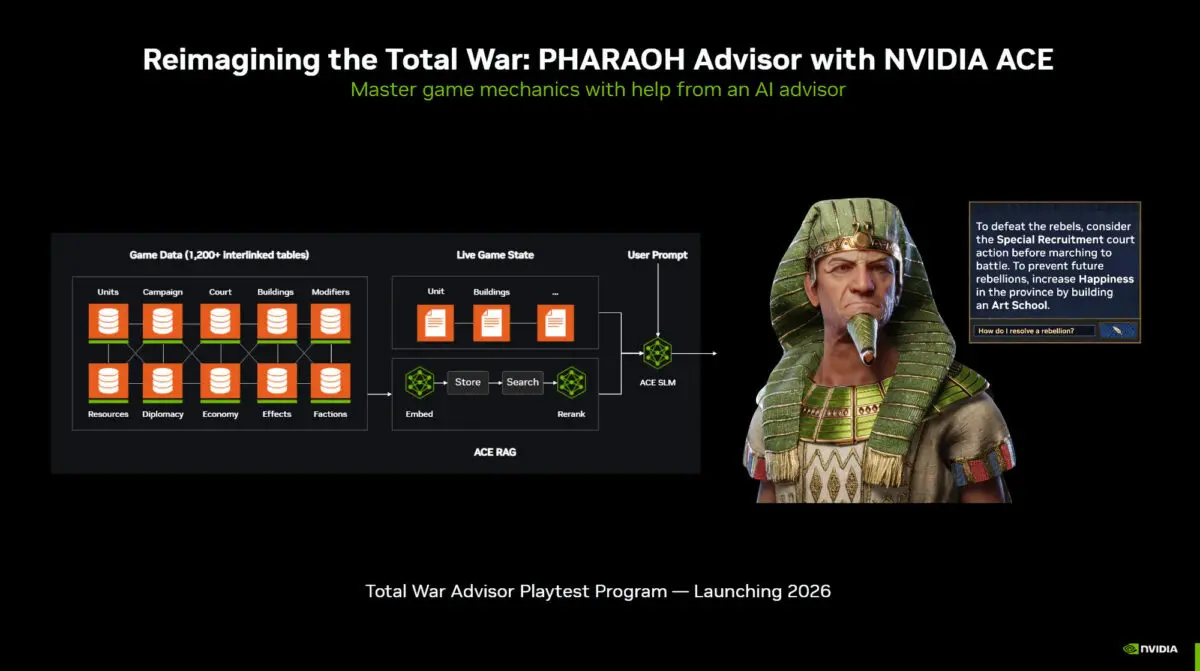
NVIDIA tested the technology in Total War: PHARAOH to demonstrate how an AI advisor could query historical game records in real time. The framework optimizes for small models that fit within consumer GPU memory limits rather than relying on massive server-side clusters. Running AI locally reduces server expenses and improves responsiveness, particularly benefiting large-scale multiplayer games.
The release focuses on giving developers tools to implement local AI features without requiring persistent internet connections from players. The SDK integrates directly into Unreal Engine 5, making it easier for developers to add talking characters to strategy and role-playing titles.

Discussion
0 comments
Log in to join the thread with a thoughtful take, question, or correction.