
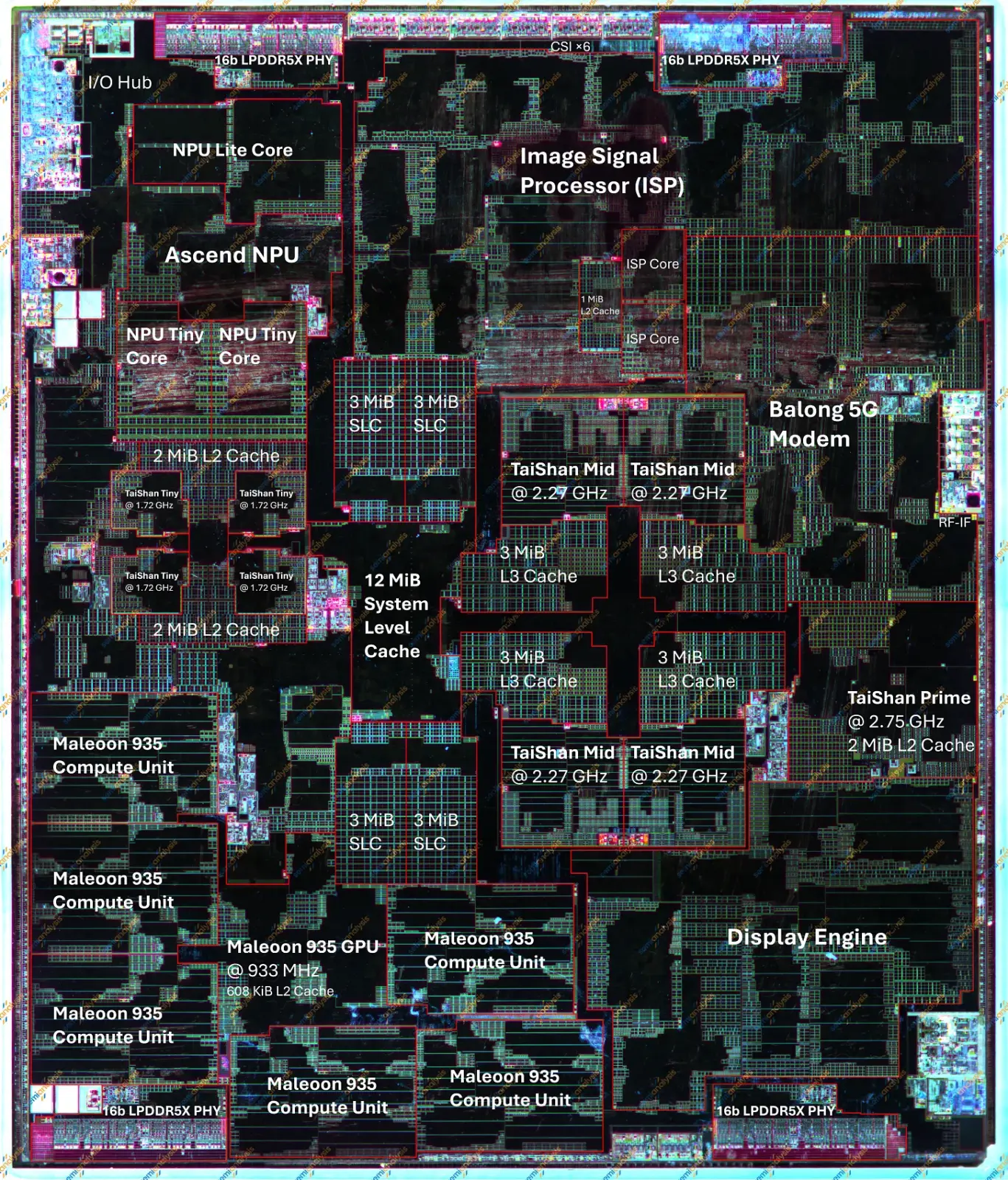
A teardown of Huawei's Kirin 9030 Pro reveals that SMIC's 7nm N+3 process achieves a tighter metal pitch than Intel's upcoming 18A node, but falls behind on transistor density. The analysis comes from SemiAnalysis, which opened a new reverse engineering lab in Oregon.
SemiAnalysis opens new reverse engineering lab in Oregon
The Kirin 9030 Pro is HiSilicon's latest smartphone processor, built on SMIC's third-generation 7nm technology. It powers Huawei's flagship devices despite US sanctions that restrict access to advanced chipmaking equipment.
Specifications
- Minimum metal pitch: 32.5nm
- Transistor density: 113.4 million per square millimeter
- Prime core frequency: 2.75 GHz
SMIC's N+3 process has a minimum metal pitch of 32.5nm, beating Intel 18A's 36nm on Panther Lake. However, transistor density is 113.4 million per square millimeter, which trails Intel's high-density library by 38%. SMIC achieved this without EUV lithography, using DUV with quadruple-patterning.
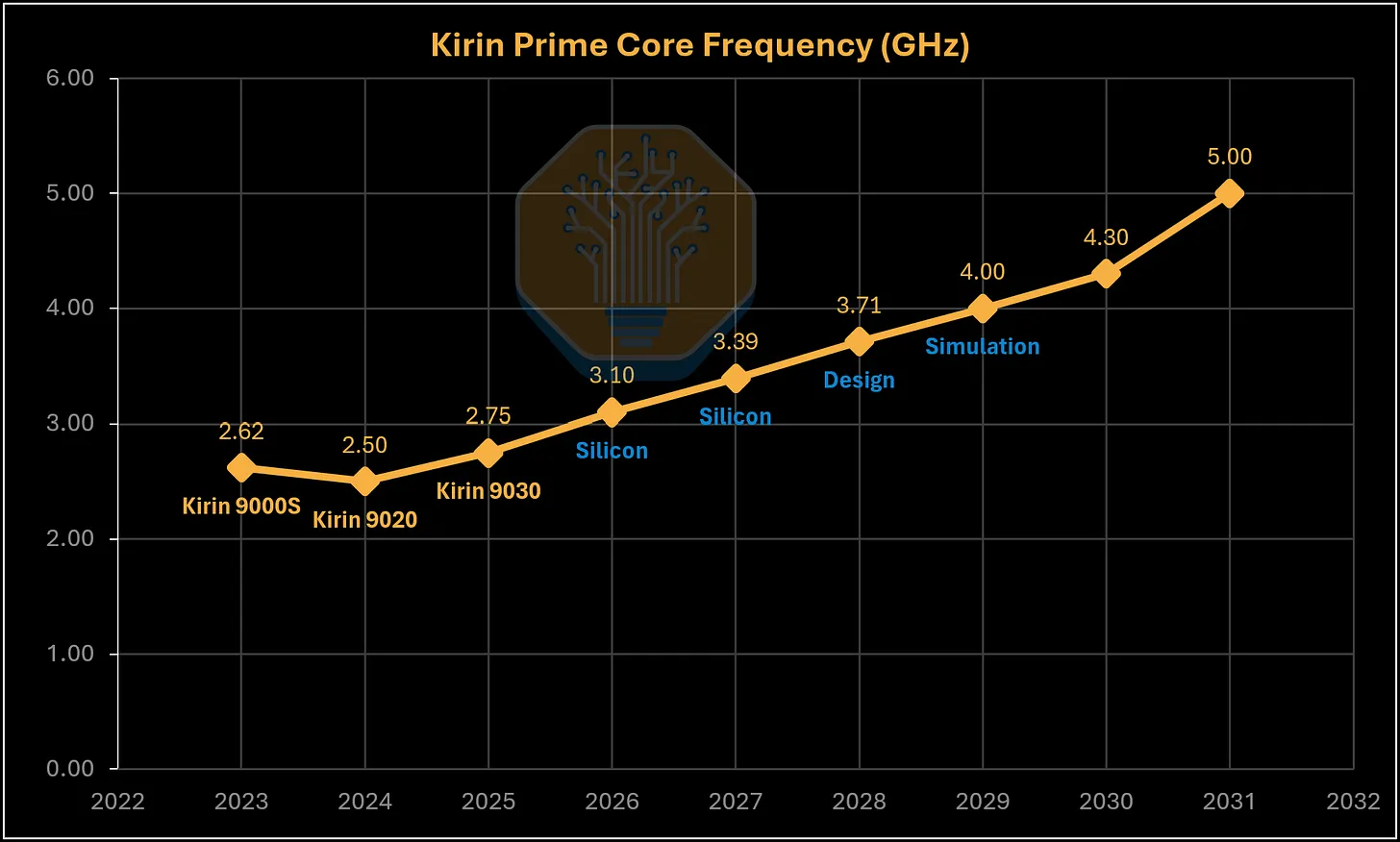
The Kirin 9030 Pro's prime core runs at 2.75 GHz, delivering performance roughly comparable to 2021-era Cortex-X2 chips. SemiAnalysis notes the chip is roughly level with Android flagships from three years ago.
SemiAnalysis opened the STEEL lab in Hillsboro, Oregon, dedicated to chip reverse engineering. The lab has already generated revenue from teardowns of advanced datacenter chips, including a TSMC customer's optical engine stack.
Discussion
0 comments
Log in to join the thread with a thoughtful take, question, or correction.