
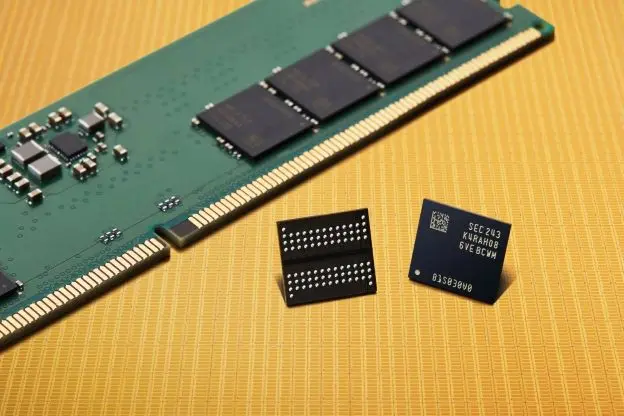
Samsung Electronics and SK hynix are shifting their memory sales strategy toward long-term agreements to stabilize revenue in a tight market. The two manufacturers are expanding their use of long-term contracts with customers to secure future demand. These agreements typically last three to five years and include advance payments ranging from 10 to 30 percent of the total contract value. This structural change aims to protect profit margins as the industry navigates a supply shortage that is expected to last until at least 2028.
The contract expansion covers DDR5, standard DRAM, and high-bandwidth memory products. Analysts suggest that Samsung Electronics will use these long-term agreements to drive up memory prices and establish firm pricing structures. The company anticipates strong demand from major clients for mid-term volume increases driven by artificial intelligence workloads. This shift marks a transition to a producer-favorable market where manufacturers hold greater leverage over pricing.
Manufacturers secure future demand through three-to-five-year contracts with advance payments.
Memory prices could increase by up to 50 percent in the second quarter compared to the first quarter. Maeil Business Newspaper reported that Samsung Electronics operating profit margins could exceed 80 percent due to these pricing dynamics. The magnitude and duration of these price increases remain uncertain as they depend on ongoing market shifts and analyst projections.
The industry is currently in a producer-favorable market environment. Samsung Electronics stated that major clients are requesting mid-term volume expansions in anticipation of strong AI demand. The long-term contract strategy helps mitigate the impact of potential price volatility while securing stable revenue streams for the manufacturers.
Discussion
0 comments
Log in to join the thread with a thoughtful take, question, or correction.