

AMD motherboard makers have updated their firmware to support a new memory optimization feature that tightens latency on DDR5 modules. AMD EXPO Ultra Low Latency, or ULL, now runs on 600-series boards through revised BIOS releases from ASUS and MSI.
ASUS and MSI release firmware updates enabling automatic memory overclocking for AM5 DDR5 modules
The update targets the AM5 platform and its DDR5 memory ecosystem. Users with compatible motherboards can enable automatic memory overclocking that adjusts timing parameters without manual tuning. This approach builds directly on AMD's existing EXPO standard for DDR5 profiles.
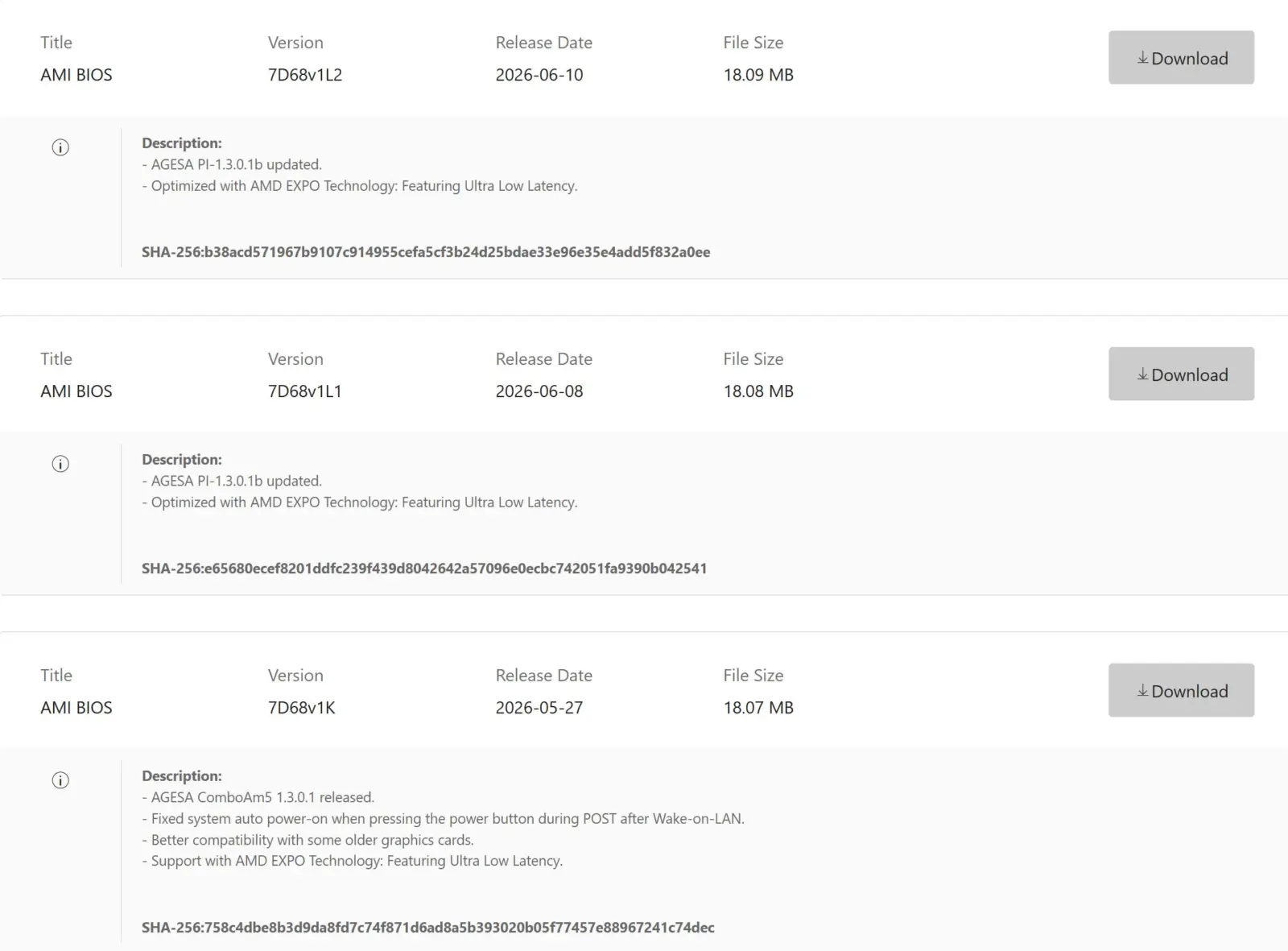
MSI initiated the update cycle with a BIOS release based on AGESA PI-1.3.0.1b firmware beginning June 3. The company pushed optimized updates on June 8 and June 10 to refine memory behavior across select models.
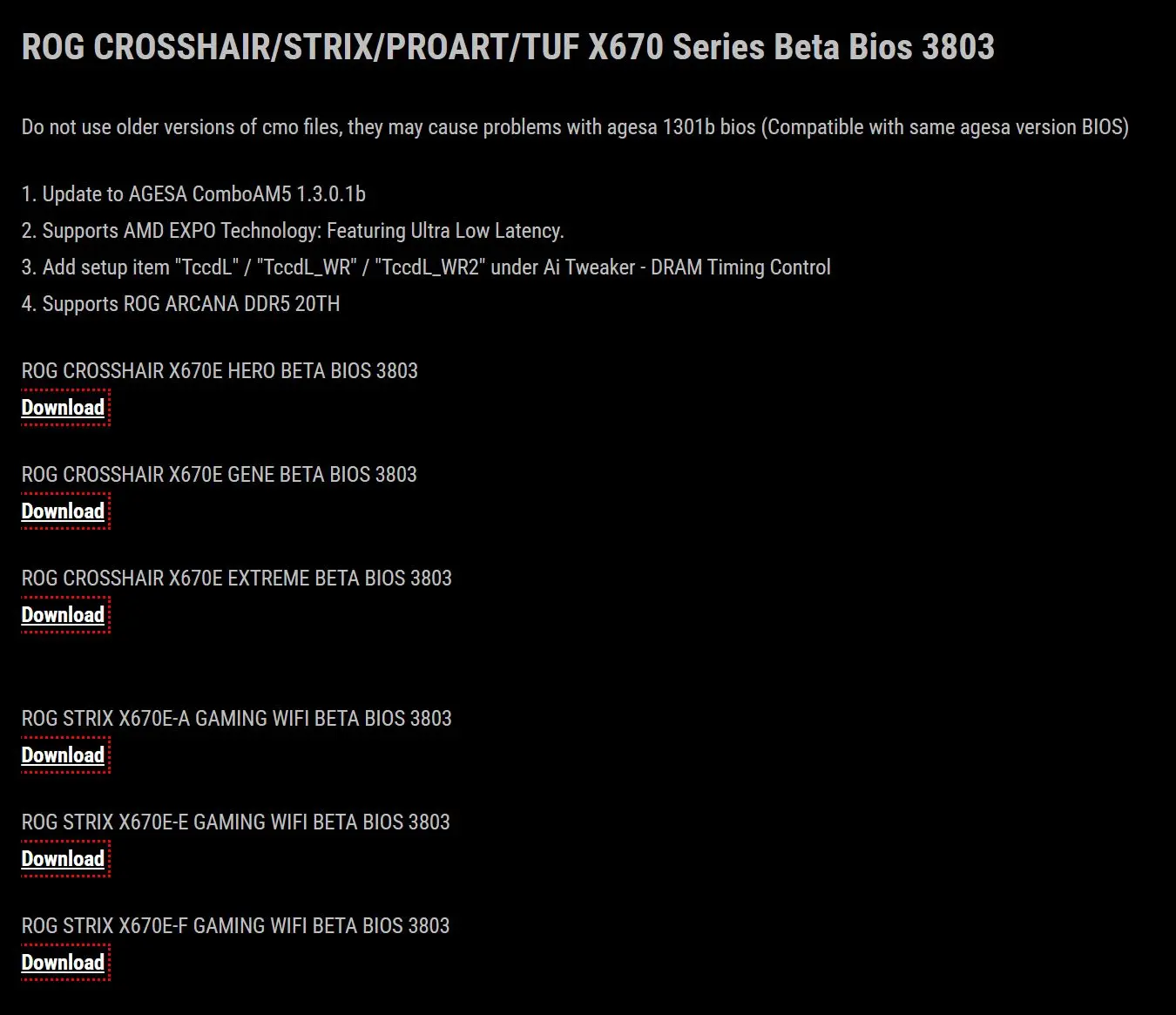
ASUS followed with Beta BIOS version 3803 for its flagship X670E boards. The update covers the ROG Crosshair series and ROG Strix lineup, adding ULL support to those platforms.
AMD claims the feature delivers up to a 4 percent gaming performance increase compared to non-ULL EXPO memory configurations. Performance improvements stem from reduced memory latency instead of increased operating frequencies.
This firmware push narrows the gap between 600-series boards and AMD's newer 800-series lineup, which already supported ULL features out of the box. Both manufacturers are bringing the capability to older platforms through standard BIOS updates.
The changes confirm that motherboard vendors can extend new memory technologies to existing hardware via firmware alone. Gamers with AM5 systems can now access tighter latency profiles without buying a new board or CPU.


Discussion
0 comments
Log in to join the thread with a thoughtful take, question, or correction.