

East China has completed its first domestic TPU cluster, a milestone that gives local developers a viable path for training massive AI models without relying on foreign hardware. The project, finalized in Hangzhou on July 20, 2024, marks a significant step for domestic compute infrastructure. Buyers and researchers in the region now have access to a system capable of handling trillion-parameter models. This deployment reduces the friction typically associated with switching to domestic chips, as it requires minimal code changes for migration.
New infrastructure supports trillion-parameter model training with minimal code changes
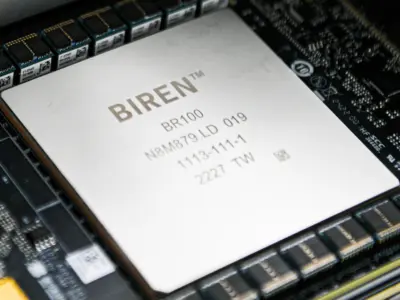
The core of this infrastructure is the TaiZe 2.0 AI server, built by Zhonghao Xinying. This hardware platform combines two high-performance CPUs with eight Zhonghao Xinying TPU chips, known as Xu Yu, per server unit. The cluster represents the first large-scale domestic TPU deployment within the China Telecom system. It serves as a joint effort involving China Telecom Hangzhou, ZTE, and Zhonghao Xinying.
- Total Compute Power: 7.168 PetaFLOPS
- AI Chip Model: Xu Yu (须臾)
- Platform Name: TaiZe 2.0
- Max Chips per Super Node: 2048
- Supported AI Frameworks: PyTorch, vLLM, SGLang
The system delivers a total compute power of 7.168 PetaFLOPS. A single super node can support up to 2048 Xu Yu chips in a direct interconnect configuration. This architecture allows for massive parallel processing required for large language model training. The hardware supports major AI frameworks including PyTorch, vLLM, and SGLang. It has also completed deep adaptation for the Qwen series, DeepSeek, and GLM models.
This completion establishes a practical benchmark for domestic AI compute substitution in the region. The project demonstrates that local hardware can handle the computational load of trillion-parameter models. Developers can now migrate existing models with reduced engineering overhead. The cluster provides a concrete foundation for future AI research and deployment in East China.
Discussion
0 comments
Log in to join the thread with a thoughtful take, question, or correction.