
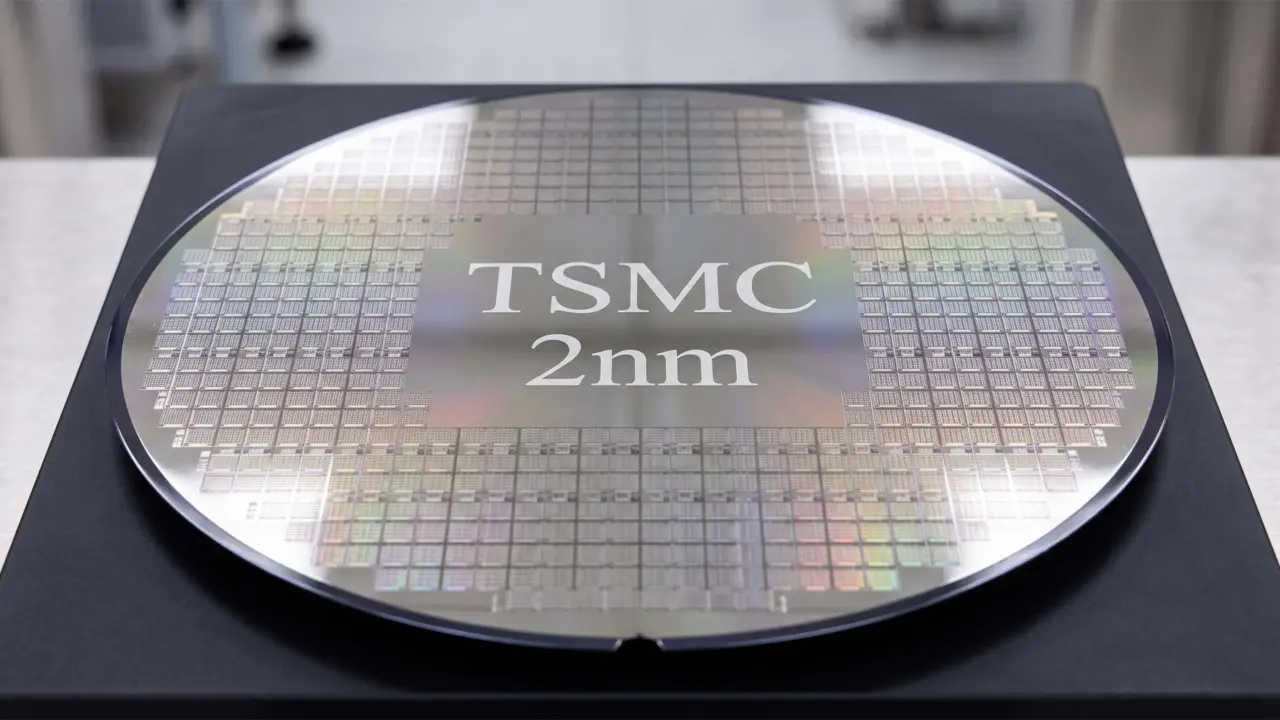
TSMC's Fab 20 has reached a monthly production milestone of 20,000 wafers for its 2nm process. This output signals that the foundry is scaling manufacturing capacity to meet surging demand from major technology clients. Buyers and industry watchers should note that this ramp-up is critical for the upcoming generation of AI and mobile chips.
TSMC's 2nm process reaches 20,000 monthly wafers as demand from Apple and AMD accelerates
The 2nm process involves key clients including Apple, Google, AMD, and NVIDIA. Apple plans to use the 2nm process for the A20 Pro chip in the iPhone 18 series. Google expects to utilize the same process for the Tensor G6 in the Pixel 11 series.
- Fab 20 Monthly Output: 20,000 wafers
- 3nm Monthly Output: 175,000 wafers
- 2nm Tape-out Volume: 4x that of 3nm
- Expected Revenue Contribution: 3% of TSMC revenue in Q3 2026
TSMC reported that tape-out volume for the 2nm process is four times higher than that of the 3nm process. Tape-out volume represents the number of chip designs ready for manufacturing, indicating strong client confidence. This metric suggests that 2nm will eventually surpass 3nm in production volume.
The 3nm process currently maintains a higher absolute production volume at 175,000 wafers per month. AMD has confirmed the use of TSMC's 2nm process for its MI455X GPU designed for agent AI. NVIDIA is also expected to utilize the 2nm process for upcoming hardware.
TSMC expects the 2nm process to contribute 3% of its revenue in the third quarter of 2026. Apple and Google are anticipated to debut the first 2nm chips soon. These expectations are based on current demand projections and client roadmaps.
The 2nm process is now in mass production at Fab 20. This milestone confirms that TSMC is actively scaling the technology for commercial use. The foundry's ability to meet high tape-out demand will determine the availability of next-generation chips for consumers.



Discussion
0 comments
Log in to join the thread with a thoughtful take, question, or correction.