
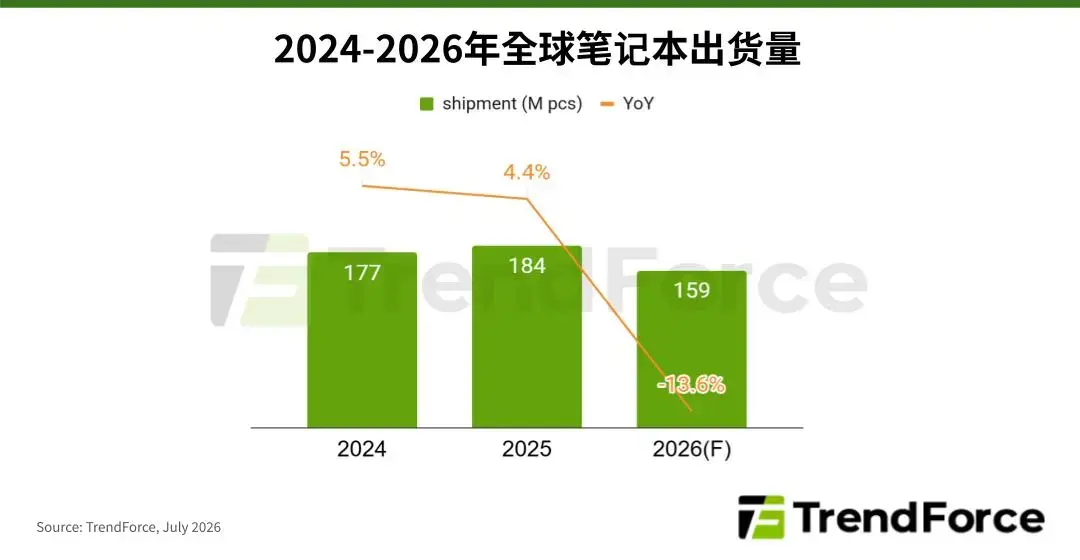
Global notebook shipments are projected to fall by 13.6 percent in 2026 as consumer demand weakens under the weight of rising hardware costs. This contraction matters to buyers because Apple's aggressive price increases for MacBooks are altering the value proposition of premium laptops. Shoppers who previously viewed MacBooks as standard upgrades now face a steeper financial barrier that limits replacement cycles.
Apple's comprehensive price increases shift consumer expectations toward higher costs
Apple's strategy of raising prices across its MacBook lineup is the primary driver behind this shift in consumer behavior. The company's comprehensive price adjustments are pushing the cost of entry for its laptops higher than before. This pricing structure forces a comparison with high-end Windows PCs that may offer better value for budget-conscious users.
The broader technology sector faces supply chain pressures that complicate these market dynamics. AI server demand is currently consuming significant memory and advanced process resources, which drives up component costs. These resource constraints, combined with weakening terminal demand, create a difficult environment for notebook manufacturers.
Despite the overall market decline, Apple's specific notebook shipments are expected to grow. TrendForce estimates that Apple will ship approximately 23.1 million units in 2026. This double-digit growth indicates that Apple's brand loyalty helps it maintain volume even as the broader industry shrinks.


Discussion
0 comments
Log in to join the thread with a thoughtful take, question, or correction.