
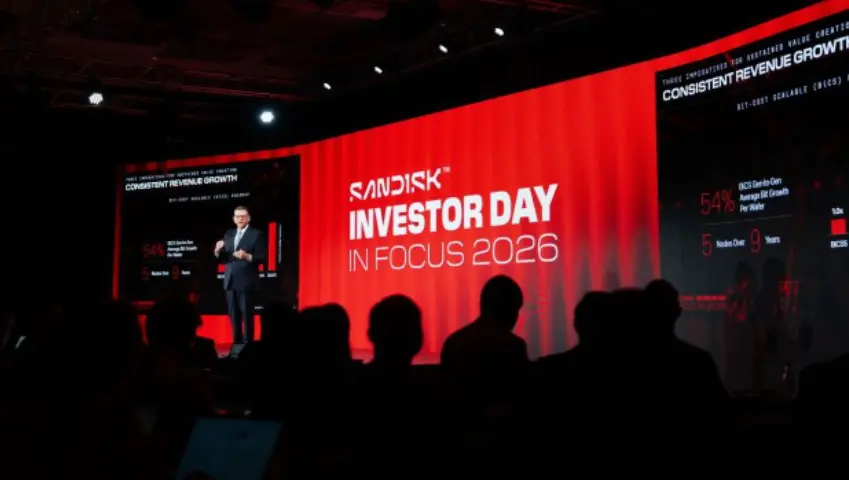
AI inference workloads are hitting a storage ceiling that limits how many chips data centers can deploy. SanDisk and SK Hynix released the first specification for High Bandwidth Flash (HBF) to break this barrier. This technology targets the AI infrastructure market by offering a middle ground between fast memory and high-capacity storage. Buyers should care because HBF could reduce the number of GPUs needed to run large models.
New storage tier aims to halve GPU requirements for large models
HBF combines the high bandwidth of HBM with the density of NAND flash. The technology stacks NAND flash layers to achieve capacities eight to sixteen times larger than HBM. This design aims to solve the AI memory wall without sacrificing speed. The product sits between traditional HBM and SSDs in the storage hierarchy.
- Sample Release: 2027
- Mass Production: 2028
- Technology Base: NAND Flash Stacking
- Capacity vs HBM: 8-16x
- Performance Claim: 4 HBF GPUs match 8 HBM GPUs in token output
SanDisk plans to release the first HBF samples in 2027. Mass production is targeted for 2028. The company claims that four GPUs equipped with HBF can match the token output speed of eight GPUs using HBM. This performance claim suggests a significant reduction in hardware requirements for AI inference tasks.
We looked at SK Hynix and SanDisk Release First in our earlier Sandisk coverage. Industry consensus suggests HBF will not completely replace HBM but will reshape the storage hierarchy. The technology reduces the need for GPU count in AI inference infrastructure by offering higher capacity at lower cost. This shift lowers the overall cost of AI inference infrastructure.
SanDisk and SK Hynix have defined the initial standards for this new storage tier. The roadmap sets clear milestones for sample release and mass production. The technology promises to address capacity constraints in AI data centers. The industry will watch for the 2027 sample release to validate the performance claims.

Discussion
0 comments
Log in to join the thread with a thoughtful take, question, or correction.