
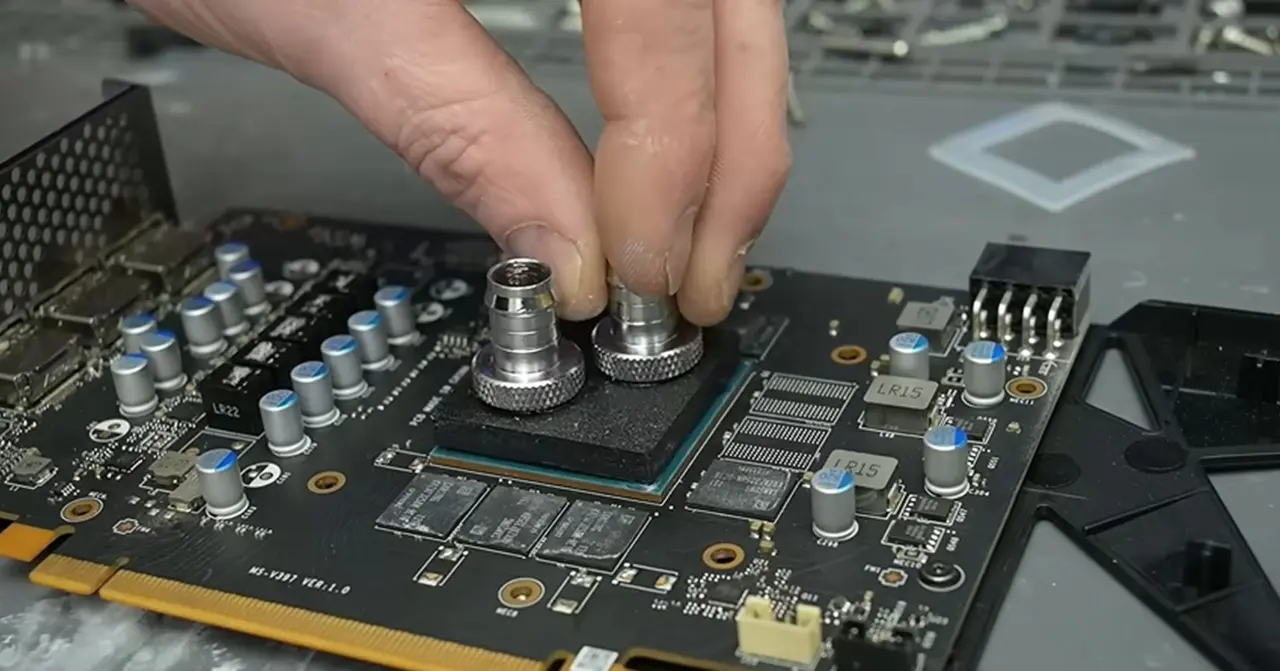
A hardware modder has demonstrated that pumping water directly onto GPU silicon can slash operating temperatures far below standard cooling solutions. This experiment matters because it highlights the extreme thermal headroom available in modern graphics cards, though it also underscores the significant risks involved in bypassing manufacturer-designed cooling systems. The findings offer a glimpse into custom loop capabilities while serving as a cautionary tale for enthusiasts considering similar modifications.
Modder achieves 28°C on GPU silicon with risky direct water setup
The testing focused on NVIDIA GeForce cards, specifically using a dead RTX 3060 to refine the 3D-printed block and epoxy sealing process before applying the technique to operational hardware. The modder, known as TrashBench, successfully cooled a running GeForce GTX 980 and then moved to an RTX 2060 to measure the thermal impact of direct water contact. This progression allowed for precise temperature tracking without risking valuable working components during the initial development phase.
When paired with a standard stock heatsink, the RTX 2060 reached 70°C under load in Unigine Heaven. Switching to a 360mm all-in-one (AIO) liquid cooler attached to the GPU reduced that temperature to 36°C. The direct water cooling method, which channels coolant straight onto the silicon die, dropped the temperature further to just 28°C. This setup also recorded a hotspot temperature of only 41°C, demonstrating the superior heat transfer efficiency of direct die cooling compared to indirect AIO solutions.
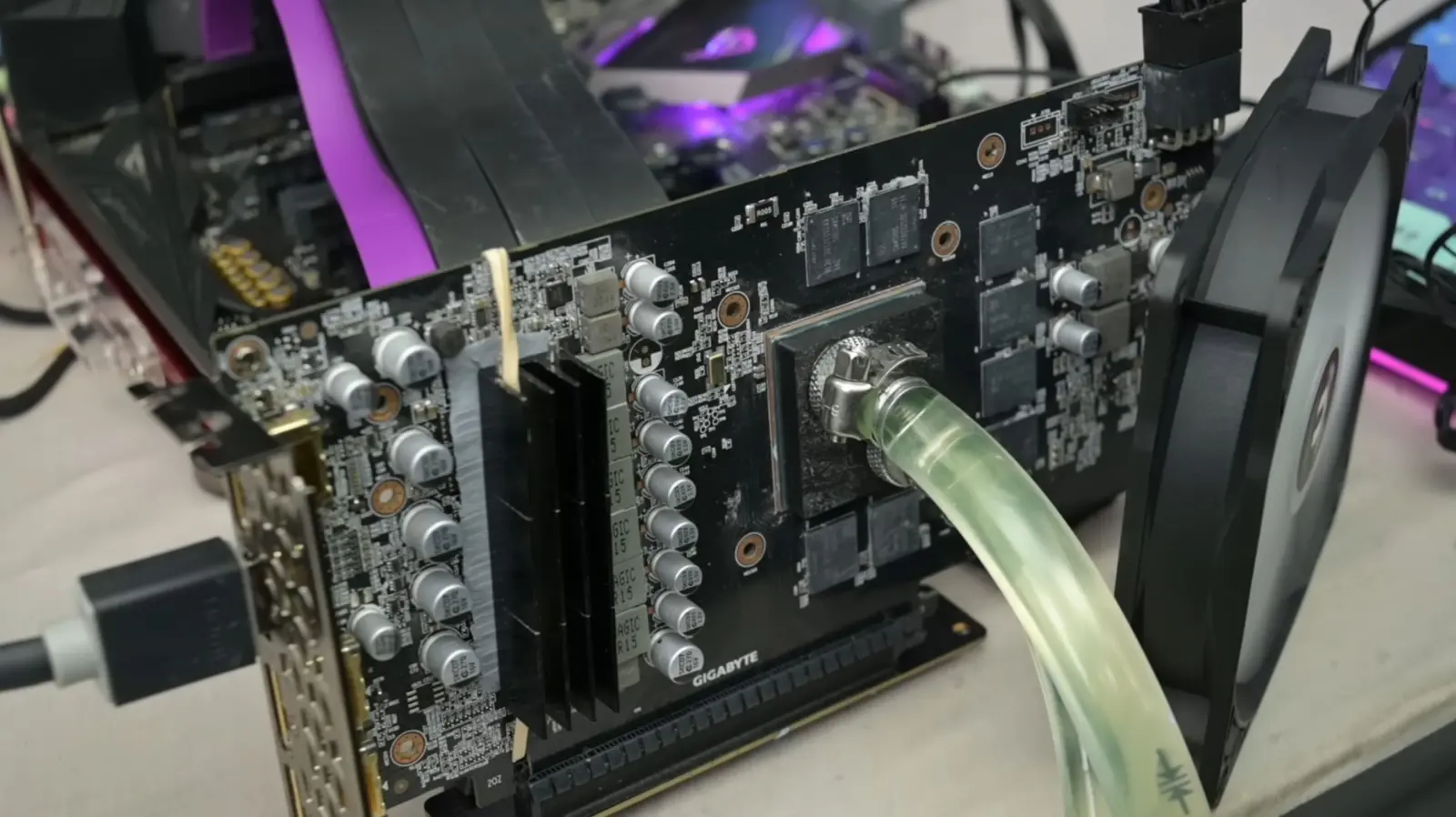
The modder also attempted this direct water cooling technique on an Intel Core i5 7600K processor, but the results did not surpass the performance of a standard AIO cooler. This comparison suggests that the extreme cooling benefits are most pronounced on the GPU architecture tested, or that the specific implementation for the CPU was less effective. The experiment confirms that while direct water cooling is technically viable, it requires significant expertise and carries a high risk of permanently damaging the GPU due to potential leakage.
Wccftech described the project as a wild experiment that showcases the modder's transition from traditional heatsinks to direct water cooling methods. The results confirm that direct silicon cooling can achieve startlingly low temperatures, but the permanent damage risk remains a critical barrier for general users. This specific modification is not recommended for everyday users due to the complexity and danger involved in maintaining a direct water seal on sensitive electronics.


Discussion
0 comments
Log in to join the thread with a thoughtful take, question, or correction.