
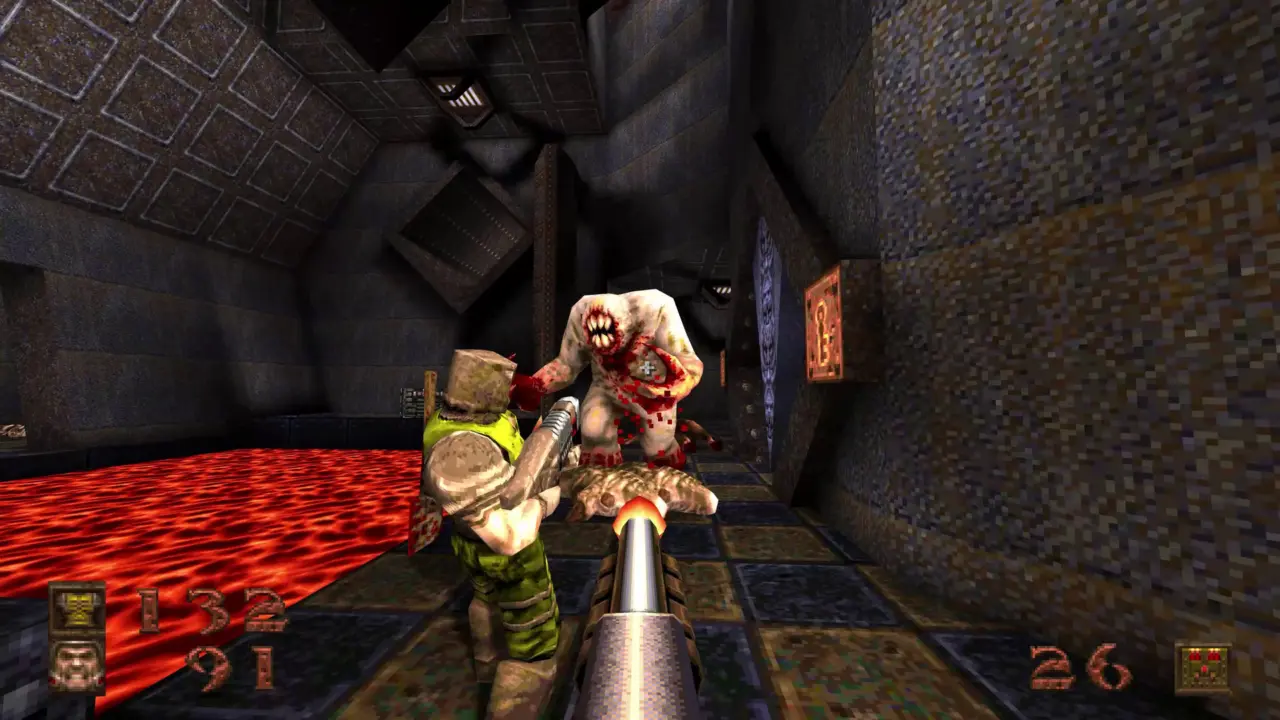
The first-person shooter Quake marks its 30th anniversary today, reminding players how a 1996 release fundamentally altered the gaming landscape. This milestone highlights a title that shifted the industry from flat, pre-rendered visuals to fully interactive three-dimensional worlds. The anniversary serves as a reminder of how deeply this software influenced both player habits and the hardware they use.
The 1996 first-person shooter established modern 3D graphics and online multiplayer culture
id Software released Quake on June 22, 1996, to introduce true 3D polygonal graphics to a mass audience. Prior titles relied on 2.5D tricks to simulate depth, but Quake built its entire world from moving polygons. This technical leap allowed for genuine spatial awareness and fluid movement in a way previous games could not achieve.
The game established the foundation for modern online multiplayer competitive culture and popularized PC modding communities. Its open architecture allowed players to modify the game extensively, creating a lasting legacy of user-created content. The source code for various versions, including winquake and quakeworld, remains available on GitHub under the GPL license.
Quake directly drove the creation of the PC 3D accelerator market by demanding hardware that standard processors could not handle. Cards like the 3dfx Voodoo and Nvidia Riva became essential components for anyone wanting to play the game smoothly. This hardware demand forced the industry to innovate rapidly, setting the standard for future gaming PCs.
John Romero celebrated the occasion with a thank you message and announced a live event for fans later in the day. Another observer noted that players can still examine the source code that shaped modern game engines and networking. These reflections underscore the enduring technical and cultural impact of the original release.



Discussion
0 comments
Log in to join the thread with a thoughtful take, question, or correction.