
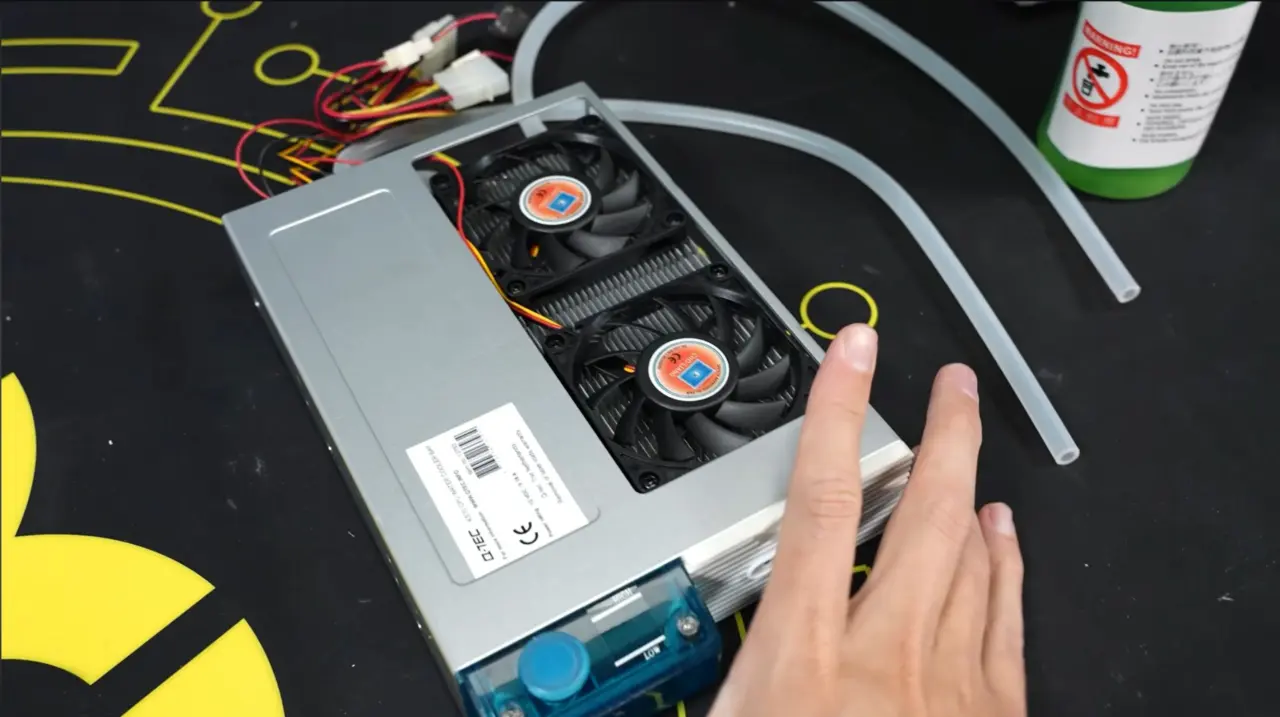
We tested a 22-year-old liquid cooler on a modern processor to see if vintage hardware can handle today's power demands. The experiment reveals that while older cooling solutions might manage light gaming, they lack the thermal headroom required for sustained high-performance computing. This distinction matters because it clarifies the practical limits of retro-modding projects for enthusiasts who might otherwise assume compatibility equals performance parity.
Vintage cooler handles gaming temps but fails under heavy synthetic loads
The test subject is the Q-Tec KS70, a liquid cooling unit originally released in 2004. It features a copper cold block connected to an aluminum radiator. To mount this legacy device on a modern AMD Ryzen 7 9800X3D, the tester fabricated a custom 3D-printed AM5 socket adapter. The installation also required a 5.25-inch drive bay for the radiator, a form factor that has largely disappeared from contemporary PC cases.
- CPU Model: AMD Ryzen 7 9800X3D
- Cooler Model: Q-Tec KS70
- Cooler Release Year: 2004
- Cooler Material: Copper block, Aluminum radiator
- Gaming Temp: 60°C
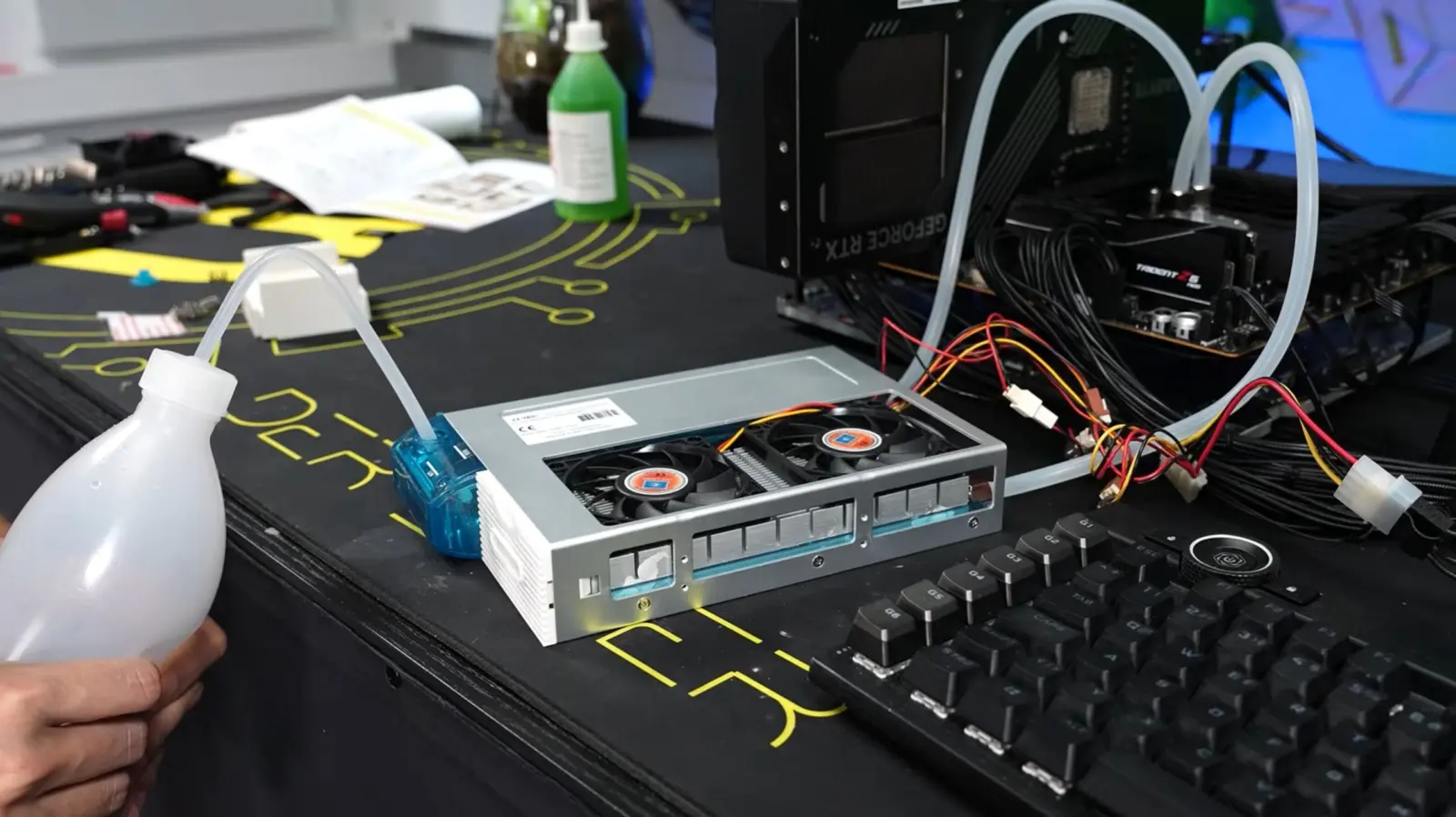
During gaming workloads, the Q-Tec KS70 maintained a stable temperature of approximately 60 degrees Celsius while the CPU clocked at 5.2 GHz. The system remained responsive and cool enough for typical entertainment tasks. However, the cooler's limitations became apparent under heavy synthetic stress. When running Cinebench R23 at 100% load, the temperature spiked to 95 degrees Celsius while the processor ran at nearly 5.0 GHz.
The results demonstrate that the 2004 Q-Tec KS70 is insufficient for modern high-TDP CPUs under maximum load. While it handled gaming temperatures adequately, the 95-degree ceiling during productivity tasks highlights the thermal gap between early-2000s cooling technology and current processor power requirements. We looked at AMD Ryzen 7 9800X3D Cools 19C earlier while tracking similar retro-cooling experiments.
The experiment confirms that vintage coolers like the Q-Tec KS70 can function with modern adapters but fail to provide adequate thermal management for heavy workloads. Buyers and modders should expect stable gaming temperatures but must anticipate significant thermal throttling or instability during intensive CPU tasks. The 22-year-old hardware serves as a functional proof of concept rather than a viable daily driver for high-performance systems.

Discussion
0 comments
Log in to join the thread with a thoughtful take, question, or correction.