
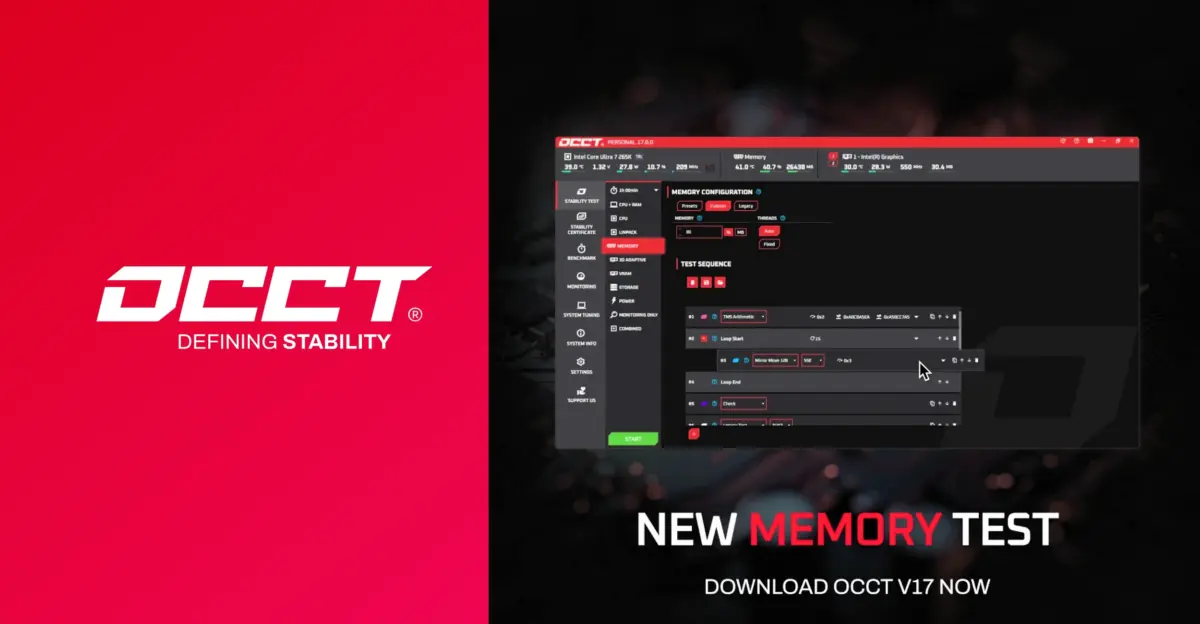
System stability tools now load faster and consume fewer resources with the release of OCCT v17. Users running long diagnostic sessions will benefit from reduced memory overhead and quicker test initiation. This update matters because it allows technicians to run more tests in less time without system slowdowns.
Redesigned modular architecture allows custom stress test configurations
The OCCT software suite provides hardware monitoring and stress testing capabilities for personal computers. The v17 stable release introduces a redesigned modular architecture for its memory testing suite. This new structure allows users to combine individual testing blocks into custom configurations.
The updated Memory Test module includes 16 individual testing blocks that can be mixed and matched. The release adds six new presets to help users target specific hardware behaviors. One of these new presets is the AM5 Margin Probe for AMD socket platforms.
Performance improvements in v17 include a 10 to 30 percent reduction in startup times thanks to a new launcher. The application also cuts overall memory usage by 15 to 30 percent. Monitoring data now writes directly to disk to improve efficiency during extended sessions.
Reliability enhancements address common troubleshooting pain points for portable installations and system updates. The auto-update system has been reworked to handle updates more smoothly. Enhanced crash recovery features make the software easier to debug when errors occur.
OCCT v17 is now available as a stable release for users seeking reliable hardware diagnostics. The update combines faster performance with more flexible memory testing options. These changes provide a more efficient workflow for system stability verification.
Discussion
0 comments
Log in to join the thread with a thoughtful take, question, or correction.